

Audio By Carbonatix
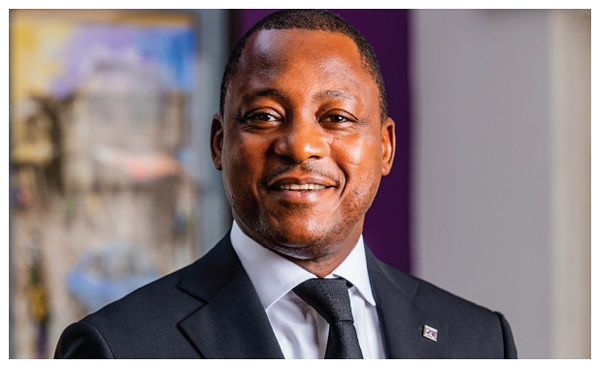
Managing Director and Chief Executive Officer of First Atlantic Bank, Odun Odunfa, has attributed the bank’s decision to undertake an Initial Public Offering (IPO) and list on the Ghana Stock Exchange (GSE) largely to renewed confidence in Ghana’s macroeconomic environment and regulatory framework.
Speaking in an interview with Joy News at a celebratory lunch event held at the Labadi Beach Hotel on Friday, December 20, Mr Odunfa said improving economic indicators and policy stability created the right conditions for the bank to open its ownership to the public.
“It says a lot about the confidence in the system right now, in our business,” he said, referring to the strong response to the IPO.
He pointed to recent trends in the performance of the Ghanaian cedi, easing inflationary pressures and the posture of economic regulators as key factors influencing the bank’s timing.
“The Ghanaian economy today, you've seen how the cedi has trended. You've seen how inflation has trended. You've heard how our regulator has positioned itself, the various initiatives that they've taken. You've seen what the Ministry of Finance is doing, and you've seen what the government is doing. I think it's a good time for Ghana,” Mr Odunfa stated.
According to him, the convergence of economic stability and regulatory clarity gave First Atlantic Bank the confidence to pursue a public offering after years of internal restructuring and consolidation.
“We must not minimise it. Things are being done well at the moment. We pray it continues, and that's what we're benefiting from. That's what we're leveraging,” he said.
Beyond economic conditions, Mr Odunfa explained that the move was also driven by the need to broaden the bank’s ownership base and strengthen corporate governance.
“First of all, we have to broaden the investor base, and we have to deepen governance,” he said, adding that access to capital would support the bank’s long-term growth strategy.
He said First Atlantic Bank is pursuing an ambitious expansion agenda, with significant investments in digital transformation, regional expansion and human capital development.
“We're ambitious. We are investing heavily in digitisation. We're investing in our original expansion plans across Africa, West Africa, and Africa. We're also investing a lot in the human capital, fellow Ghanaians, developing the capacity, skills, and so on of our people,” he noted.
Mr Odunfa also said increased market visibility and local investor participation were important considerations.
“The brand gets more visibility. The brand gets more exposure… with coming on board of Ghanaian investors, both institutional and individual, we'll have more belief, more support, more business,” he said.
On managing shareholder expectations in a volatile economic environment, the CEO stressed that prudence would remain central to the bank’s operations.
“The only thing we can promise investors is that we're going to run a decent business, a proper business… We will aspire to meet market expectations, but we will not cut corners to do so. We will do our business properly,” he said.
Reflecting on the bank’s earlier restructuring efforts to meet the Bank of Ghana’s capital requirements, including its merger with Energy Bank in 2018, Mr Odunfa said the experience reinforced the value of discipline and long-term thinking.
“Growth does not come easy. If you're going to do a good thing, you have to go through a process… if you do things properly, you will do well. And people would recognise it in the long run,” he said.
First Atlantic Bank, founded in 1994 and licensed as a universal bank in 2011, has grown into a full-service financial institution operating across retail, corporate and institutional banking. Its recent IPO and listing on the Ghana Stock Exchange on Friday, December 19, came after several years of balance sheet strengthening and governance reforms.
Mr Odunfa said choosing the local bourse was deliberate.
“We're Ghanaians, we're in Ghana. Where else would we list?… If Ghanaians don't believe in the Ghanaian Stock Exchange, nobody else will,” he said.
The CEO expressed optimism that sustained economic stability would encourage more Ghanaian firms to access the capital market and deepen domestic participation.
Latest Stories
-
Power restoration fault suspected in Kumasi Central Market fire
3 hours -
The 7-foot giant of Ngleshie Amanfro: Seven-foot Ghanaian Ephraim Saawa dreams of joining the national basketball team
4 hours -
Government promises support for Kumasi Central Market fire victims
4 hours -
Vibes The Movie: Big Ghun’s Ghanaian film earns five nominations at 2026 REFFA
4 hours -
MamaCare CEO warns unresolved conflicts among health workers could undermine maternal and neonatal care
5 hours -
Health professionals urged to translate medical knowledge into practice to save mothers
5 hours -
Conflicts among care providers linked to maternal, neonatal deaths – Expert
6 hours -
GIS marks 10th TIME conference, champions improved teaching practices
7 hours -
BRICS Or Balance? What Ghana’s bid really means
7 hours -
GPRTU wants full TRAFFITECH-GH implementation to start in 2027
7 hours -
Mahama announces plans to import electric wheelchairs for PWDs
7 hours -
KGL U17 Colts 2026: Western beat Prempeh Elite Academy to set up final final with Greater Accra Region
8 hours -
Late Solanke strike salvages 10-man Spurs draw at Man United
8 hours -
Gender Ministry to monitor welfare of Nana Akua Addo’s children amid domestic violence case
8 hours -
Benedict Okyere Yeboah: Ghana’s football problem goes beyond sacking a coach
8 hours