

Audio By Carbonatix
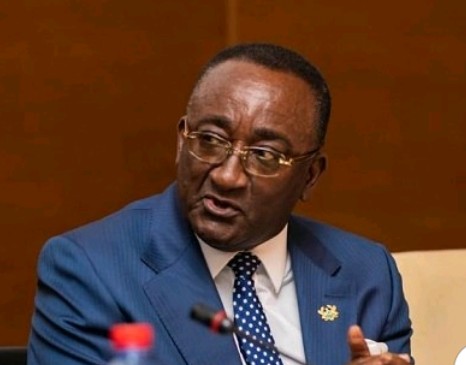
Minister for Food and Agriculture, Dr. Owusu Afriyie Akoto, has said that harmful chemicals used in illegal mining is the greatest threat to cocoa production in the country.
The Minister is worried that cyanide and other chemicals used in water bodies in cocoa farming areas are endangering the country’s cocoa sector.
He said the practice could lead to a ban of Ghana's cocoa beans on the international market, with an adverse effect on the country’s economy.
Currently in Europe, there is new legislation that could soon make Ghana’s cocoa and coffee unexportable to many foreign countries.
Speaking to LUV News, Dr. Owusu Afriyie Akoto noted that the issue must be addressed urgently to safeguard the country’s export of cocoa.
“It is very important. It is the water pollution, cyanide and other chemicals, mercury that go into the food chain and ends up in our stomachs. To me, that is the most dangerous part, it is not the quantity but it is the negative environmental impact…If we send a consignment of cocoa to say Belgium and they tested and find any trace, they could ban our cocoa exports.
“So it is not so much the impact of the production as to endangering our international trade, and the only thing we have is cocoa. Immediately, the danger of these cyanides and these very dangerous chemicals going into our products, which we send abroad, will endanger our export earnings which for me is the biggest concern,” he stated.
Meanwhile, the European Union has threatened to impose restrictions on Ghana and Cote D’Ivoire with regard to cocoa exportation into ports of their member countries if the destruction that is being caused by illegal mining is not dealt with.
Deputy CEO of COCOBOD, Dr. Emmanuel Agyeman Dwomoh, revealed this during the national Consultative Dialogue on Small Scale Mining in April last year.
The EU also believes growing of cocoa in the thick forest might be one of the driving forces.
“As we speak, EU is threatening to impose restrictions on the importation of cocoa from Ghana and Côte d’Ivoire to their ports.”
He added, “When you take the satellite images, you will see those places in red. The EU thinks that all those places are red because cocoa is causing land degradation [in Ghana]. Meanwhile, it is as a result of the galamsey activities.”
Ghana exports 80% of its cocoa into the European Union market, according to COCOBOD. Stakeholders are therefore worried about the impact of the galamsey menace on the finances of the country and the cocoa sector.
Latest Stories
-
Girls must have equal place in Ghana’s digital future – Vice President
7 minutes -
High Court issues EOCO warrant to arrest Manhyia South MP Baffour Awuah
12 minutes -
Ghana at the heart of global PR excellence
19 minutes -
Ghana Institute of Architects clarifies position on ARC-ASG dispute amid ongoing case
21 minutes -
NDC supporters storm Fomena constituency office over alleged disqualification of chairman aspirant
23 minutes -
NPA CEO assures tanker drivers of action on welfare concerns
24 minutes -
Karpowership seeks contract extension as Ghana’s power demand grows
27 minutes -
Gender Ministry inaugurates committee to drive early childhood development
29 minutes -
Four Schools, One Crown: Prempeh, Corpus Christi, Mfantsipim and St Augustine’s battle for NIQ trophy
30 minutes -
HIV status cannot be used to deny employment under Ghana law – Ghana AIDS Commission
31 minutes -
Buffer Stock calls for expansion of national storage capacity as it falls below 50,000 metric tonnes
31 minutes -
Central Regional Minister urges use of religious platforms to change environmental, sanitation practices
54 minutes -
Henry Kweku Banning
55 minutes -
Execution of US murderer Christa Pike halted an hour before it was due to happen
57 minutes -
GoldBod generates US$1.87bn in FX in September, exceeds monthly target
1 hour