

Audio By Carbonatix
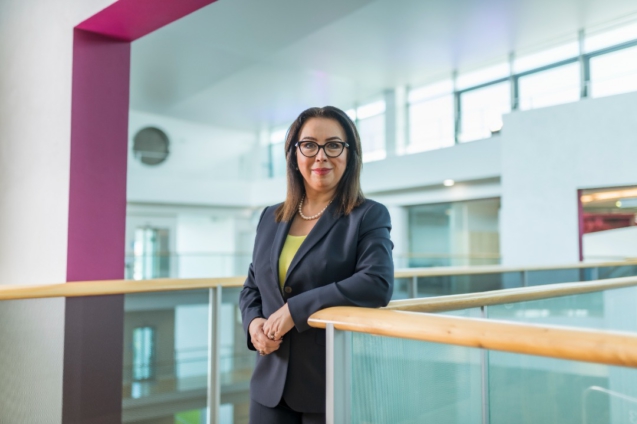
When I was a young girl in Izmir, I never thought that I would someday become the Area Vice President of a multinational pharmaceutical company, leading a team of more than 2,500 colleagues who are making health happen for hundreds of millions of people across the Middle East and Africa region.
I knew I loved science and eagerly pursued my medical degree, qualifying as a psychiatrist. But it was only after I joined AstraZeneca in 2000 that the corporate world opened its doors to me, and I realised what women could achieve in the boardroom. Back then, the pharmaceutical industry was a male-dominated sector. I was the first Turkish woman to become an AstraZeneca Country President in Türkiye in 2014, a glass ceiling I was proud to break.
Twenty years on, AstraZeneca is a very different place. More than 50 per cent of our global workforce are women. Women now make up 38 per cent of our Board of Directors, 42 per cent of our Senior Executive team, and 48.1 per cent of senior middle management roles and above. We are on track to achieving gender parity at all levels across the organisation by 2025.
These figures are industry-leading but there is still so much more that needs to be done to make girls and women feel that they belong in science, technology, engineering and mathematics (STEM) careers.
Despite the fact that girls generally achieve better grades on average in STEM subjects than boys1, less than 30 per cent of STEM researchers are women.2 We know that women and girls are not held back by their abilities, but rather by social attitudes and inequitable access to education. According to the Malala Fund,3 the coronavirus pandemic has set girls’ education back even more; it is estimated that 20 million girls may never return to school after COVID-19.
To mark the International Day of the Girl (October 11), AstraZeneca is proud to join the global #GirlsBelongHere campaign, developed by Plan International, our partner in the Young Health Programme. The #GirlsBelongHere annual call-to-action was launched to tear down barriers of discrimination and prejudice that continue to hold girls back. It brings young women and girls into the boardrooms of companies around the world and provides them with a platform for their voices and opinions to be heard.
Over the first two weeks of October, girls and young women will step into senior leadership roles at AstraZeneca offices across the Middle East and Africa and spend time engaging with our leadership team. They will participate in 1:1 briefing meetings, manufacturing site visits, career mentoring sessions and team workshops, experiencing what it’s like to work at AstraZeneca.
As a science-led company, supporting the next generation of women and girls in STEM is a responsibility we are proud to carry. We remain committed to diversity and inclusion in the workplace, which includes promoting women in leadership.
Through our ‘She CAN’ initiative in Egypt, we are challenging traditional mindsets, and empowering women to stand on equal ground with their male colleagues through a cross-functional Women’s Council, development and empowerment programmes, leadership role modelling, workshops and other activities.
In South Africa, we are supporting the development and training of nurses and assistants at Unjani Clinic, a network of 100% black women-owned healthcare providers for under-served communities. We are also working with WEConnect International, an NGO that supports women-owned enterprises, to help us identify a more diverse pool of suppliers and support sustainable communities.
Earlier this year, AstraZeneca’s Near East and Maghreb office hosted the second edition of our Women’s Empowerment Summit in Tunisia, with the aim of honouring and empowering women within AZ and beyond.
And more than 500 colleagues across MEA have already enrolled in the AstraZeneca Women in Leadership Programme, which helps to build the capabilities of the next generation of female leaders and supports careers with lasting impact.
Occasions such as the International Day of the Girl give us pause to reflect on the role we can play in lifting up women and girls and making sure they can achieve their full potential. But this needs to be a year-round commitment. Through initiatives like these, I hope that we can inspire more young women to pursue STEM careers, making the field all the richer for it.
******
The writer is the Area Vice President, Middle East and Africa of AstraZeneca
Latest Stories
-
The jury’s options in Lindsay Clancy’s murder trial
3 seconds -
Venus Williams loses 15th match in row in 2am finish
7 seconds -
NSA reopens portal for defaulters, private candidates ahead of September 4 deadline
43 seconds -
Akosua’s ‘Fante Deliciousness’ wins in Big Chef Season 5
1 minute -
My chances are good – Paul Afoko confident of clearing NPP vetting in National Chairman race
1 minute -
Fairtrade Africa presses cocoa industry to close living income gap
3 minutes -
Ghana Airports Company’s income rises to GH¢2.48bn as assets exceed GH¢10bn
4 minutes -
aYo Ghana is Mobile Insurance Leader of the year
10 minutes -
Deputy AG rejects OSP claim of collaboration snub, says allegation is false
12 minutes -
Compounded dilema of healthy and safe foods on our plates; any end in sight
19 minutes -
Nigeria urges AU action over xenophobic, Afrophobic attacks in South Africa
19 minutes -
Richmond Gyamfi to join Egersunds IK on loan from AGF
26 minutes -
ADB champions safer banking as GAB fraud awareness campaign climaxed
30 minutes -
Agyarko campaign denies rift with Bawumia, defends his record of service to NPP
33 minutes -
Ayariga inspects Kejetia Market Phase II, pledges push to complete project
37 minutes