


Audio By Carbonatix
CEO of Vodafone Ghana has asked the government and private businesses to work together to improve access to the internet and make smart devices more affordable to improve distance education in Ghana.
According to Patricia Obo-Nai, emerging technology has changed the concept of distance education, where students travel from far locations to campuses, sometimes on weekends, to be taught.
She said that even though times are changing, there is still a gap in access to internet connectivity and affordable smart devices.
To illustrate her point, Patricia said that about 80% of the 1,000 girls who signed up for Vodafone’s free online coding course could not take part because they did not have smart devices or access to the internet.
Patricia Obo-Nai highlighted these points during her speech as the guest speaker at the 10th Congregation of the Jackson College of Education, a teacher training college that operates by distance learning is accredited by the Ghana Tertiary Education Commission (GTEC), and is affiliated with the University of Education, Winneba.
She stated: “Driving access to internet connectivity across Ghana should be a shared concern between the government and the private sector if we are to make significant strides in education.
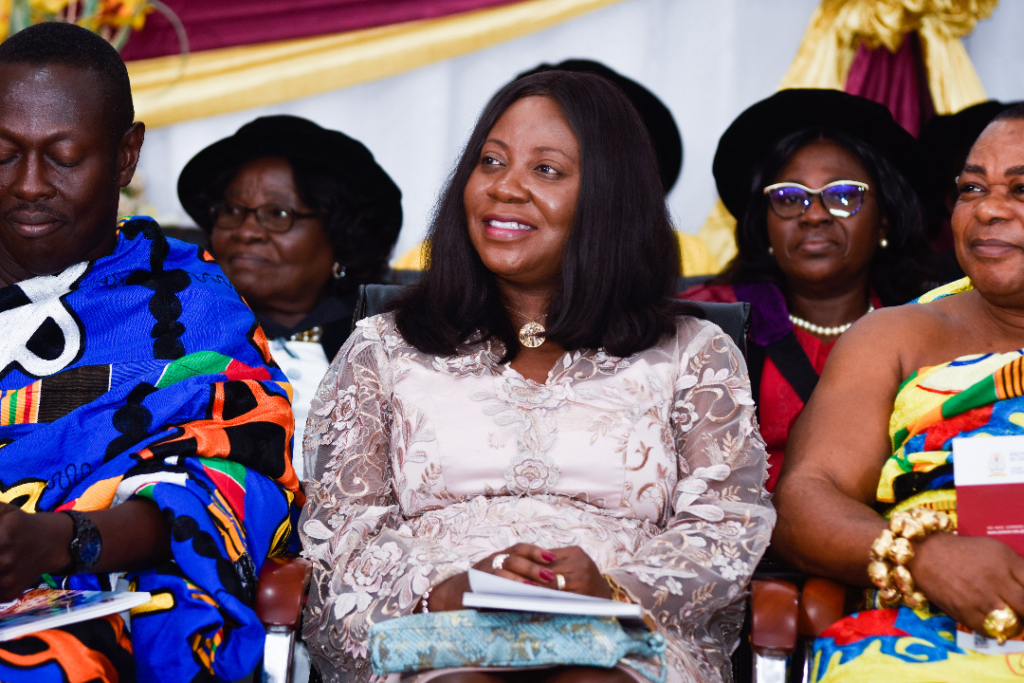
"Access to reliable internet connectivity in communities is now a necessity, equivalent to electricity and water, and collectively we must make it happen. Also, what is the use of providing internet coverage across the country if the people in the community do not have access to smart devices?
"Affordability is key. While we drive manufacturers to produce low-cost smart devices for Africa, we must reduce costs through the entire supply chain, even if it means assembling in Ghana and reducing the cost of imports. We can also provide tax incentives to suppliers to speed up adoption and usage.”
Concerning what Vodafone Ghana has done to improve access to the internet, the CEO revealed that her company has worked with the government through the Ghana Investment Fund for Electronic Communications (GIFEC) to connect over 300 rural communities to Vodafone’s network.
Meanwhile, Patricia Obo-Nai urged educators who graduated from the school to embrace a mindset change regarding technology.
“We need a new breed of educators who are open to modern ways of solving challenges, communicating, and collaborating in and out of learning environments. We need teachers who will use modern technologies in the classroom to make learning more connected.
"To do this effectively as an educator, you need to be curious about the world outside your curriculum. You must take the initiative to learn what you need to know.
As you expose your students to emerging technologies that you yourself have learned about, they can keep in step with the changing times,” she concluded.
Latest Stories
-
He entered at eight. He is now 16: Ghana’s children growing up in prayer camps
1 hour -
‘Development must not always begin from Accra’ — Anwelle Foundation launched in Jirapa
1 hour -
PKO trio eye victories at Odwira Festival
4 hours -
346 Ghana Navy recruits pass out after 26 weeks of intensive training
4 hours -
Newsfile to discuss EOCO-MP arrest, drug trafficking, speech arrests and $235m water debt
4 hours -
JoyNews gets results as listeners raise GH¢40,000 to help 17-year-old student with cerebral palsy attend SHS
5 hours -
Vice President calls for stronger local pharmaceutical production to reduce medicine imports
5 hours -
The brewing tension at KNUST; Beware the Ides of October….
6 hours -
Health Ministry moves to integrate traditional medicine into mainstream healthcare
6 hours -
550 pupils in Kintampo South get educational lifeline as ‘Seeds of Hope’ reaches farming communities
6 hours -
Opoku Mensah urges Christian Council, House of Chiefs to speak up on democratic freedoms
7 hours -
Teacher unions’ strike: Minority demands immediate payment of teacher arrears, 20% deprived area allowance
7 hours -
The Accra-Kumasi Expressway: Building it right
7 hours -
Beyond gold exports: Building value and economic resilience from Ghana’s gold
7 hours -
2027 AFCONQ: Ghana under pressure as Gambia beat Somalia 2-1
7 hours