

Audio By Carbonatix
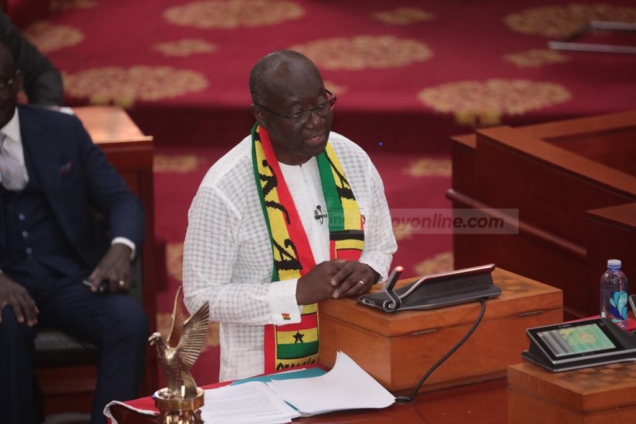
The Minister of Finance, Ken Ofori-Atta has indicated in the 2023 budget statement that Ghana’s public debt has increased by GH₵93 billion ($6.53 billion at current rate) due to the depreciation of the Ghanaian cedi alone since the beginning of 2022.
Meanwhile, the bailout Ghana is seeking from the International Monetary Fund (IMF) amounts to just $3 billion compared to the addition to public debt due to depreciation.
According to the budget statement, the cedi has depreciated by 53.8% and 54.2% against the dollar as of October 2022 and November 2022. The massive depreciation has been due to the inability to access the International Capital Market due to the continuous credit rating downgrades. The tightening of domestic financing conditions and the increasing cost of borrowing has also contributed to further depreciation.
The Minister indicated that there has been a high demand for forex to finance the import bill, including the import of crude, and the financing of electricity has worsened the performance of the cedi and led to the high depreciation. Ghana’s import bill, the budget stated, exceeds US$10 billion annually. Considering the low foreign earnings, it has been difficult to meet the import requirements including crude oil and petroleum products of about US$400m (GH₵4.80 billion) a month. The Ministry of Finance also requires about US$1.0 billion per year to finance the lights in homes and workplaces.
Ghana and the IMF
Ghana is seeking a three-year Extended Credit Facility (ECF) programme of $3bn at the International Monetary Fund. This means that this potential bailout cannot even finance the debt accumulated as a result of the depreciation of the Ghanaian cedi.
The ECF is the Fund’s main tool for medium-term support to countries facing prolonged balance of payments problems, similar to Ghana’s. The duration of such arrangement is between three to four years and extendable to five years. In 2014, Ghana requested a similar arrangement and it lasted four years. However, the level of access and the final programme design is ultimately decided by the IMF Executive Board.
According to the IMF, an IMF-supported programme aims at providing space for Ghana to implement policies that will restore macroeconomic stability and strengthen debt sustainability while protecting the most vulnerable. The programme could help create the conditions for inclusive and sustainable growth and job creation. This will help anchor policy credibility, alleviate exchange rate pressures and provide catalytic effect on financing.
Latest Stories
-
Mysterious illness leaves children struggling to walk, hear as Mafi Kope community appeals for urgent medical help
12 minutes -
Ghana begins free rabies vaccination for 25,000 pets
19 minutes -
Ghana Navy strengthens operational readiness with specialist seaman gunners training
22 minutes -
Nkrumah’s legacy must be measured by action, not ceremonies – Armah-Kofi Buah
28 minutes -
Kwesi Pratt Jnr questions Ghana-US defence cooperation agreement over sovereignty concerns
34 minutes -
Nkrumah’s legacy must drive African unity, self-reliance and environmental protection – Armah-Kofi Buah
39 minutes -
Nkrumah’s inspiration should unite Africans despite political differences – Dr Opoku Prempeh
42 minutes -
Some dissolved NSA board members could be reappointed – Kofi Adams
1 hour -
Mahama leaves for New York to attend 81st UN General Assembly
1 hour -
Aston Villa beat Mohammed Kudus’ Tottenham 3-1 as Spurs struggles continue
1 hour -
Auditor-General’s COVID audit omissions worrying for anti-corruption fight – CDD-Ghana
1 hour -
Bawa-Rock supports over 300 Obuasi Town Hall fire victims with GH¢1.5m package
1 hour -
Western regional security council steps into Betterland-Gwira mining dispute
1 hour -
Photos: Nkrumahfest 2026 draws dignitaries as Ghana celebrates Kwame Nkrumah’s legacy
1 hour -
Flames, smoke seen near Riyadh airport after Saudi warning of aerial attack threat
1 hour