

Audio By Carbonatix
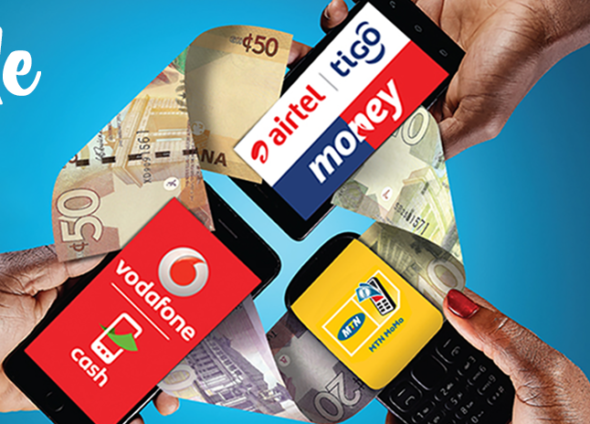
The Institute of Economic Affairs (IEA) Ghana has said that the decision of government to remove the daily GH₵100 threshold on the electronic transactions levy (e-levy) is inappropriate.
This, according to them, is because it 'fails' to protect the poor in the current economic crisis.
Reacting to the announcement of a downward review of the e-levy rate from 1.5 per cent to 1.0 per cent in the 2023 Budget, the IEA said government could attain the revenue target and boost usage of electronic transactions if it reviewed the rate further downward to 0.5 per cent
“We are not only disappointed that the new rate is higher than the 0.5 per cent we proposed, but also the removal of the GH₵100 daily exemption threshold, which is inappropriate,” said Mr John Kwakye, Director of Research, IEA Ghana, at a press briefing in Accra.
The Institute noted that though it is generally against the introduction of new consumption taxes, which were not progressive, it said it welcomed the increase of the basic Value Added Tax (VAT) rate by 2.5 per cent.
Dr Kwakye explained that the increase in the basic VAT rate while putting Ghana at comparable levels with its peers in the West Africa Sub-region, would yield the needed revenue for government as it is easier to collect and administer.
“It is our expectation that as the economic situation normalises and government revenue improves, the VAT increase can be scaled back accordingly,” he said.
He encouraged government to consider more innovative tax measures in the form of corporate taxes rather than consumer taxes to ensure government meets its revenue projections of GH₵144 billion for the year 2023.
They include the introduction of e-commerce levy to tax online transactions and corporate tax reform that will see the increase of base tax rate for non-extractive foreign companies from 25 per cent to 45 per cent; an increase base tax rate from 25 per cent to 35 per cent for the indigenous companies and an increase in base tax rate from 35 per cent to 45 per cent for extractive companies with a special tax of 20 per cent.
The IEA also proposed a super-profit tax of 10 per cent and an increase in base tax rate from 25 per cent to 45 per cent for telcos while a tax base rate increased from 25 per cent to 45 per cent with a super-profit tax of 10 per cent for the Banks.
“We call for the reduction and abolishing of some of the several taxes/levies in the petroleum build up to relieve pump prices, which are extremely high,” Dr Kwakye said.
Latest Stories
-
Drug cartels may be seeing Ghana as easy route – Lenin Anane Agyei
13 minutes -
Ghana risks gaining notoriety as drug-trafficking hub – Bobby Banson
22 minutes -
Government dismissed my drug trafficking warning, then tried to arrest me – Ntim Fordjour
24 minutes -
Day Two: 3rd Republic Bank-JoyNews Habitat Fair Clinic underway at Junction Mall
24 minutes -
NACOC addressing inherited gaps in fight against drug trafficking – Deputy Director-General
36 minutes -
Taekwondo goes to school as GTF launches five-region youth campaign
39 minutes -
The issues Mourinho is struggling to fix at Real Madrid
46 minutes -
Hundreds throng EducationUSA College Fair in Kumasi in pursuit of abroad studies
49 minutes -
Drug bust: NACOC should be part of port inspection team – Twum-Barimah
52 minutes -
Ward appointed Liverpool’s sporting director
52 minutes -
This isn’t the first cocaine bust; NPP must stop the politicisation – NACOC deputy boss
56 minutes -
Drug bust case: Only Customs officers, MPS officials in scanning room – NACOC
2 hours -
I don’t mind being insulted; I have a crocodile skin – President Mahama
2 hours -
Samson’s Take: Verify the badge – and verify the story
3 hours -
President Mahama explains why Ghana must rethink regulation of TikTok, other new media platforms
3 hours