

Audio By Carbonatix
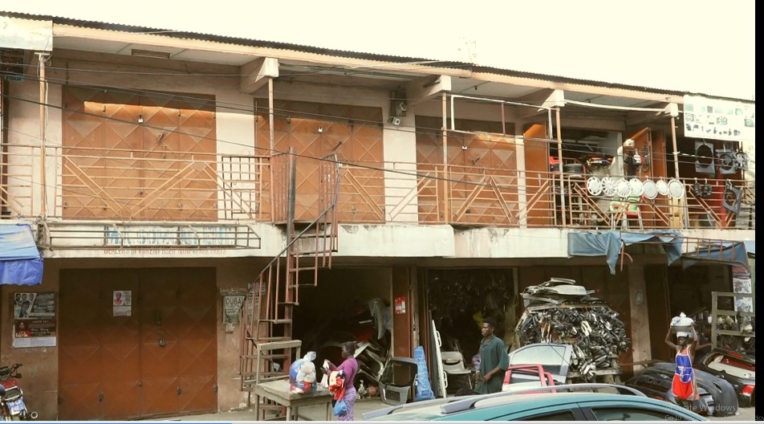
Over 50 shops at the Abossey Okai Spare parts market have shut down their operations due to default in paying their loans.
Some of the owners of the shops blamed the situation on the high cost of doing business in the country, as a result of high inflation and volatilities in the exchange rate regime earlier this year.
They also cited high taxes at the port as contributing to the default in repaying their loans.
“A lot of traders go for loans to import goods to the market. Due to the high cost of port duties and the unstable exchange rate regime, we are compelled to increase prices but at the end, customers don’t buy and we lose”, a trader who gave his name as Julius said.
According to Julius, many of his colleagues have to leave the country in search of better opportunities to pay back their loans.
“It is not easy my brother. A lot of people are travelling outside the country to look for better conditions. Why operate a shop here when you can't break even”.
Expressing his disappointment, Julius said he is unhappy with the current economic situation in the country and as a result will also leave for Dubai for a carpentry profession.
"Listen! We don't have any business to do. All we have is what we do here. Look at the shops, they are all closed with no spare parts in there. Do you know why? They have all travelled because the banks are chasing them for repayment of the loans which they can't repay.
"The only option now is to travel abroad, get some monies and pay your debt. I don't think you will meet me here in your next visit. I am also going to Dubai to make money"" he said.
Kwesi, who primarily deals in automobile engines, had to rely on his children living abroad to pay a local bank a loan for ₵2 million, which, in his words, almost got him imprisoned.
He stated that the operations of the spare parts merchants are being hampered by the failure to implement pricing control policies.
"They came to my shop with some policemen. To be frank with you, the goods I used the money for were in the shop and buyers were not willing to buy because of the price. I had wanted to resort to reduction of the goods which means I won't be able to recoup my principal I used to purchase the goods"
“I would be happy if we could have price control, but it appears it won't work out because people just want to sell their goods just to stay in business. The issue of taxes too is a big problem for us”, he stated
Latest Stories
-
Promotion pay row: Gov’t gives teachers September to complete salary adjustments
7 minutes -
Financial irregularities plummet by 62.9% as state tightens fiscal controls
8 minutes -
DVLA to expand mobile services to underserved communities in Ghana’s Eastern Corridor of the Northern Region
24 minutes -
GUTA urges GPHA to act swiftly to end Tema Port congestion to avert rising business costs
24 minutes -
Port congestion could undermine 24-hour economy policy – GUTA
25 minutes -
NSA opens three-day window to resolve national service biodata mismatches
34 minutes -
Abu Jinapor highlights increased gold exports after Domestic Gold Purchase Programme
38 minutes -
NPP UK branch calls for independent audit into gold purchasing operations and parliamentary probe
1 hour -
Zanetor Agyeman-Rawlings pledges decisive action on climate change, galamsey and environmental degradation
1 hour -
Bawumia was brainchild behind Domestic Gold Purchase Programme – Samuel Jinapor
1 hour -
Fuel prices set to go up from September 1, Petrol to sell at GHC 16.69 and Diesel, GHC 17.90 – COMAC
1 hour -
Our World Our People withdrawn due to curriculum duplication, not politics – Adutwum’s spokesperson
1 hour -
GANRAP is essentially a rebranding of Domestic Gold Purchase Programme – Abu Jinapor
1 hour -
I am tired of being in opposition, my goal is to win in 2028 – Boakye Agyarko
2 hours -
Ghana’s road maintenance funding gap deepens as only 37% of needs met – World Bank
2 hours