

Audio By Carbonatix
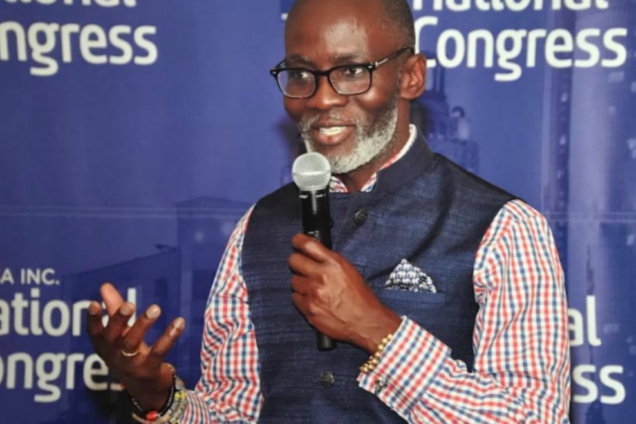
NPP stalwart, Gabby Otchere-Darko, has underscored the relevance of government's debt exchange programme in facilitating negotiations with the International Monetary Fund (IMF).
Ghana is currently in talks with the global lender for a deal to help salvage the country's ailing economy.
If approved, the deal will help Ghana to properly balance its books and project better prospects for the economy.
But according to Mr Otchere-Darko, this can be possible if government's domestic debt exchange programme is embraced by all and sundry.
In a tweet on Sunday, he therefore called on all individual bondholders to align with government towards a successful implementation of the said initiative.
"The debt exchange programme is voluntary for individual bondholders but a very necessary evil for our economy.
Its success is critical to restoring macroeconomic stability, securing an IMF prog. It hits those of us holding bonds very hard. A straight no to it is no solution!", he wrote.
Ghana's return to the IMF marks the country's seventeenth engagement with the Fund, since attaining independence in 1957.
The factors which have perenially led to Ghana-IMF interactions include the deprecation of the local currency, fiscal indiscipline, budget deficits and a host of other lapses in economic management.
In its current ongoing negotiation with the Fund, the depreciation of the local currency against other major trading currencies has been identified as one of the key triggers.
Also, the country's debt stock and rising inflation have collectively contributed to its recent IMF engagement, which started in July 1, 2022.
But government has consistently maintained that these factors would not have resurfaced had it not been for the Russia-Ukraine war and the ravages of the COVID-19 pandemic.
Over the period, government communicators and state officials have been explaining how the pandemic and the conflict jointly culminated in the downward spiral of the economy, which they claim was on a good footing prior to these twin disasters.
Meanwhile, according to critics, the country's 17th return to the IMF is due to government's own mismanagement, reckless borrowing and corruption.
It is however expected that, the engagements with the IMF will be concluded before the first half of the year, to aid government's plans of rebuilding the economy.
Latest Stories
-
Ghana needs a law to sustain constitutional reforms – CDD-Ghana
1 hour -
COVID fumigation audit: Auditor-General has a lot of questions to answer – Akwatia MP
1 hour -
Stranded Ghanaian medical graduates in Cuba appeal to Mahama for immediate return
1 hour -
GNFS contains fire outbreak at Teshie Lekma Road near Lekma Hospital
8 hours -
Samia Nkrumah rejects the narrative that Ghanaians were happy after Nkrumah’s overthrow
9 hours -
A Mother’s pain: Tribute by Ivan Baidoo’s mother
9 hours -
‘Forgive us for staying away’ — Samia Nkrumah leads family back to Nkroful, pledges to preserve Nkrumah’s legacy
9 hours -
Ernest Nuamah scores twice as Lyon beat Rennes
9 hours -
‘My dear Ivan’ – A father’s tribute to a son tragically killed
9 hours -
GNPC Explorco advances Voltaian Basin drilling preparations with 13.5km access road
9 hours -
Cabinet approves facility manager for Borteyman Sports Complex – Kofi Adams
10 hours -
Sanitation is improving; critics may be ‘living in another world’ – Salaga South MP replies Bekwai MP
10 hours -
Government must do more to tackle sanitation crisis – Bekwai MP
10 hours -
World Cleanup Day: GFF begins sanitation education in local communities
11 hours -
EU Ambassador, IGP discuss stronger cooperation on policing and security
11 hours