

Audio By Carbonatix
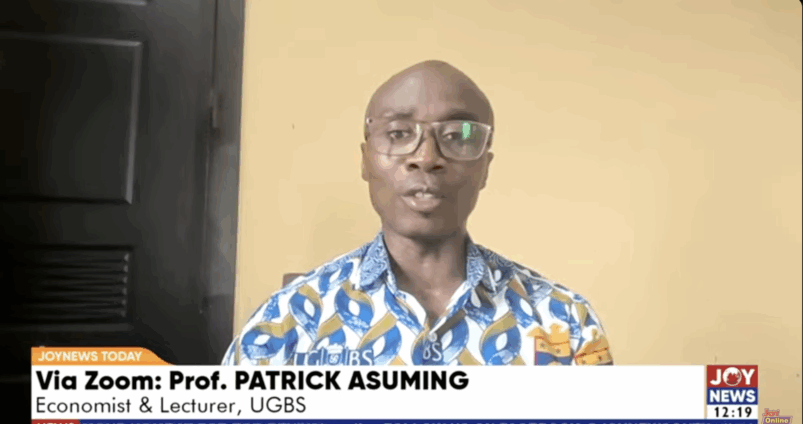
Renowned economist and Senior Lecturer at the University of Ghana Business School, Prof. Patrick Asuming, has issued a high-mark validation of President John Dramani Mahama’s first year in office, asserting that the administration has successfully steered Ghana away from a "prolonged crisis" toward an era of renewed confidence.
Appearing as a lead analyst on Citi FM on Saturday, January 10, 2026, Prof. Asuming argued that the administration’s primary victory has been psychological—transforming a stagnant national mood into one of proactive economic engagement.
Reflecting on the government's performance since the January 2025 transition, Prof. Asuming noted that the administration avoided the teething problems typical of new governments by arriving with a pre-packaged, well-defined execution roadmap.
“I think you have to say the first year of the administration has gone well. Right from the opening weeks, you got the sense that there was a clear plan on what the strategy is and what they want to do, and the President wasted no time in doing it,” Prof. Asuming stated.
He observed that even the President’s critics have been forced to acknowledge the speed of his agenda, noting that the decisive steps taken in the first budget helped solidify the government’s credibility early on.
A significant portion of Prof. Asuming’s analysis focused on the shift in public temperament.
He recalled the "dark years of 2022" through late 2024—a period marked by record-high inflation, a volatile Cedi, and a general sense of economic paralysis.
Citing data from the Bank of Ghana’s Consumer and Business Sentiment Surveys, the economist pointed out that the economic recovery began as a psychological phenomenon before it became a statistical one.
“If you track the Bank of Ghana’s consumer and business sentiment survey, the moment it became obvious that there was going to be a change, you began to see that moods changed and sentiments shifted,” he explained.
He argued that this shift wasn't accidental but was the result of a "clear change in outlook" that took hold once the transition of power became a certainty.
Prof. Asuming credited the administration with "capitalising on this renewed optimism" by integrating core campaign promises into the national budget immediately.
By doing so, the government moved beyond rhetoric to tangible policy, which he believes has effectively "carried many Ghanaians along."
However, the economist cautioned that while the mood has improved, the second year must focus on the "structural reset" of the economy—ensuring that the restored confidence translates into lower costs of living and stable job creation for the youth.
Latest Stories
-
Don’t let speed of information become your judgement – CJ tells new lawyers
22 minutes -
World Cup visa scandal: People have leveraged public office to facilitate fraud – Senyo Hosi
27 minutes -
Glut! Farmers count losses as prices crash, customers happy
1 hour -
GSA postpones auction of unserviceable vehicles
1 hour -
Man charged with attempted murder after stabbing
1 hour -
World Cup visa scandal: Senyo Hosi says issue goes beyond calls for Sports Minister’s resignation
1 hour -
Yaw Ampofo Ankrah hasn’t taken or received any money to facilitate visas – Lawyer insists
1 hour -
World Cup visa scandal: Senyo Hosi urges focus on constitutional accountability
1 hour -
La Beach demolition: Senyo Hosi condemns lack of consultation
2 hours -
Russian glide bomb attack on Zaporizhzhia kills at least 15 people
2 hours -
Jinapor warns underperforming energy sector CEOs of consequences, says no protection for failure
2 hours -
Fire destroys head of tipper truck on Lower Volta Bridge
2 hours -
Palmer signs new Chelsea contract until 2034
2 hours -
World Cup visa scandal: Mahama will act on corruption allegations – Abass Nurudeen
2 hours -
Abass Nurudeen accuses Minority of ‘scandal scavenging’ over World Cup visa controversy
2 hours