

Audio By Carbonatix
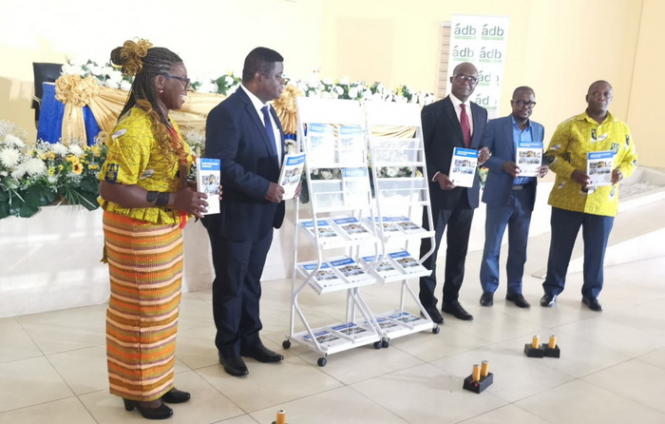
The Ghana Social Development Outlook Report (GSDO) launched at the University of Ghana has revealed that there has been a decline in enrollment in primary and Junior high schools.
According to the 2022 report, enrolment at the Primary level declined from an average of 91 percent in 2016 to 80 percent in 2020 while the Junior High School enrolment also fell from 50 percent to 45 percent within the same period.
The GSDO report is a biannual research finding published by the Institute of Statistical, Social and Economic Research (ISSER) of the University of Ghana.
Speaking at the launch, the Director of ISSER, Professor Peter Quartey explained the drop was mainly attributed to waning school feeding.
“In terms of education, we saw that net enrolment although picked up, started declining in some areas particularly because for some particular areas, it is a school feeding, capitation grant, and some of the support that comes from government that enhances the net enrolment. Therefore where there are challenges, the numbers will go down,” he said.

The director stressed that “the decline in enrolment at the JHS and primary levels is a reflection of a situation of ‘taking our eyes off’ the basic education sector.”
To address the decline, the 2022 GSDO report recommended balanced funding to address the quality imbalance and engaging of relevant stakeholders.
It also called for a national discussion on free senior high school policy financing and continuous monitoring and evaluation.
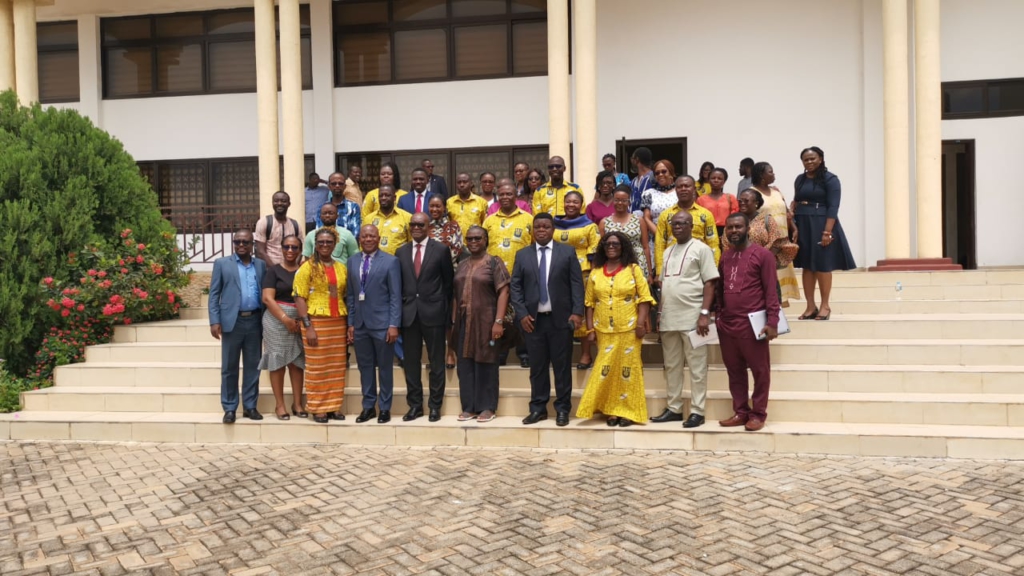
The report in its sixth edition also highlighted 10 thematic social sectors namely;
- Education
- Health
- Water and sanitation
- Housing
- Employment
- Energy
- Environment
- Gender
- Social relations and
- Population
Again, elaborating on the same issue on the MiddayNews on JoyFM, the Head of the 2022 GSDO report, Dr Martha Awo said the study also found that the decline in enrolment was largely attributed to delay in the payment of capitation grant.
“The payment of capitation grants to various schools usually delays and the amount of GH¢4.50 is woefully inadequate. Apart from that, payment of caterers has been stalled for some time, and in most part of the poverty-stricken areas most of the caterers have laid down their tools,” she said.
She continued that findings on the ground show that children in the northern part of the country leave school after noon due to hunger, further accounting for the significant decline in enrolment.
Dr Awo recommended that the same support given to Senior High Schools (Free SHS policy) must be extended to the Primary and Junior High School levels.
Latest Stories
-
One Million Coders Programme targets 100,000 digital jobs in two years – Sam George
3 minutes -
John Jinapor, Italian Ambassador explore opportunities for energy sector investment
5 minutes -
NHIA seeks legal reforms to support Free Primary Healthcare
9 minutes -
Beatrice Annan defends Afi Agbenyo’s EC appointment, cites record of gender advocacy
12 minutes -
Ghana seeks investment deals in Bangkok amid global economic crises
16 minutes -
IMF raises Ghana’s 2026 growth forecast to 5.7%, sees inflation falling to 4.8%
18 minutes -
Ablakwa urges Africans not to view immigrants as threat to national progress
22 minutes -
Mahama Cares must fund treatment, not looting – Asogli chiefs
23 minutes -
Ghana’s economic salvation lies not in shifting geo-political allegiances – Dr Atuahene
26 minutes -
BoG proposes tougher rules on loan repayment assessment
31 minutes -
Government plans mandatory drug tests for public service jobs — Muntaka
36 minutes -
Media urged to intensify awareness campaigns on breast cancer
41 minutes -
Interior Minister urges public to share drug intelligence
47 minutes -
Afadzato South DCE commissions water projects, teachers’ bungalow
52 minutes -
Council of State urges sustained dialogue, negotiations as teachers resume work
57 minutes