

Audio By Carbonatix
The Ministry of Education has launched a high-level mediation effort to resolve a standoff at the University of Ghana (UG) over fee hikes that have triggered student unrest and a stern regulatory crackdown.
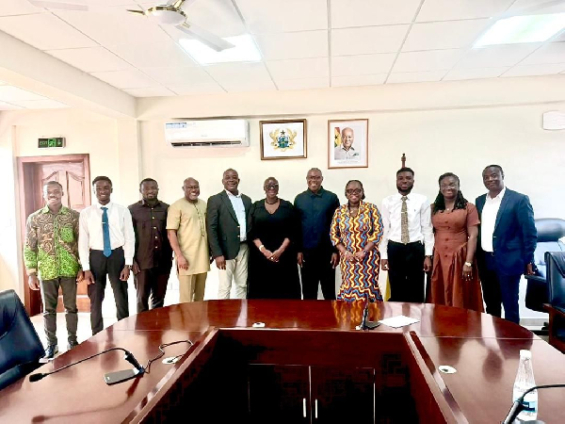
On Thursday, January 8, 2026, a meeting was convened, bringing together the university’s top management, student leaders, and regulators.
The session was chaired by the Deputy Minister for Education, Dr. Clement Abas Apaak, acting under the mandate of the sector minister to secure a legally compliant resolution to a dispute that has left thousands of students in financial limbo.
The meeting follows a decisive intervention by the Ghana Tertiary Education Commission (GTEC).
In a directive issued on January 5, GTEC boss Prof. Abdulai Jinapor ordered the university to immediately roll back all unapproved price increases.
The commission has demanded that final-year students who have already paid the inflated rates be refunded, while continuing students must receive credit on their accounts.
The university has been given until January 12, 2026, to provide documented evidence of compliance.
"Failure would attract serious regulatory sanctions," the commission warned in its correspondence to Vice-Chancellor Nana Aba Appiah Amfo.
The backlash centres on reports of academic fee increases averaging 25 per cent.
The burden has fallen most heavily on first-year students, some of whom were reportedly slapped with hikes as high as 34 percent, while continuing students faced a 27 percent surge.
Defending the ministry's decision to step in, Dr. Apaak noted that the volume of complaints from the public made silence impossible.
“The level of public outcry from students and parents was such that we couldn’t have ignored it,” Dr. Apaak stated.
He emphasised that under the Fees and Charges Act, any adjustment requires Parliamentary approval—a step that was bypassed in this instance.
“Given that we work with laws and there are processes and procedures, the best thing was to instruct GTEC to call the university to stop any increase,” he added.
The University of Ghana management has attempted to distance itself from the academic portion of the hike.
Prof. Gordon Akanzuwine Awandare, the Pro Vice-Chancellor, argued that the disputed figures were largely "third-party fees" negotiated and approved by student representatives to cover rising utility costs.
“What is in the report is about third-party fees which were imposed by the student leadership,” Prof. Awandare maintained.
However, the University of Ghana Students’ Representative Council (UGSRC) is facing its own internal pressure.
SRC President Larbi Ofori Richmond admitted that a ₵200 levy was added to fee bills, but framed it as a strategic investment for a proposed 15,000-capacity hostel aimed at solving the campus's perennial accommodation crisis.
Latest Stories
-
David Selassie Anthony declares bid for NDC Deputy National Organiser
2 hours -
Amin Adam proposes 13 measures to strengthen Ghana’s debt transparency and market confidence
2 hours -
Mahama announces $2bn annual investment to accelerate industrialisation
2 hours -
Amin Adam urges monthly disclosure of Sinking Fund as Ghana prepares for DDEP repayments
2 hours -
Stronger banks will fuel business growth and jobs – ADB MD
2 hours -
Galamsey: ‘Rivers that fed our grandparents now run the colour of chocolate milk’ – Sam Jonah
2 hours -
We have been scammed by NDC, government is only doing PR – Abanga Fuseini
2 hours -
Republic Bank–JoyNews Habitat Fair opens in Ho today
2 hours -
Dr Boako challenges government over new digital tax
2 hours -
BoG pledges stability to attract investment, urges stronger Africa–Asia partnerships
2 hours -
Amin Adam warns treasury bill dependence could expose Ghana to refinancing risks
2 hours -
Ghana better placed to withstand commodity price shocks – IMF
2 hours -
GAPTE intensifies efforts to increase bus availability for Aayalolo contra-flow
2 hours -
Amin Adam warns cedi depreciation could reverse Ghana’s debt relief gains
2 hours -
Fiscal discipline crucial for pension fund investments – Finance Minister
2 hours