

Audio By Carbonatix
The Regional Organised Crime Observatory Director of the Institute Of Security Studies, Oluwole Ojewale has expressed optimism that a diplomatic solution is the key to addressing the ongoing tensions and incidents in Niger.
Echoing concerns about the potential consequences of military intervention, the security analyst stressed the shared cultural affinity across West African nations and stressed the importance of avoiding fratricidal conflicts.
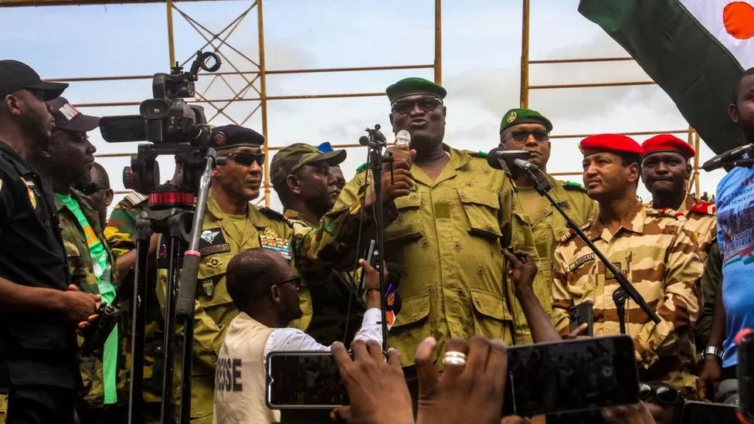
Mr Ojewale's comments come at a crucial juncture when there has been a series of coup d’états in countries across the West African sub-region. Many believe the Economic Community of West African States (ECOWAS) should adopt firmer tactics to restore constitutional rule in these military-ruled nations.
However, in his assessment, military intervention could lead to brother turning against brother, a scenario that contradicts the very essence of ECOWAS and its foundational objectives.
He made his assertions known during a discussion on the JoyNews’ PM Express on Monday.
“In terms of cultural affinity, we are almost one across the West African Region. When it is the Niger-Nigeria border, Togo-Benin border, and Benin-Nigeria border it is the same set of people that you find on both sides of the border so if ECOWAS decides to use military intervention my humble assessment will be that it is brothers going against brothers.
“It is going to be a fratricidal war it is going to be a civil war because it is the same people that you find on both sides of the border and I don’t think this is the strategic objective of the founding of ECOWAS - that one day we’ll raise guns against each other in the region,” he told JoyNews’ Evans Mensah.
The analyst's optimistic stance is rooted in his belief in the efficacy of diplomatic solutions.
He expressed confidence that the ongoing tensions can be effectively addressed through dialogue and negotiation at the diplomatic table.
Mr Ojewale underscored the importance of exploring all avenues for peaceful resolution and working toward preserving stability and unity in the region.
“I remain extremely optimistic that what we are seeing on the part of the Junta is mere military propaganda for some form of rhetoric possibly to get some form of soft landing."
“Because going to war, irrespective of the assessment on paper, you can only predict the beginning no one can tell how it is going to end. I remain optimistic that it will be solved on the diplomatic table,” he stated.
Latest Stories
-
Inter Milan mount stunning comeback to beat Napoli
3 minutes -
Modric plans to play for Croatia past 41st birthday
14 minutes -
Bayern fail to score for first time in 59 games
18 minutes -
Bawumia preparing new cocoa policy package for farmers – Annoh-Dompreh
21 minutes -
Wa-Tumu-Bolga road upgrade will unlock agriculture, trade – Agbodza
24 minutes -
Ghana Maritime Authority readies oil-spill response vessel for deployment
25 minutes -
Ayariga turns to drones, AI to tackle Agbogbloshie waste mountain
34 minutes -
Agbogbloshie waste heap must go – Mahama Ayariga declares
45 minutes -
Government to upgrade all rural telephony sites to 4G – Communications Minister
45 minutes -
Rural calls, data to become cheaper by Q1 2027 – Sam George
51 minutes -
National Chief Imam remains Ghana’s strongest symbol of interfaith harmony – Mahama Ayariga
1 hour -
Nhyiaesohene pledges support to ECG to curb encroachment
1 hour -
Somanya residents demand asphalt overlay to protect road investment
1 hour -
Kumawu MP leads stakeholders meeting on human rights, child labour
1 hour -
Breakfast: To skip or not to skip? An evidence-based perspective on weight management and overall health
2 hours