

Audio By Carbonatix
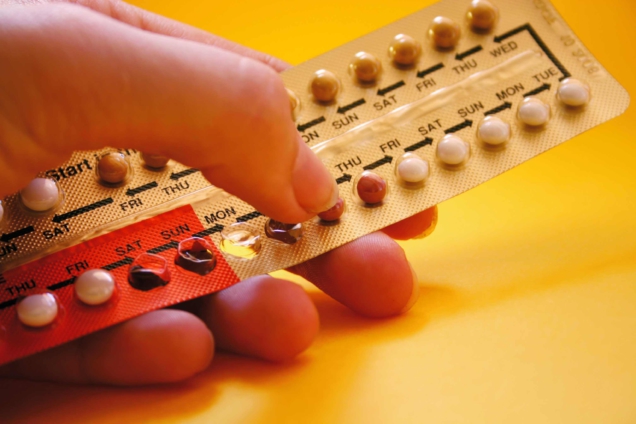
A medical practitioner says women are more likely to suffer from stroke because of the prolonged consumption of oral contraceptives.
According to Dr Collins Abaitey Muzu, these oral medications when used for a long may result in clotting in the vessels which transport blood from the heart to the brain.
"The reason why women are said to have a higher risk of having stroke more than men is because of the use of oral contraceptives and pills."
"They’ve been found to increase the incidence of stroke because these medications increase the chances of clot formation in the blood vessels,” he said.

Speaking on Joy Prime’s Prime Morning, he explained that these clots block the free flow of nutrient-carrying blood to the brain causing the cells within that deprived part of the brain to die and hence stop functioning.
“There’s a type where there’s a clot that is blocking the flow of blood to the brain, there’s a clot that is sitting in the artery that goes to the brain or within the brain.”
“When that happens, because the artery is blocked and blood cannot flow beyond the clot, that part of the brain that is supplied blood by that particular artery will die off and lose its function, the cells within that brain will die because there’s no blood going in.”
“The brain has so many parts, and every part of the brain has a function that it performs, so if an artery that is going to the part that controls maybe my arm is impaired and then there’s no blood going to that part, that part of the brain loses oxygen and dies off and cannot perform its function.”
“That’s when you see that people have stroke and they can’t move their hand or their legs or they can’t talk because the part that controls that function is lost because there’s no blood or oxygen,” he explained.
Dr. Muzu also added that older or post-menopausal women who take hormone replacement therapies for a long time are at a higher risk of getting stroke due to clotting in the blood vessel which prevents blood from going into the brain.
This medication contains female hormones which tends to replace the estrogen that the body stops making during menopause.
Latest Stories
-
Education Minister commends teacher unions for suspending nationwide strike
9 minutes -
‘Farmers Services Centres to be game changer for Ghana’s agriculture’ – Mahama
15 minutes -
WIWIK launches new leadership development pathway for Ghanaian university students
20 minutes -
Public basic schools resume today after strike suspension
27 minutes -
Environment Minister calls for transparency in Ghana’s GMO adoption
34 minutes -
Ghana risks 10% to 100% tariffs on exports to US under Trump’s threats as it moves to join BRICS
49 minutes -
US imposes sanctions on ICC hours after former judge wins Nobel Peace Prize
2 hours -
South Africa withdraws asylum directive after anti-migrant violence
2 hours -
Moroccan king says migration cooperation model with Spain hit limit
2 hours -
Libya’s military seizes narcotics after firefight with smugglers
3 hours -
At least 139 migrants dead, including some children, after boat from Djibouti to Yemen capsizes, UN agency says
3 hours -
“US Embassy introduced TRIBE Culture Fest to NSA, GTA” – Kofi Adams
3 hours -
“NSA did not tell us of any embassy arrangement” – Kofi Adams
3 hours -
Kumasi records third commercial fire in three days
5 hours -
Trump faces growing backlash over plans to import diesel from Russia
5 hours