

Audio By Carbonatix
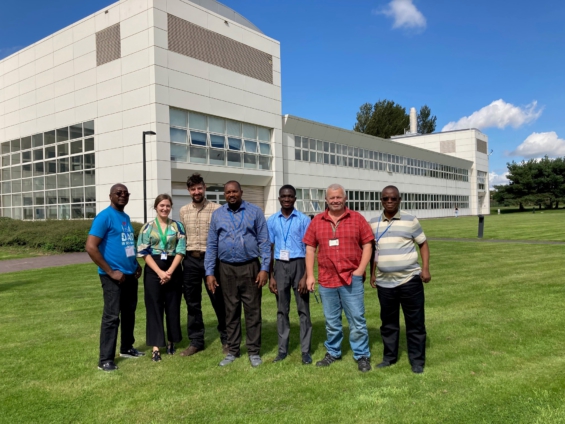
A four member delegation from the University of Ghana (UG) and Kwame Nkrumah University of Science and Technology (KNUST) Schools of Veterinary Medicine are visiting the UK’s National Bee Unit to foster strong partnerships for the development and inclusion of bee health teaching the veterinary undergraduate and postgraduate programmes in Ghana.
The two weeks trip (18th - 31st August 2023) is sponsored by the Animal Health System Strengthening Project (AHSS), a UK overseas development assistance project managed by the UK’s Department for food and rural affairs.
The team include Professor Benjamin Obukowho Emikpe, Dean, School of Veterinary Medicine, KNUST, Dr. Richard Hope Otsyina, Acting Dean of the School of Veterinary Medicine, UG, Dr. Ayodeji Ayotunde Oni, a senior lecturer at the School of Veterinary Medicine, UG, and Dr. Emmanuel Dongbataazie Piiru of the School of Veterinary Medicine, KNUST.

Bees are important to a healthy environment: they are part of the biodiversity on which we all depend for our survival.
They provide high-quality food (such as honey) as well as being great pollinators. When they pick up the pollen of flowers and spread it, they allow plants, including many food crops, to reproduce.
Bee populations have been declining globally over recent decades due to habitat loss, changes in weather patterns, pathogens and the excessive use of agrochemicals such as pesticides which harm bee health.

The National Bee Unit (NBU) in the UK is a recognised centre of excellence in the provision of advice and research in bee health. It has been involved in the management and control of bee pests and diseases, along with training and dissemination of information to beekeepers for over 60 years in England and Wales. The current team of 80 people comprises laboratory diagnostics, research personnel and 60 Bee Inspectors.
The delegation is receiving both theoretical and hands-on training on bee husbandry and the pests and diseases of bees.
They will also meet the scientists at Fera Science Ltd responsible for the laboratory testing of bees and honey and shadow the work of bee health inspectors.

All the knowledge and skills acquired will be applied to produce the bee health teaching module to be deployed at both veterinary schools in the future.
The second phase of this collaboration will see UK bee experts and Ghanaian collaborators visiting various bee keeping communities around Ghana to look at what diseases and pests are present and adapt recommended disease control practices, to make them relevant and acceptable to honey producers and processors in Ghana.
Latest Stories
-
Government has improved sanitation in one-and-a-half years — Salaga South MP
48 minutes -
Nkwanta North Assembly to appear before Parliament over DACF sanitation spending
1 hour -
Mourinho prints out ‘red card’ incidents after Real lose derby
1 hour -
Atletico beat 10-man Real in feisty Madrid derby
2 hours -
Twelve Tribes of Israel Ghana to mark 40 years with anniversary celebration
2 hours -
GPL 2026/27: Hearts held by Bechem as Kotoko, Samartex share spoils
2 hours -
My Story (Kwaku Antwi-Boasiako)
2 hours -
We expect growth rate to re-accelerate in second-half of 2026 – IC Insights
2 hours -
The ungodliness and unrighteousness underlying the National Cathedral mess!
3 hours -
T-bills auction: Government fails to achieve target; yield on 91-day-bill remains unchanged
3 hours -
It’s Ghana’s shame to denigrate Nkrumah when the whole world honours him as African of the Century – Asiedu Nketiah
3 hours -
No other nationalist can compare to Nkrumah – Asiedu Nketiah
3 hours -
Collateral Registry: Foreign banks accounted for GH¢19.9bn of secured credit in quarter 2, 2026
3 hours -
This government should expect scrutiny – Asiedu Nketiah
4 hours -
Two-year-old girl dies in domestic fire at Cantonments
4 hours