

Audio By Carbonatix
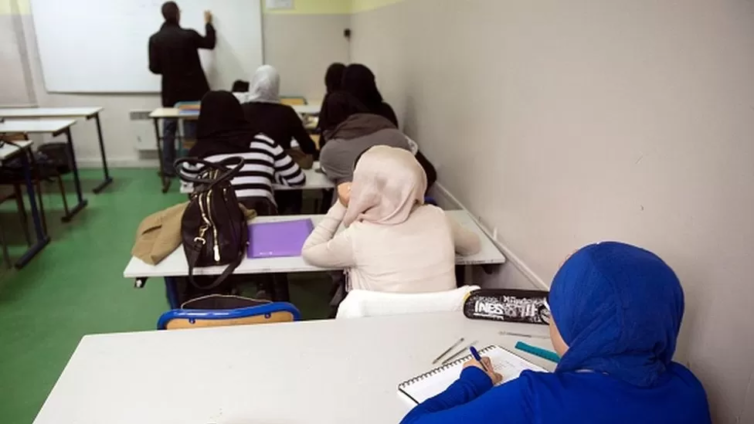
The French education minister has said that nearly 300 pupils arrived at school on Monday wearing the abaya, the long Muslim robe which was banned in schools last week.
Most of the girls agreed to change into other clothes.
According to official figures, 298 girls - mainly aged 15 or more - turned up at school in the banned garment.
Under instructions laid down by the ministry, there followed in each case a period of dialogue with school staff.
Most girls then agreed to dress differently and were able to start classes.
However, 67 girls refused to comply and were sent home.
A further period of dialogue with their families will now ensue. If that fails, they will be excluded.
Set against the 12 million school boys and girls who started term on Monday, the government believes the figures show that its ban has been broadly accepted.
However, a legal challenge by a group representing some Muslims goes before the courts later today.
At the end of August, the education minister announced that pupils would be banned from wearing the loose-fitting full-length robes worn by some Muslim women in France's state-run schools at the start of the new school year on 4 September.
France has a strict ban on religious signs in state schools and government buildings, arguing that they violate secular laws.
Wearing a headscarf has been banned since 2004 in state-run schools.
The move comes after months of debate over the wearing of abayas in French schools.
The garment is being increasingly worn in schools, leading to a political divide over them, with right-wing parties pushing for a ban while those on the left have voiced concerns for the rights of Muslim women and girls.
In 2010, France banned the wearing of full-face veils in public, provoking anger in France's five million-strong Muslim community.
France has enforced a strict ban on religious signs at schools since the 19th Century, including Christian symbols such as large crosses, in an effort to curb any Catholic influence on public education.
Reflecting its changing population, it has updated the law over the years to include the Muslim headscarf and Jewish kippa, but abayas have not been banned outright until now.
Latest Stories
-
Police arrest woman for allegedly biting tenant’s ear during fight over child discipline
2 minutes -
US diesel prices hit a record high, pushing up transportation costs for a long list of goods
3 minutes -
300 entrepreneurs in Bono East battle for MTN-Innohub SME Support as programme enters 4th year
18 minutes -
Lawyer sues AG, GRA boss over passenger baggage exemption rules
19 minutes -
Ashanti Region crowned 2026 MTN Elite U-19 Champions after epic seven-goal final
54 minutes -
Gomoa chiefs give IGP, National Security one week to close New Winneba North Police Station
55 minutes -
Pilgrims Affairs Office approves 42 Hajj agents for 2027 pilgrims
56 minutes -
Building Trust in Digital Entertainment: What users should Look for in an online gambling site
1 hour -
Former Deputy CEO of SIF declares Nandom NPP bid, pledges to rebuild party unity
1 hour -
Jefferson Sackey to launch PURPOSE: A Memoir of Fearless Journalism, Diplomacy and Growth
1 hour -
GCB Bank Head of People & Culture shares workforce planning strategies at Mining HR Conference
1 hour -
Rising cost of political campaigns threatens inclusive participation – CDD-Ghana
1 hour -
Parents laud convenience, affordability at Joy FM Back-to-School Fair
2 hours -
End partisan recruitment into security agencies – Asiamah Amoako
2 hours -
Mahama Ayariga seeks Chief Imam’s prayers, guidance in his new ministerial role
2 hours