

Audio By Carbonatix
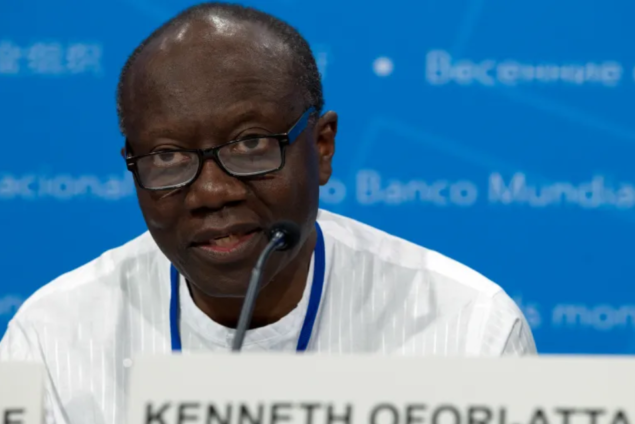
Finance Minister, Ken Ofori-Atta, has jumped to the defence of the Bank of Ghana, saying the Central Bank in the past almost seen year has remain prudent, strong, resilient and functioning efficiently.
According to him, this has been barely noticed until the interruption of unprecedented global events.
In an article titled “Standing strong with the Bank of Ghana”, Mr. Ofori-Atta, said “our Central Bank’s assets have grown almost in tandem with the size of our financial sector and economy. From ¢53b in 2016, the Bank’s assets have grown by nearly one and half to ¢126 billion as of the end of 2022”.
He added “The foundation has never been conspicuous – our revenue has more than doubled since 2016, with total revenue increasing from ¢32 billion in 2016 to ¢96.7 billion (end-December 2022). The size of our economy has also more than doubled from a GDP value of ¢219.6 billion in 2016 to an estimated ¢610.2b by the end of 2022; and more pragmatically the number of active contributors on the SSNIT register has increased from 1.3 million in 2016 to over 1.8 million in 2022.”
Furthermore, the Finance Minister said “We can all attest to the progress made in digitisation, infrastructure, the armed forces and police, public spending on education, agriculture (cocoa and PFJ), health, and school feeding among others”.
“Indeed, spending on the education sector including our universities, second-cycle institutions and basic schools collectively constitute about 20% of tax revenue – and includes compensation, goods and services, and GETFund spending on infrastructure, while the health sector consumes about 8-10% of tax revenue, among others”, he pointed out.
Macroeconomic volatility induced by pandemics, others
Mr. Ofori-Atta continued that the vision for and progress in social mobility and economic freedom is often in budget conflict with short-term macroeconomic volatility, where the activist roles of fiscal and monetary policy, and if blessed with a Keynesian benefactor or fiscal windfall, must be deployed to ensure that these gains are not eroded.
“This is especially the case in instances where the volatility is mainly induced by cataclysmic events such as pandemics and geo-politics – the controls are often outside the remits of small open economies with independent central banks like Ghana”, he added.
“It is within this context that since 2017 and especially between November 2019 and now, both the Ministry of Finance and the Bank of Ghana have shown the strongest collaboration yet to reset the financial architecture and to keep the economy strong”, he mentioned.
Latest Stories
-
Ayew brothers among Ghanaians without clubs after transfer window closes
11 minutes -
GPHA records GH¢2.82bn net profit as revenue rises to GH¢7.62bn
17 minutes -
Today’s front pages: Thursday, September 3, 2026
22 minutes -
Police arrest over 10 students over Okuapeman-Mount Sinai clashes
39 minutes -
WAFU B WCLQ: Ampem Darkoa Ladies thrash Dynamique FC to reach final
2 hours -
Chief Justice should avoid partisan political arena – Prof Kwaku Asare
2 hours -
GMTF Administrator hails Mintah Akandoh’s support as Fund marks first year
2 hours -
GPHA honours 410 staff for outstanding service
2 hours -
BoG slashes September FX support to $500m as GoldBod boosts dollar supply
2 hours -
GNFS rolls out automated fire compliance system
2 hours -
SOE profit at GH¢19.8bn: I call it a miracle, but it’s not operational efficiency – Dr Atuahene
2 hours -
SHS violence: Government must review discipline policy – IFEST
3 hours -
Nana Akomea leads NPP First Vice Chairman race in new poll
3 hours -
Ato Forson begins groundwork for Mahama’s $10bn New Economy agenda
3 hours -
SHS violence: Peter Anti demands intelligence-led security in schools
3 hours