

Audio By Carbonatix
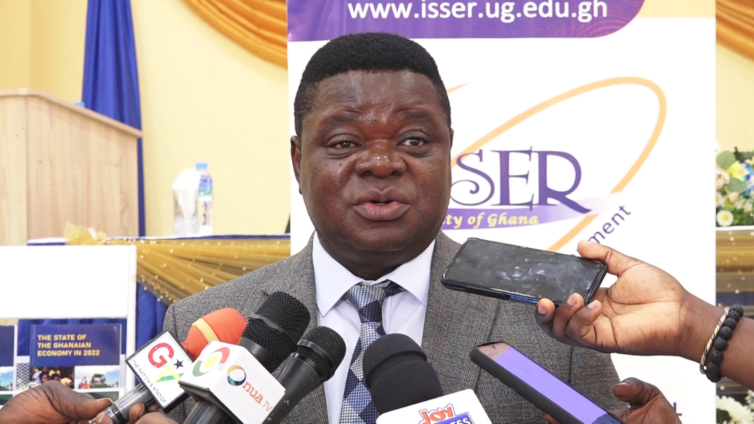
The Institute of Statistical, Social and Economic Research (ISSER) is calling for a freeze on new tax exemptions for foreign companies.
In its proposed fiscal policy measures to the government in the 2024 Budget, ISSER also suggested the review of tax exemptions for the free zones and extractive industries.
Research has revealed that Ghana loses about ¢25 billion annually through tax exemptions. This has compelled many to call for the abolishment of tax exemptions for foreign companies.
Among some indirect tax measures, the research organisation also called for reduction in the Electronic Transfer Levy rate from 1.5% to 1% of transaction value and the removal of the daily threshold.
It also proposed the withdrawal of discount on benchmark import values on selected imported general goods and vehicles.
However, it suggested to the government to re-introduce public road tolls on selected roads, the introduction of Self Clearance system at the ports for imports, and the introduction of Value Added Tax invoicing to cover all VAT taxpayers by 2024.
Regarding direct taxes, ISSER, also called for the introduction of a 35% marginal income tax rate for individuals and revision of the upper limits for vehicle benefits.
It also proposed the conversion of National Fiscal Stabilisation levy (NFSL) to Growth and Sustainability Levy (GSL) to cover all entities. This will avoid the duplication of taxes.
In terms of expenditure, ISSER, wants the freezing of public sector employment; review key government programmes to reflect relevance, promote efficiency and ensure value for money and integrate the public procurement approval processes with GIFMIS to ensure that projects approved are aligned with budget allocation.
Also, it suggested the implementation of action on the government directives on expenditure measures and the review of the efficiency of statutory funds.
Government to spend ¢52.5 billion as interest payments in 2023
In the 2023 Budget, the government targeted a revenue mobilization of ¢141.553 billion, about 98.3% increase.
For non-oil tax revenue, the government was seeking to raise ¢99.639 billion. It is expected to generate ¢23.455 billion from the oil and gas sector.
For expenditure, the government is expected to spend ¢45.52 billion on wages and salaries. This represents 23.8% of total expenditure.
¢52.55 billion will, however, be spent on loans as interest payments, about 27.5% of total expenditure.
For capital expenditure, an estimated ¢27.63 billion, representing 13.9% of total expenditure will be spent this year.
Latest Stories
-
GoldBod gets BoG authorisation to sell forex, Sammy Gyamfi tells PAC
3 seconds -
Ghana Water revenue mobilisation below 50% of potential – MD
7 minutes -
Ghana’s democracy must accommodate dissent and constructive criticism – Haruna Iddrisu
7 minutes -
Fact check: Trump posts fake quote of Denzel Washington supposedly praising him
8 minutes -
UPSA students lament high fees at private hostels, call for government intervention
19 minutes -
We will upgrade Ghana’s credit ratings if government maintains fiscal discipline, policy effectiveness – Moody’s
20 minutes -
Gender Ministry supports four siblings allegedly sexually abused by their father
24 minutes -
UMB MD wins ‘CEO of the Year’, banking category at 2026 Ghana Credit Excellence Awards
25 minutes -
Don’t throw away empty egg cartons — 6 smart ways to reuse them
28 minutes -
GoldBod poised to surpass 2025 forex performance – Sammy Gyamfi
29 minutes -
Old students of Peki SHS break ground to give 70-year-old school infrastructure a facelift
43 minutes -
Ablakwa facing ‘personal vendetta’ over refusal to grant Nana B service passport – Majority
44 minutes -
Every year, the lawyers come out, and so does the nonsense! – Ace Ankomah writes
57 minutes -
Digital transformation without an ownership culture can digitise poor service
60 minutes -
Fishing communities demand revocation of offshore gold exploration licences over livelihood concerns
1 hour