

Audio By Carbonatix
Private business associations operating in Ghana’s forestry sector have formed a united front to address common challenges while pursuing a sustainable operational model.
The Forest Industries Association of Ghana (FIAG) is formed as a not-for-profit conglomerate of 11 trade and business associations operating in the private sector of forestry in Ghana.
President of the Association, Richard Nsenkyire, says priority areas include “ensuring sustainability by promoting the adoption of circular economy and green economy principles in our business practices. For instance, some processing companies are retooling to be able to use more of their residues. Others are also supplying their residues to others for further processing”.
The goal of FIAG is to enhance corporate performance, have a common voice on concerns and forge a strong entity to continue contributing to the socio-economic development of Ghana.
“The individual firms collectively employ over 300,000 in the business areas of plantation development, logging, milling, manufacturing, haulage and equipment services, sales and marketing; and capacity building,” said Richard.
Indirectly, the businesses lubricate many links of the forest products supply-chain by consuming products from other members to keep the conveyor belt moving.
“The sector is also a major consumer of electricity, fuel, plant and machine accessories, with other players in the economy depending on them for their businesses to survive,” observed Richard Nsenkyire.
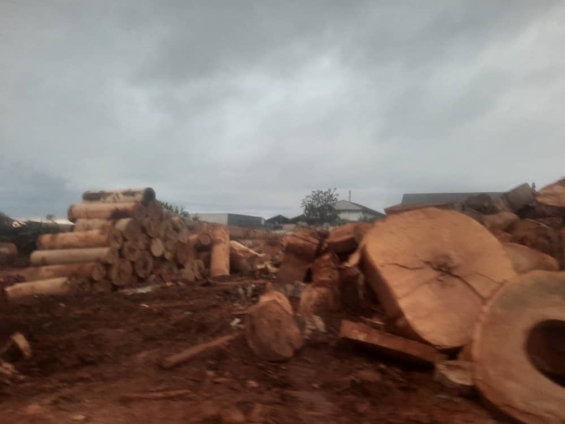
However, the industry is faced with the challenge of diminishing raw material supply from forest reserves which have gone down from 1million m3 to 500,000 m3.
Other challenges include the dwindling log production in off-reserve areas to unsustainable levels due to inadequate incentives for farmers to retain timber trees on their farms as well as the degradation of the resource base due to destruction by illegal mining, illegal farmers and illegal mining.
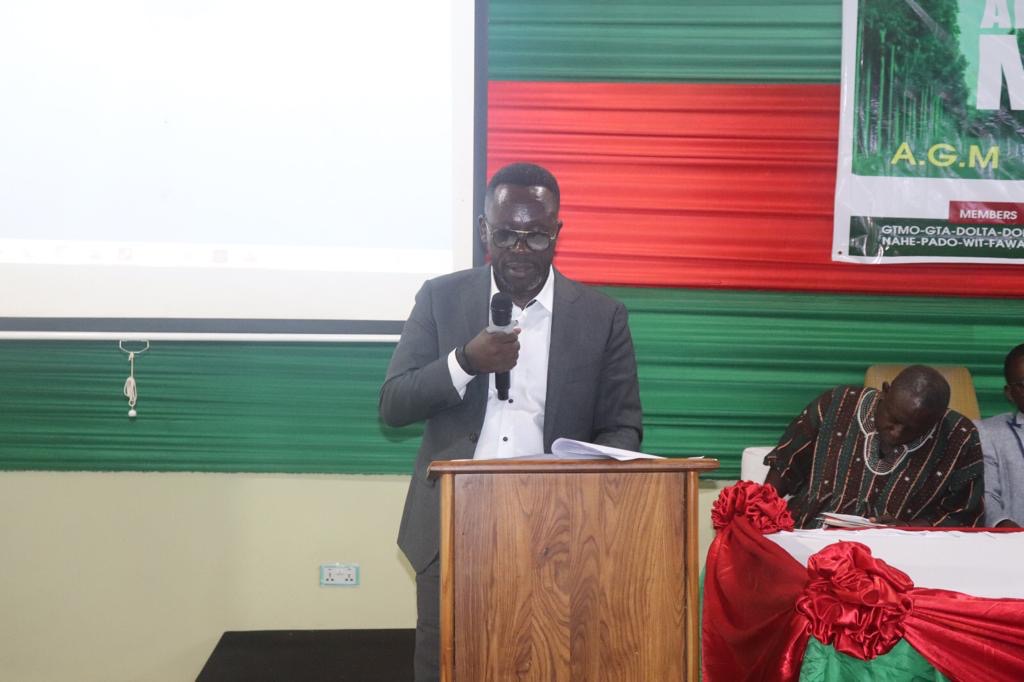
Chief Executive Officer of the FIAG, Dr. Kwame Asamoah Adam, says opportunities in the sector will be explored through the Association’s green economic models.
“The transition to a green economy business model is necessary for companies to achieve sustainable development targets. This virtuous circle encourages resource and energy efficiency and promotes sustainable production, enabling the use of environmentally friendly technologies, processes, and products,” he said.
Latest Stories
-
Asantehene plants trees to commence Jimi Watercourse Rehabilitation destroyed by galamsey
17 minutes -
15 arrested, 6 trucks impounded over sandwinning activities on Kumasi-Accra Expressway
17 minutes -
OFFICIAL: Vinicius will miss El Clásico, suspended four games
21 minutes -
Prayer vigil held after four arson attack murders
28 minutes -
GRA fully recovers $154k legacy debt owed by foreign entities between 2022 and 2024
29 minutes -
Kwesi Pratt Jr warns bus preachers are adding to passengers’ stress with accident prophecies
30 minutes -
MTN Ghana to spend $1.1bn in 3 years, build 500 new sites as MoMo hits 44% Growth
32 minutes -
I have no regrets joining Assemblies of God – Mahama
33 minutes -
Starlink restrictions in Ukraine war linked to political situation, Zelensky aide says
35 minutes -
Furniture boost for Techiman North schools as MP donates to 20 institutions
36 minutes -
Assemblies of God to loan 10,000-seater dome for Ghana@70 celebrations
36 minutes -
Government to audit 2,016 community network sites – Communications Minister
37 minutes -
Heritage Series notes: BoG promises more inclusive cedi with improved sizes, tactile features
54 minutes -
‘We want answers’ – Family seeks probe into 14-year-old’s death 12 days after starting SHS
1 hour -
No preacher has the right to impose beliefs on bus passengers – Kwesi Pratt Jr backs preaching ban
1 hour