

Audio By Carbonatix
The Monetary Policy Committee of the Bank of Ghana will from today, January 23, 2024, begin its 116th meeting to review developments in the Ghanaian economy.
The meeting is coming at a time when there is pressure on the Committee to cut the policy rate by some significant margin due to the consistent decline in inflation.
The policy rate was kept unchanged at 30.0% in November 2023, but inflation eased to 23.2% in December 2023.
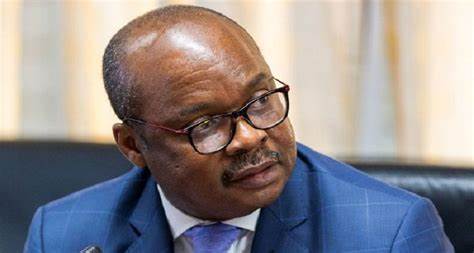
Governor of the Bank of Ghana, Dr. Ernest Addison, however, said though his outfit is committed to a tight Monetary Policy stance, the Committee will cut the policy rate when necessary.
The MPC is expected to prioritise the recent International Monetary Fund Board approval of the first review of Ghana’s programme and the $600 million bailout package from the Fund and its impact on the economy.
Already, Fitch Solutions, has stated that it expects the policy rate to go down by 8.0 percentage points in 2024.
“With inflation moderating substantially through 2024, we anticipate that the BoG will embark upon a sizeable monetary easing cycle, cutting the policy rate by a cumulative 800bps to 22.00% by year-end.”
Fitch Solutions added it usually takes about 12 months for interest rate adjustments to affect the real economy due to the lag in monetary transmission mechanisms.
As such, it believes that the Bank of Ghana’s dovish monetary policy stance is unlikely to result in a sharp increase in real loan growth – which has remained in contractionary territory over January to August 2023.
MPC to assess business environment
The MPC will assess the business environment, particularly the business and consumer risk factors.
In the third quarter of 2023, the Bank of Ghana said its high-frequency real sector indicators pointed to continued pick-up in economic activity, although at a moderate pace. The updated Composite Index of Economic Activity (CIEA) contracted at a lower rate of 0.4 percent in September 2023, compared with a sharper contraction of 1.2 percent in the same period of last year.
The main indicators that contributed to the relative improvement in the CIEA were industrial consumption of electricity, private sector contributions to Social Security, and tourist arrivals. The momentum in credit to the private sector, cement sales, and port activity, however, slowed down over the period
Latest Stories
-
Trump administration accuses banned media outlets of ‘falsehoods’ ahead of court hearing
15 minutes -
US and Iran hold first talks since June after Trump’s ‘annihilation’ threat at UN
16 minutes -
More than 170,000 respiratory cases recorded in haze-choked Indonesia
21 minutes -
UK to review Chagos Islands deal over lack of US support, Streeting tells BBC
26 minutes -
BoG weighs on rising inflation risks as inflation climbs to 5%
28 minutes -
AFCON 2027Q: Kurt Okraku backs ‘good enough’ Black Stars to fight for Ghana
37 minutes -
Debt financing, expenditure are key risks to liquidity, exchange rate – BoG
40 minutes -
BoG warns of pressure on reserves as GoldBod pauses exports
46 minutes -
No player will intentionally decline national team call-up – Kurt Okraku
54 minutes -
AFCON 2027Q: ‘No player deliberately turned down Ghana’ – Kurt defends injury withdrawals
1 hour -
The Luckiest launches 4th edition of annual promotion with nationwide activations
2 hours -
Ecobank calls for wider access and stronger collaboration on agricultural finance
2 hours -
Agribusinesses need more than loans to reach their full potential – Ecobank
2 hours -
Green finance must deliver measurable benefits to Ghanaian farmers – Ecobank
2 hours -
Today’s front pages: Wednesday, September 23, 2026
3 hours