

Audio By Carbonatix
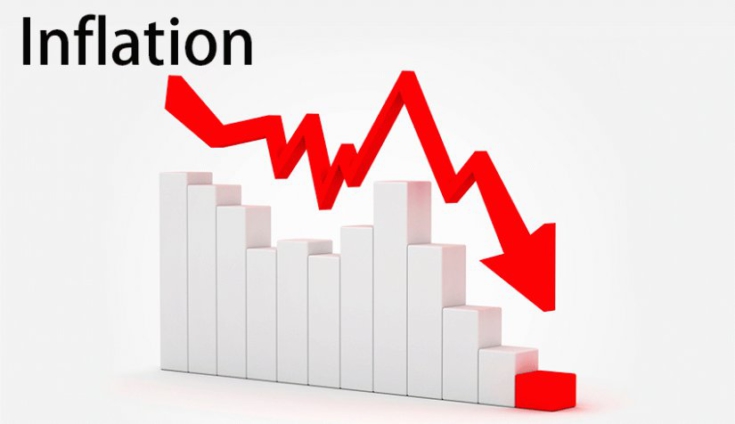
Inflation for January 2026 stands at 3.8%, yet many people feel this figure is far removed from everyday reality.
Let me offer an economist’s perspective.
I have consistently argued that the inflation Ghana has experienced is largely imported inflation—what economists describe as cost-push (or supply-side) inflation. Put simply, inflation occurs when more money chases fewer goods. However, Ghana’s recent inflation episode was not driven by excess money in the system. Rather, it stemmed from high production costs, largely because we are—and remain—an import-dependent economy.
One would agree that liquidity in the economy has been tight, so it is difficult to attribute inflation to demand pressures. In other words, this was not a case of too much money chasing too few goods, but a supply shock transmitted through higher import costs, exchange rate pressures, and rising input prices.
It is also not the first-time concerns have been raised about inflation figures not reflecting market realities. In fact, in 2019, two important changes were made to improve the accuracy of inflation measurement in Ghana. First, the CPI basket was expanded from 267 to 307 items to better capture what households actually consume. Second, the number of markets surveyed was increased. These enhancements were intended to ensure that inflation figures are more representative of real market conditions. This suggests that significant methodological improvements have already been made.
From a theoretical standpoint, a priori economic theory posits that inflation, interest rates, and exchange rates move in the same direction. A priori means reasoning based on economic theory and logic, without reference to data.
According to this framework, higher inflation leads to higher interest rates as the central bank tightens policy to curb price pressures (the Fisher effect). At the same time, higher inflation makes exports more expensive and imports relatively cheaper, increasing demand for foreign exchange and causing the domestic currency to depreciate.
The key question, then, is this: does this theoretical relationship align with what we are currently experiencing in Ghana?
Let’s discuss.
Latest Stories
-
New Mexico wants Meta to pay up to $40 billion in penalties after data privacy trial
57 minutes -
Oil rises slightly as market weighs mixed supply signals
1 hour -
Jordan ‘Last Dance’ jersey sells for £9m
1 hour -
Nigeria charges man with running fictitious government agency
1 hour -
COMAC renews call for full deregulation of fuel prices
2 hours -
Putin warns West that Russia is ready to use every weapon to protect Kaliningrad
2 hours -
Fuel sector overcrowded as 245 OMCs compete for market share – COMAC CEO
4 hours -
Mobile Money Fintech LTD, UMB train hairdressers and beauticians
4 hours -
COMAC boss blasts gov’t interference in fuel pricing, demands full deregulation
4 hours -
OpenAI fires workers for mishandling ‘sensitive information’
4 hours -
What’s gone wrong at Nike? How the world’s sportswear giant lost its mojo
4 hours -
Carney pitches oil pipeline as a response to US-Canada trade war
5 hours -
Badenoch welcomes expanded grooming gangs inquiry
5 hours -
GACL MD sues Samuel Buabeng over alleged Facebook defamation
5 hours -
Asylum votes show people want help, says Kemi Badenoch
5 hours