

Audio By Carbonatix
The Food and Drugs Authority (FDA) is making a case for health technology assessment in the efficient use of resources for improved healthcare delivery in developing countries.
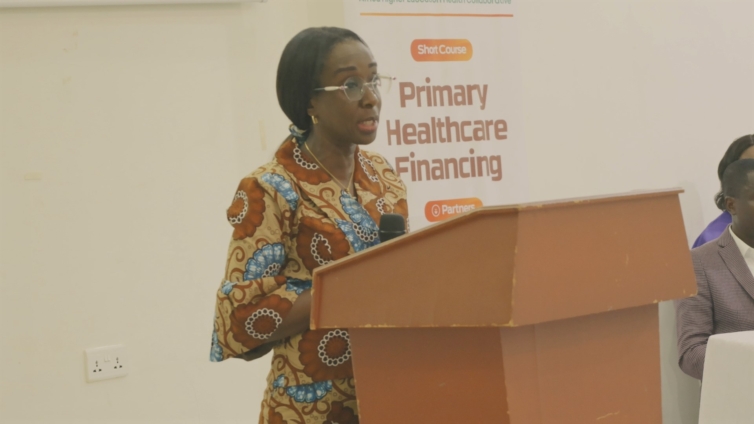
The CEO of the Authority, Dr Mimi Darko believes Ghana’s healthcare surging reliance on technologies makes it imperative.
“In our pursuit of meeting the demands of evolving trends, particularly in technology and assistive devices, the significance of health technology assessment cannot be overstated.
"Especially in developing countries where resources are often scarce, efficient allocation is paramount.
“Health technology assessment serves as a compass in efficient utilisation of our resources to ensure we have optimal healthcare delivery.
"Especially in Ghana, there is the need for health technology assessment and it has become more pronounced across all facets of the health sector even in the remotest areas,” she noted.
Dr Darko also touched on the role of health regulation in fulfilling the SDGs.
“I am confident the course content will shed light on the vital role of regulatory issues in achieving the Sustainable development Goals,” she charged.
She was speaking at the opening ceremony of the Health Technology Assessment (HTA) and Healthcare Industry and Regulatory Affairs (HIRA) courses by the Africa Higher Education Health Collaborative at the Kwame Nkrumah University of Science and Technology.
The Health Technology Assessment (HTA) and Healthcare Industry and Regulatory Affairs (HIRA) courses are spearheaded by the Health Employment Pillar of the Collaborative led by Dr. Kofi Akohene Mensah.
Health Technology Assessment (HTA) allows a critical assessment of health technologies as a basis for making evidence-based decisions in the health sector.
The course has been accredited by various health professional bodies for Continuous Professional Development (CPD) points.
32 and 30 health personnel were allowed to take part in the second cohort of the Health Technology Assessment (HTA) and Healthcare Industry and Regulatory Affairs (HIRA) courses respectively.
The Principal Investigator of the Collaborative, Prof. Ellis Owusu-Dabo entreated participants to take advantage of the opportunity to impact their community.
The partners in the workshop include: KNUST School of Public Health, The DAAD-PAGEL (German Academic Exchange Service Partnership for the Health Sector in Developing Countries) Accelerating Capacity-Building in Health Systems Research and Management in Africa Project, and the German-West African Centre for Global Health and Pandemic Prevention (G-WAC)
The rest are the Department of Health Care Management at the Technische Universitat Berlin (TUB), Germany, the Norwegian Institute of Public Health, Norway, and the HTA Secretariat of the Ministry of Health, Ghana.
Latest Stories
-
KNUST partners with government to manufacture locally-made agricultural machines and smart traffic lights
29 minutes -
Government to add constitutional referendum to 2027 District Assembly elections
1 hour -
Government disburses GH¢23.1 billion to clear road contractors’ arrears – Roads Minister
2 hours -
NPP Ashanti elections: 1,020 delegates to choose 11 regional executives
3 hours -
Galamsey: ‘Challenge is prosecution, not arrest’ — Lands Minister
4 hours -
MTN to build 80 new sites across the five regions of the north as part of a $1.1bn investment
5 hours -
The Polygamist’s creator says women see themselves reflected in her Netflix hit
6 hours -
UEW Hospital suspends OPD services over GAUA strike
6 hours -
Muzic Mensah selected for Boomplay’s inaugural ‘NEXT WAVE’ Programme
7 hours -
Prime Insight to tackle legal vacation controversy and $1million AKSA bribery case
7 hours -
Ghanaian evacuee from South Africa dies on arrival in Accra
7 hours -
Suicide and the fight to stay alive
8 hours -
POS Foundation raises alarm over student cohabitation, sexual harassment on university campuses
8 hours -
Nandom NPP primary heats up as four candidates enter 2028 race
8 hours -
Mangione admits killing healthcare CEO and pleads guilty to federal charges
9 hours