

Audio By Carbonatix
The integration of Indigenous Peoples and local communities into REDD+ projects in Africa is highlighted as a significant means of honouring traditional knowledge and sustainable methods and upholding Indigenous Peoples' rights at the Regional Knowledge Exchange Workshop in Abidjan.
The week-long event assessed achievements and insights from various African countries, including a learning lab that focused on "strengthening social inclusion in REDD+ implementation."
Participants concurred that promoting a human-rights-based approach to development, social justice, and equity is most effectively and efficiently achieved by ensuring the inclusion of Indigenous Peoples, women and local communities.
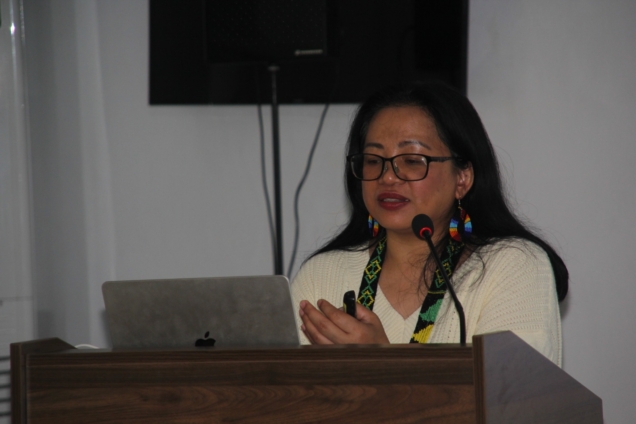
Mary Ann Manja Bayang and her colleague Elizabeth Berth, specialists in Climate Change, Indigenous Peoples, and Local Communities from the United Nations Development Programme (UNDP) climate and forest hub, emphasized the importance of integrating social inclusion and gender approaches into REDD+ planning and implementation.
Their presentations underscored the crucial role of indigenous and local communities in sustaining and enhancing REDD+ initiatives.
Manja emphasised that Indigenous Peoples are the guardians of the world's biodiversity, protecting about 80% of it. She highlighted the need to conserve Africa's significant wealth of forests, which host some of the world's hotspots in terms of biodiversity.
Manja pointed out that without the active and meaningful participation of Indigenous Peoples, and local communities, including children and women who hold valuable local environmental knowledge, REDD+ initiatives may not fully achieve their expected potential.
To successfully incorporate Indigenous Peoples' traditional knowledge and sustainable practices into REDD+ projects, various strategies can be employed.
She suggested that legal and policy reform, community engagement, leadership, capacity building, and empowerment could play pivotal roles in transforming the narrative.
“Involving Indigenous communities from the beginning stages of the project from planning and design to implementation and monitoring, and empowering Indigenous leaders to take key roles in project management and decision-making process would ensure their voices are heard and their knowledge is valued,” she said.
Manja highlighted the Surui Forest Carbon Project in Brazil as an exemplary case, being the first indigenous-led conservation initiative funded by the sale of carbon offsets. She noted that the Painter Indigenous Peoples led the project in partnership with NGOs and private entities.
However, the project faced setbacks when it was suspended in 2018 due to the discovery of gold deposits within the Surui territory, leading to increased deforestation activities.
“It demonstrates how indigenous communities can play a crucial role in forest conservation and climate change.”
The Surui Forest Carbon Project produced 299,895 carbon offsets, equivalent to removing 64,000 cars from the road.
“The Paiter-Surui used the proceeds from the offset sales to support six sustainable development initiatives that generated income and supported traditional practices such as harvesting of medicinal plants, creation of artisanal handicrafts that enabled Indigenous Peoples to live off the land while maintaining the forest.”
The workshop organised by Africa Forest Forum (AFF) in partnership with the United Nations Collaborative Programme on Reducing Emissions from Deforestation and Forest Degradation in Developing Countries (UN-REDD Programme) brought together over 45 participants from more than 12 African countries.
These included experts, REDD+ representatives, and technical staff from Burkina Faso, Cameroon, Ghana, the Republic of Congo, the Democratic Republic of Congo, Ethiopia, Uganda, Togo, Zambia, and other stakeholders involved in REDD+ implementation.
Participants such as Godfred Phiri, REDD+ environmental and social safeguards from Zambia, Tessia Boateng with the Ghana Forest Commission, Teshale Wolderamanuel, REDD+ consultant from Ethiopia, Dr Jewel Andoh with CSIR-Forestry Research Institute of Ghana among other participants lauded emphasis on issues social inclusion and gender concerns as well ensuring full and effective participation of a diverse range of stakeholders and rights-holders in REDD+ implementation.
“The inclusion of Indigenous Peoples, women and local communities in REDD+ activities will ensure the effectiveness, legitimacy, ownership and sustainability of this international voluntary climate change mitigation efforts by developing countries,” Dr Andoh said.
Latest Stories
-
Toxic wildfire haze spreads across South East Asia as ‘super’ El Niño intensifies
4 minutes -
Man jailed 10 years for possessing 21 parcels of cannabis for trafficking
7 minutes -
Two security guards charged with defilement of 14-Year-old BOGISS student granted bail
7 minutes -
Here’s what to eat to support healthier mouth bacteria
8 minutes -
More than 80 feared dead after boat drifts in Atlantic for 27 days
10 minutes -
Gov’t mobilises resources to clear accumulated waste at Jamestown
11 minutes -
CJ comment on state institutions has stripped judiciary of its neutrality – Manhyia South MP
12 minutes -
Africa Prosperity Dialogues 2027 to push for ‘borderless Africa’ as registration opens September 7
15 minutes -
Northern region Minister rallies stakeholders’ support to tackle alleged irregularities in School Feeding Programme
15 minutes -
How Ghana can spread tourism development across all 16 regions
16 minutes -
GIF demands swift prosecution of attacks on Forestry Commission officers
18 minutes -
Constitution review implementation: NCCE, media have critical roles to play—EU
19 minutes -
AMA orders Accra businesses to close for September sanitation exercise
20 minutes -
Chief Justice’s comment on state institutions ‘extremely unfortunate’ – Baffour Awuah
26 minutes -
Justice moves fast for opponents, slow for allies – NPP accuses CJ
27 minutes