

Audio By Carbonatix
Resident Coordinator of the United Nations in Ghana, Charles Abani is urging countries worldwide to leverage their unique comparative advantages in addressing the global climate crisis.
This call comes as a movement of environmental activists and other actors from across Africa, which emerged at the COP27 Climate Conference, continues to push for the largest polluters, particularly wealthy Western nations, to pay reparations for damages and losses to the continent.
They are also advocating for global climate change policies that prioritize the needs of indigenous people.
However, industrialized nations have yet to agree on a framework to create and implement an aid package for climate mitigation in developing nations.
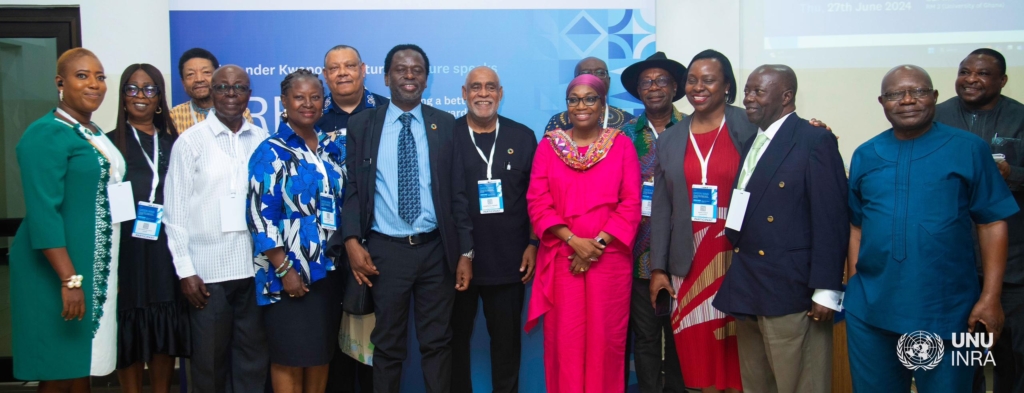
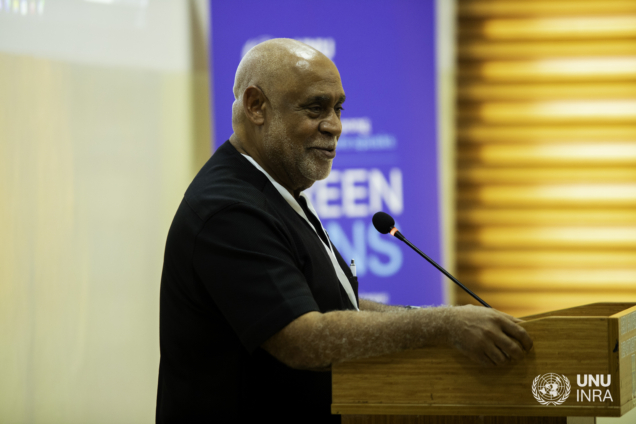
During a lecture at the University of Ghana's Cedi Hall on the theme "Fostering a Better Dialogue Towards Sustainable, Inclusive Natural Resource Governance," Mr Abani emphasized that all countries face the same challenge and must bring their unique comparative advantages to the table.
The event was organised by the United Nations University – Institute for Natural Resources in Africa (UNU-INRA).
He noted that developing countries, while having lower emissions, are rich in natural resources needed for green transitions. In contrast, developed countries have the technology and resources to facilitate the transition but are burdened with the costs associated with high carbon-dependent models.
Both developed and developing countries will have to bear the costs. Historical emitters must retrofit and transition more, while those with higher impacts need to adapt more as well as grow greener”. Mr. Abani noted.
The UN Chief in Ghana premised his argument on the emerging trend where Finance challenges which most countries are challenged with while urging the world to adopt an investment mindset.
According to him “We must adopt win-win approaches and a different mindset to achieve breakthrough transformation. Sustainable interdependence and equitable approaches are essential. Developed countries need to move away from narrow interests, pursue equity-based models, and address responsible production and consumption”.
He further explained that developing countries must take responsibility, ensure policy congruence and leverage indigenous knowledge and technology, including Artificial intelligence.
With the deployment of the right capacities, Charles Abani is hopeful that there’ll be Sustainable and Inclusive Natural Resource Governance.
Latest Stories
-
Allround Baby Pants launched in Ghana to ease diapering for mothers
22 minutes -
Aggrieved Gold Coast Fund Management Company customers to petition Mahama over locked-up funds
37 minutes -
NSMQ 2026: PRESEC, Legon dethrones defending champions Mfantsipim in thrilling battle to book semi-final spot
51 minutes -
Ghana’s cashew industry faces processing gap as Côte d’Ivoire moves to capture more value
1 hour -
“Our greatest wealth is not in our soil but our people” — Upper West Minister
1 hour -
Luex Healthcare launches children’s health education book series with Luey the Lion
1 hour -
NAGRAT urges gov’t to communicate early if September deadline cannot be met
2 hours -
We trust government to meet September deadline on teachers’ promotions – NAGRAT
2 hours -
“We dare not fail” – Gov’t promises to honour teachers’ promotion pay deal
2 hours -
The GH¢19.8 billion mirage: Inside Ghana’s state enterprise turnaround
2 hours -
Luv FM High School Debate: KNUST SHS and Osei Adutwum SHS set up thrilling final after dramatic semi-finals
2 hours -
KNUST AI Coordinator urges structured adoption of AI in teacher education
3 hours -
Nepal rescuers blast hillside in search of hydropower workers as families wait anxiously
3 hours -
Teachers who pass promotional exam to get January 2026 start date after gov’t resolves promotion dispute – Dr Apaak assures
3 hours -
NSMQ 2026: St. John’s School rally from slow start to book semi-final spot
3 hours