

Audio By Carbonatix
The Massachusetts Institute of Technology's incoming freshman class this year dropped to just 16% Black, Hispanic, Native American or Pacific Islander students compared to 31% in previous years after the U.S. Supreme Court banned colleges from using race as a factor in admissions in 2023, the elite engineering school said.
The proportion of Asian American students in the incoming class rose from 41% to 47%, while white students made up about the same share of the class as in recent years.
MIT administrators said the statistics are the result of the Supreme Court's decision last year to ban affirmative action, a practice that many selective U.S. colleges and universities used for decades to boost enrollment of underrepresented minority groups.
Harvard and the University of North Carolina, the defendants in the Supreme Court case, argued that they wanted to promote diversity to offer educational opportunities broadly and bring a range of perspectives to their campuses.
The conservative-leaning Court ruled that their race-conscious admissions practices violated the U.S. Constitution's promise of equal protection under the law.
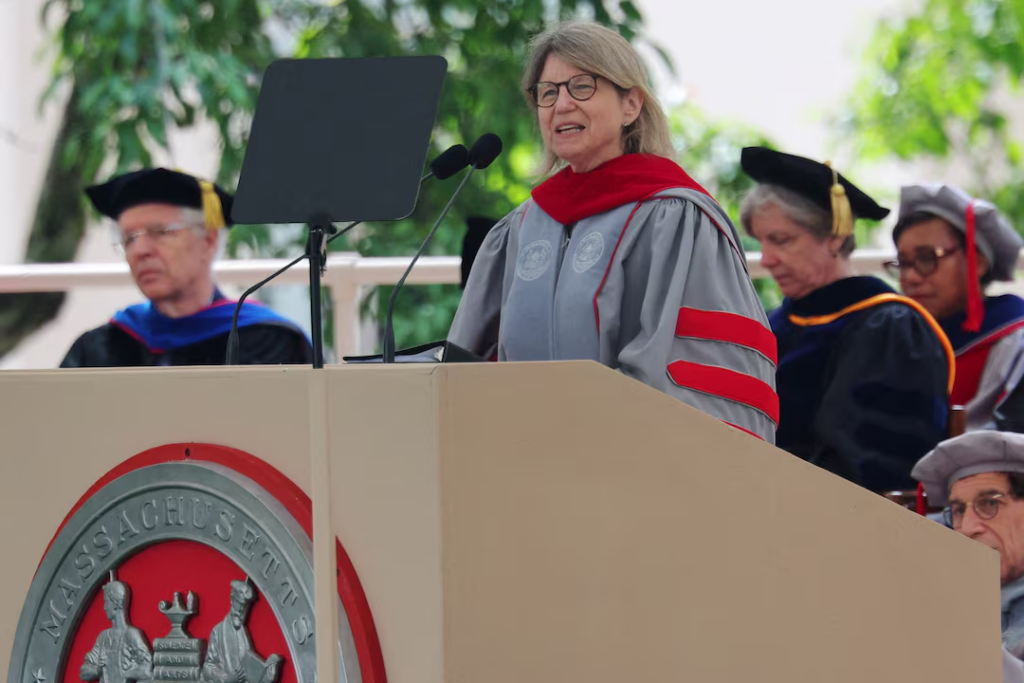
"The class is, as always, outstanding across multiple dimensions," MIT President Sally Kornbluth said in a statement about the Class of 2028.
"But what it does not bring, as a consequence of last year’s Supreme Court decision, is the same degree of broad racial and ethnic diversity that the MIT community has worked together to achieve over the past several decades."
This year's freshman class at MIT is 5% Black, 1% American Indian/Alaskan Native, 11% Hispanic and 0% Native Hawaiian/Pacific Islander. It is 47% Asian American and 37% white. (Some students identified as more than one racial group).
By comparison, the past four years of incoming freshmen were a combined 13% Black, 2% American Indian/Alaskan Native, 15% Hispanic and 1% Native Hawaiian/Pacific Islander. The previous four classes were 41% Asian American and 38% white.
U.S. college administrators revamped their recruitment and admissions strategies to comply with the court ruling and try to keep historically marginalised groups in their applicant and admit pool.
Kornbluth said MIT's efforts had apparently not been effective enough, and going forward the school would better advertise its generous financial aid and invest in expanding access to science and math education for young students across the country to mitigate their enrollment gaps.
Latest Stories
-
19 in 20 Nigerian health facilities fall short of basic medical waste standard
6 seconds -
Blame OSP for delaying SML case – Corporate Counsel
4 minutes -
GFD condemns BOGISS over disciplinary action against 14-year-old allegedly abused by watchmen
24 minutes -
Exhibitors showcase housing solutions at JoyNews Republic Bank Habitat Fair at Achimota Mall
25 minutes -
Dr. Bawumia reiterates call for inclusion and unity at meeting with new Savannah and Western regional NPP executives
31 minutes -
I’ll consider review — Oppong Nkrumah hints at next move after Supreme Court dismisses injunction
54 minutes -
Bodies of two hikers missing for decades found after Swiss glacier melts
1 hour -
NSMQ 2026: North East Region denied one-eighth stage as Kumasi High kicks out Nalerigu
1 hour -
Useless Column: ‘Weytin do Akosua?’
1 hour -
Context Matters: Understanding the Tony Elumelu First-Name Debate – Afanyi Dadzie writes
1 hour -
Microwaving is safe, but minimise aluminium foil use – Food Scientist advices
1 hour -
Supreme Court clears way for legal vacation criminal trials, dismisses Oppong Nkrumah’s injunction bid
2 hours -
Restaurant portions, surplus food worsening Ghana’s food waste problem — Food Scientist
2 hours -
NPP extends 2026 National Officers Elections filing deadline to August 29
2 hours -
NDC has not shown it can manage power sector effectively — Fiifi Boafo
2 hours