

Audio By Carbonatix
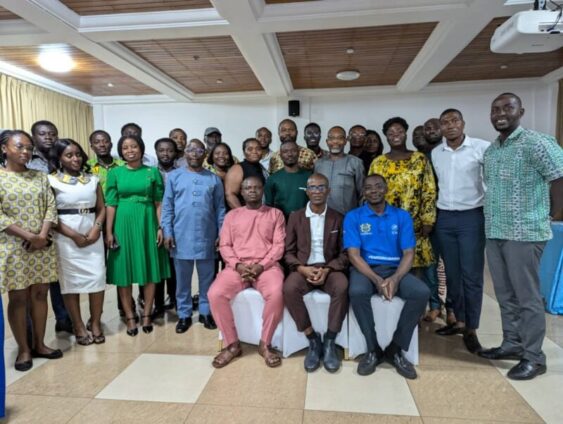
A specialized training workshop focusing on labour rights, titled the Fundamental Principles and Rights at Work (FPRW), has officially begun in Takoradi, bringing together a group of selected journalists from across the country.
The workshop, organized by the International Labour Organization (ILO), aims to enhance the capacity of journalists to report effectively on issues related to decent work and the elimination of forced labour, especially in vulnerable sectors such as fishing and agriculture.
Addressing the participants, Emmanuel Kwame Mensah, the National Project Coordinator for the 8.7 Accelerator Lab Project, highlighted the crucial role journalists play in shaping public discourse and influencing policy.
According to Mensah, media professionals are uniquely positioned to be advocates for labour rights, and through their reporting, they can spotlight labour exploitation, amplify the voices of vulnerable workers, and foster societal change.
“Journalists are not just storytellers but are agents of change. It is essential that they have the tools and knowledge to inform the public and hold institutions accountable for labour violations. The promotion of decent work and the eradication of forced labour will be critical to national development and achieving Sustainable Development Goal 8,” Mensah noted.
The Workshop’s Focus and Impact
The training delves into the core principles of labour rights, covering topics such as the right to collective bargaining, freedom from forced labour, child labour, and discrimination in the workplace. Special attention is given to the plight of vulnerable workers in sectors like fishing, where over 128,000 Ghanaians are employed, often under exploitative conditions. Issues such as forced labour, wage withholding, and debt bondage remain prevalent, and the workshop aims to equip journalists with the knowledge to report on these abuses with accuracy and impact.
Ghana’s recent ratification of the ILO’s Work in Fishing Convention (C188) has created an urgent need for heightened public awareness of labour rights in this sector. The convention provides a framework for safeguarding the rights of fishers, ensuring they have access to fair recruitment practices, safe working conditions, and social security protections. Journalists attending the workshop are expected to play a key role in raising awareness and fostering dialogue about these new protections and their implementation.
Journalists Seek In-Depth Knowledge for More Effective Reporting
The participating journalists have expressed high expectations for the workshop. Many hope that the training will deepen their understanding of the complexities surrounding labour rights, allowing them to become more effective in their reporting.
One participant noted, “As journalists, we are often the bridge between policy and the public. We need to be fully equipped with the right information so we can write compelling stories that don’t just inform but also inspire action. I look forward to gaining a comprehensive understanding of labor issues, so I can better highlight the challenges and successes in ensuring decent work for all.”
Another added, “Forced labour and child labour are persistent issues in Ghana, particularly in informal sectors. This workshop is an opportunity for us to gain the skills and insights needed to tell these stories in ways that not only capture attention but also drive the necessary change.”
By the end of the workshop, participants will have acquired practical tools and techniques to conduct investigations and produce in-depth stories on labour exploitation, ultimately contributing to the national discourse on labour rights and the fight against forced labour.
A Step Toward National Development
This training is part of a broader initiative by the ILO and its partners to ensure that labour standards are upheld across all sectors. By empowering journalists to report effectively on labour issues, the workshop aligns with Ghana’s national development goals, particularly in promoting decent work, reducing inequality, and fostering inclusive economic growth.
The ILO has been a strong advocate for labour rights globally, and this workshop is a key part of its strategy to partner with the media to advance these principles. As journalists gain the knowledge and skills to tell the stories of those who often go unheard, it is hoped that their work will inspire greater accountability and lead to meaningful reforms in the labour market.
Through their enhanced reporting, journalists can help to bring about a future where every worker in Ghana enjoys fair treatment, decent wages, and safe working conditions. The ripple effect of this will contribute significantly to the nation’s progress, ensuring that no worker is left behind in the journey toward sustainable development.
Latest Stories
-
Kejetia Phase III pricing talks loom as government moves to restart stalled works
8 minutes -
Nchiraa Yam festival: Two killed, 14 injured as police restore calm
15 minutes -
I draw inspiration for my songs from Reggae music – Lyrical Joe
16 minutes -
AI must not replace human judgment in public spending – BoG Governor
19 minutes -
Ghana should withdraw from 2027 AFCON – Kojo Addae Mensah
29 minutes -
Team Ghana departs Accra for Angola ahead of Karting Africa Trophy
35 minutes -
AIT President Prof Clement Dzidonu urges lifelong learning as AI reshapes work and education
38 minutes -
FWSC to meet striking teacher unions on Tuesday
39 minutes -
NPP won’t force candidates to step down – Miracles Aboagye
53 minutes -
Black Stars: Building in the sinking sands
54 minutes -
Low inflation on paper, high cost of living: How Presidents Mahama and Trump are facing stark economic reality
1 hour -
NPP will negotiate with popular non-politicians to secure winnable candidates – Miracles Aboagye
1 hour -
Only 5% of Ghanaians can afford housing without support – Gov’t
1 hour -
Nigeria launches rescue after military plane crashes with 32 aboard
1 hour -
GES digitalisation already exists; restore discontinued platforms – Adutwum spokesperson
1 hour