

Audio By Carbonatix
The Ghana Health Service (GHS) has outlined a series of critical public health measures to prevent the spread of mpox following the confirmation of the first case in the country.
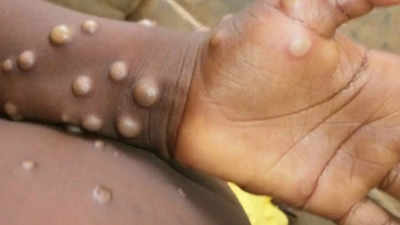
On October 1, 2024, the National Public Health and Reference Laboratory (NPHRL) confirmed a case of Mpox after testing samples from a young male child from the Western North Region who presented with symptoms including rash, fever, and general body pain.
The patient has since been discharged and is in stable condition, while 25 contacts are being monitored.
This was contained in a press statement issued by GHS on Thursday, October 3.
In response to the case, the GHS has intensified its efforts to prevent further spread by issuing alerts to all regions and teaching hospitals and enhancing surveillance.
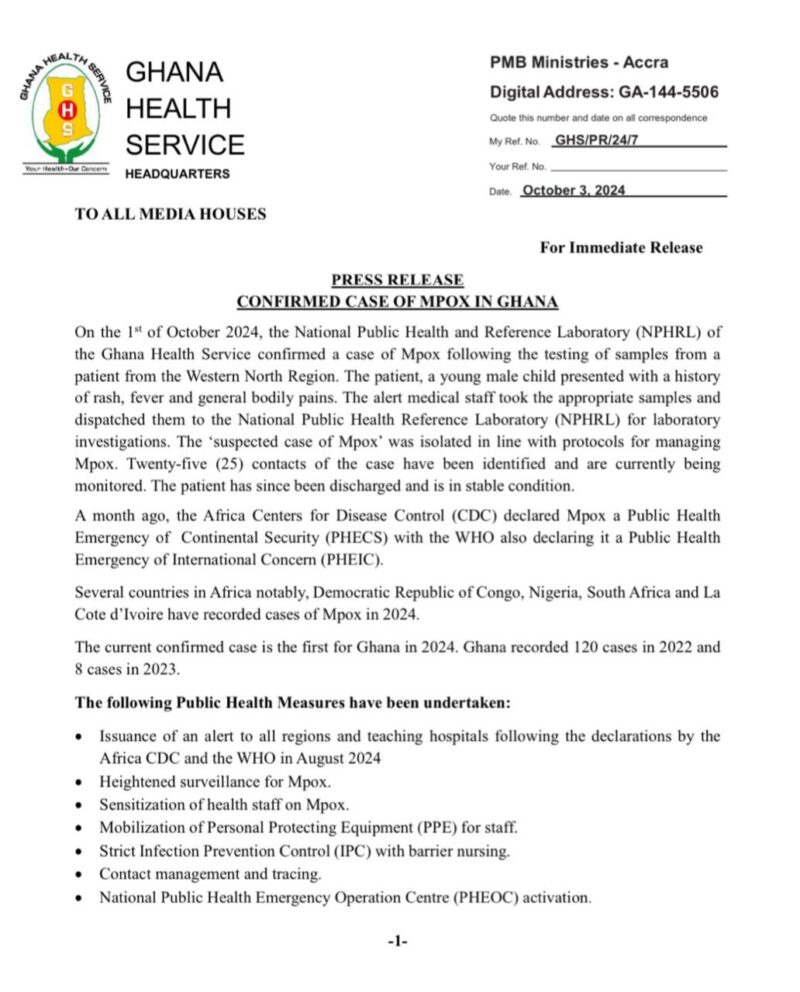
It said health workers across the country are being sensitised on mpox, with a focus on early detection, case management, and infection prevention.
GHS noted that Personal Protective Equipment (PPE) has been mobilised, and strict infection control protocols, including barrier nursing, are being enforced.
The GHS said it has also activated the National Public Health Emergency Operation Centre (PHEOC) to coordinate the response and ensure that all necessary public health actions are undertaken.
This includes the activation of Public Health Emergency Management Committees at the national, regional, and district levels, as well as further contact tracing, detailed outbreak investigations, and enhanced surveillance, particularly at points of entry.
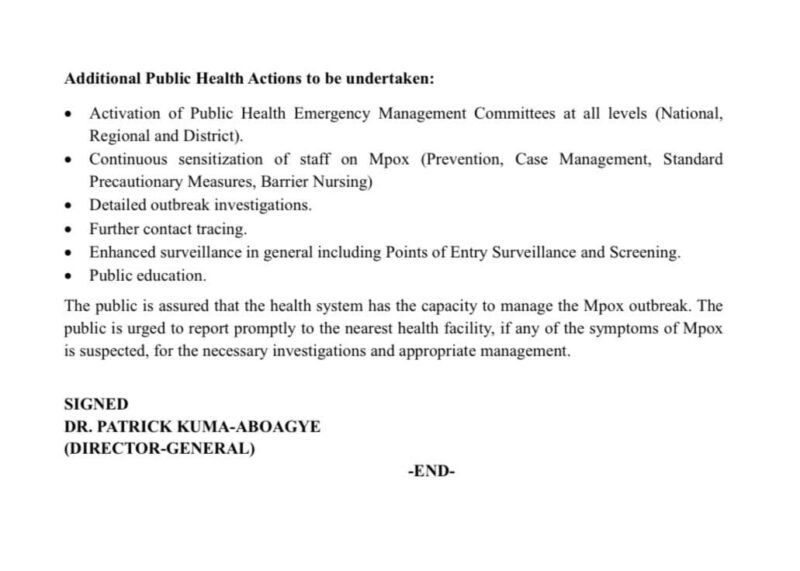
The statement further emphasised public education as a key measure to stop the spread of Mpox.
"The public is urged to report promptly to the nearest health facility if any of the symptoms of Mpox is suspected for the necessary investigations and appropriate management," GHS said.
Additionally, GHS said it will continue to monitor the situation closely, particularly given the recent declaration of mpox as a public health emergency.
The health authorities assure the public that the country’s health system is equipped to manage the outbreak, and the public’s cooperation is crucial in preventing further cases.
Latest Stories
-
GNFS contains fire outbreak at Teshie Lekma Road near Lekma Hospital
44 minutes -
Samia Nkrumah rejects the narrative that Ghanaians were happy after Nkrumah’s overthrow
2 hours -
A Mother’s pain: Tribute by Ivan Baidoo’s mother
2 hours -
‘Forgive us for staying away’ — Samia Nkrumah leads family back to Nkroful, pledges to preserve Nkrumah’s legacy
2 hours -
Ernest Nuamah scores twice as Lyon beat Rennes
2 hours -
‘My dear Ivan’ – A father’s tribute to a son tragically killed
3 hours -
GNPC Explorco advances Voltaian Basin drilling preparations with 13.5km access road
3 hours -
Cabinet approves facility manager for Borteyman Sports Complex – Kofi Adams
3 hours -
Sanitation is improving; critics may be ‘living in another world’ – Salaga South MP replies Bekwai MP
4 hours -
Government must do more to tackle sanitation crisis – Bekwai MP
4 hours -
World Cleanup Day: GFF begins sanitation education in local communities
4 hours -
EU Ambassador, IGP discuss stronger cooperation on policing and security
4 hours -
Africa Nations Volleyball Championship: Ghana set up quarterfinal clash with Cameroon after beating Chad
4 hours -
Meet Dr Benjamin Appiah Osei — Ghana’s three-time tourism awards winner
5 hours -
UEFA & CONCACAF demand Fifa pays $10m to all 211 members
5 hours