

Audio By Carbonatix
The Principal Investigator at the Merian Institute of Advanced Studies in Africa (MIASA), Dr. Chika Mba, has sparked conversation by highlighting a distinction between academic freedom and what he calls "academic peace" in Ghana.
According to Dr. Mba, while scholars and academics in the country operate in an environment that allows for critique and intellectual discourse, they are limited in their ability to challenge government policies openly and freely.
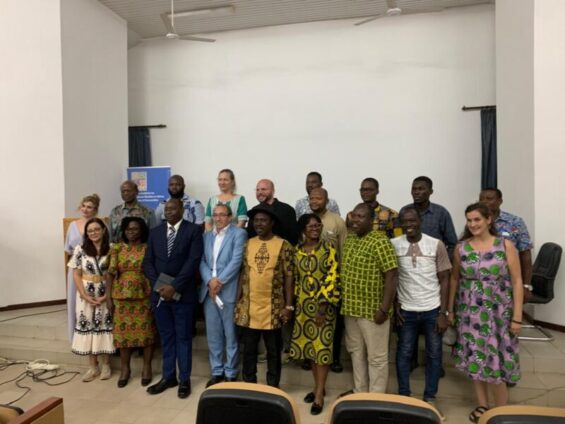
Speaking at a MIASA-MECAM roundtable discussion on “Academic Freedom and Research Ethics: Exploring Dynamics in Ghana, Tunisia, and Germany,” Dr. Mba emphasised that true academic freedom remains elusive in Ghana.
He explained that academics can voice dissenting views, but only within a boundary that avoids direct confrontation with political power.
In his view, this creates an atmosphere of academic peace rather than genuine academic freedom, as scholars tread cautiously in their critiques.
He further pointed out that academic freedom in Ghana is often confused with institutional autonomy, even though the two concepts differ.
Historical events, such as university leadership being tied to government appointments—from Dr. Kwame Nkrumah's era to the structural adjustment policies of the late Jerry John Rawlings—demonstrate that academia in Ghana has faced periods of restricted freedom.

The discussion also brought in perspectives from other regions. Prof. Emma Beitaief, Vice President of the University of Tunis and Principal Investigator at the Merian Centre for Advanced Studies in the Maghreb (MECAM), shared Tunisia’s experience.
She noted that academic freedom was tightly controlled until the 2011 revolution, which led to a more open academic environment.
In contrast, Germany’s MECAM Director, Prof. Rashid Quaissa, called for creativity in research under authoritarian regimes, stressing the need for scholars to simplify complex issues and engage the public through media for societal development.
In Ghana, the debate on academic freedom is especially pertinent as scholars grapple with contentious issues such as illegal mining, commonly known as “galamsey.” Prof. Joseph Awetori Yaro, Provost of the College of Humanities at the University of Ghana, urged academics to prioritise ethical standards in their work.
He questioned whether scholars should remain silent about destructive practices like illegal mining simply because of political affiliations or government appointments.
Ultimately, the roundtable underscored that academic freedom is essential for national development. Scholars must be free not only to pursue intellectual curiosity but also to address real-world problems for the benefit of society.
Latest Stories
-
UHAS halts semester exams over administrative, logistical issues
3 hours -
ECG announces planned maintenance outages in parts of Ashanti Region
3 hours -
Sexual harassment has no place in educational institutions – Education Ministry
3 hours -
The growing culture of vacation classes in Ghana: Should students rest or continue schoolwork?
4 hours -
E.P. Church secures radio frequency, prepares to launch Bremen Radio
5 hours -
Two dead and hundreds evacuated as twin fires break out on Greek island
5 hours -
EPCG clears over GH¢11.7m in debt as outgoing moderator calls for tighter controls on borrowing
5 hours -
Mövenpick Ambassador Hotel Accra marks 15 years of premium hospitality
5 hours -
T-bills auction: Government exceeds target by 88%, interest rates tumble
5 hours -
Western North: Confusion erupts over NPP chairmanship election results
6 hours -
Bawumia congratulates newly elected NPP regional executives
6 hours -
Bawumia urges unity after NPP regional elections ahead of 2028
6 hours -
Russia says at least seven killed in largest Ukrainian attack of 2026
6 hours -
Ghana and Netherlands sign pact to combat illicit drugs and drug markets
6 hours -
Akandoh warns Boards against interfering in day-to-day management of health institutions
7 hours