

Audio By Carbonatix
In communities long dependent on the forest for survival, residents are no longer just beneficiaries of nature; they are becoming its most determined guardians.
This transformation is being driven by a broad alliance led by the United Nations University Institute of Natural Resources for Africa (UNU-INRA) and the United Nations Environment Programme (UNEP).
It is working alongside UNDP, UNICEF, WHO, the Forestry Commission, government ministries, civil society organisations such as A Rocha-Ghana and OEF, and traditional authorities across Okyeman.
Their mission: to equip communities with the knowledge, legal backing, and governance structures needed to protect the Forest Okyeman landscape, a globally significant ecosystem under increasing pressure.
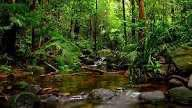
Forest Okyeman is no ordinary forest. It is the source of three major rivers—Ayensu, Birim, and Densu—and more than 99 smaller streams that supply water to millions of Ghanaians.
Ecologically, it is a treasure trove: the Atewa Forest alone hosts over 1,100 plant species, representing about 26 percent of Ghana’s total flora.
More than 100 species of flora and fauna found here are globally threatened or near-threatened, including three critically endangered species.
The forest also boasts exceptional biodiversity—accounting for over 77 percent of Ghana’s butterfly species and more than 30 percent of the country’s recorded bird species.
Beneath its fertile soils lie mineral-rich Birimian rock formations containing gold, bauxite, diamonds, and kaolin, resources that have historically attracted both legal and illegal exploitation.
Around the forest, communities cultivate cocoa, oil palm, rubber, plantain, cassava, and cocoyam, tying livelihoods directly to the health of the land.
Yet for years, forest degradation, illegal mining, and unsustainable land use threatened to unravel this delicate balance.
Recognizing the interconnected nature of environmental destruction and human insecurity, development partners adopted a human security framework—one that places people at the centre of conservation.
Through the FOREST Okyeman Project, a series of capacity-building workshops was rolled out across eight communities, focusing on the economic, environmental, political, educational, nutritional, and health dimensions of insecurity linked to natural resource depletion.
Participants were trained in legal frameworks governing water, forests, wildlife, minerals, and land, as well as sustainable agriculture, forest ecology, monitoring protocols, and the identification of natural resource-based enterprises and value chains to improve livelihoods.
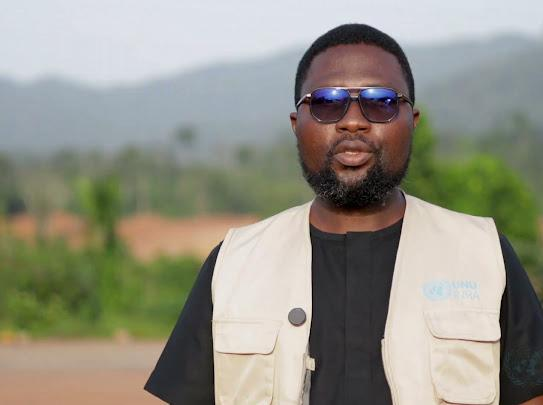
“These trainings were not just about conservation,” explained Dr Ferdinand Tornyie, Research Fellow at UNU-INRA. “They were about empowering communities to understand their rights, their responsibilities, and the tools available to protect what sustains them.”
A cornerstone of the project is the Community Resource Management Area (CREMA) model, a landscape-level governance structure that brings together farmers, traditional leaders, opinion leaders, landowners, government representatives, and the private sector.
Through CREMAs, communities are now co-managing natural resources—creating awareness, addressing violations, strengthening accountability, and promoting best practices in agroforestry. Local people are no longer passive observers when forests are destroyed; they are organised, informed, and legally empowered.
The project supported communities and district assemblies to develop new bylaws on natural resource management. These bylaws have since been gazetted, giving them legal force.
“We returned to the communities to educate them on these new bylaws,” Dr Tornyie said. “People now know what is permitted, what is not, and how to report and fight environmental damage, including illegal mining
The impact of the FOREST Okyeman Project extends beyond enforcement. Community Resource Management Committees (CRMCs) have been strengthened, collaboration among stakeholders has deepened, and awareness has been raised about the long-term value of conserving forest ecosystems.
The initiative is also laying the groundwork for ecotourism, offering communities alternative income opportunities while preserving biodiversity.
More importantly, it restores dignity -recognising local people as stewards of a globally important landscape rather than obstacles to conservation.
Latest Stories
-
Tarkwa court jails labourer for three years over GH¢123,000 theft
27 minutes -
GAEC must retain nuclear scientists for Ghana’s nuclear ambitions – Minister
59 minutes -
Man reportedly mistaken for game and shot by hunter dead in forest
1 hour -
19-year-old mason jailed 15 years for defiling seven-year-old pupil
1 hour -
Ghana’s banking sector assets rise 20.47% to GH¢500.2bn – BoG Governor
1 hour -
22 injured as Sprinter bus overturns at Sege after tyre burst
1 hour -
UN housing expert urges Ghana to strengthen Rent Control Department amid housing affordability concerns
1 hour -
Delta-BCI partnership reaches 166,000 people with breast cancer education
1 hour -
Power restoration fault suspected in Kumasi Central Market fire
7 hours -
The 7-foot giant of Ngleshie Amanfro: Seven-foot Ghanaian Ephraim Saawa dreams of joining the national basketball team
7 hours -
Government promises support for Kumasi Central Market fire victims
7 hours -
Vibes The Movie: Big Ghun’s Ghanaian film earns five nominations at 2026 REFFA
8 hours -
‘I’m a fulfilled man’—Justice Korbieh on missing out on Supreme Court despite two nominations
8 hours -
MamaCare CEO warns unresolved conflicts among health workers could undermine maternal and neonatal care
8 hours -
Health professionals urged to translate medical knowledge into practice to save mothers
8 hours