

Audio By Carbonatix
The persistent deterioration of roads in urban Ghana, particularly within affluent communities, is not just a consequence of limited government resources. It reflects a structural problem in how we fund and manage infrastructure.
Many communities with high-income residents such as Tse Addo, East Legon, Spintex, and McCarthy Hill, all in Accra, continue to suffer from bad roads, even though their residents contribute significantly to national revenue through taxes, levies, and fees.
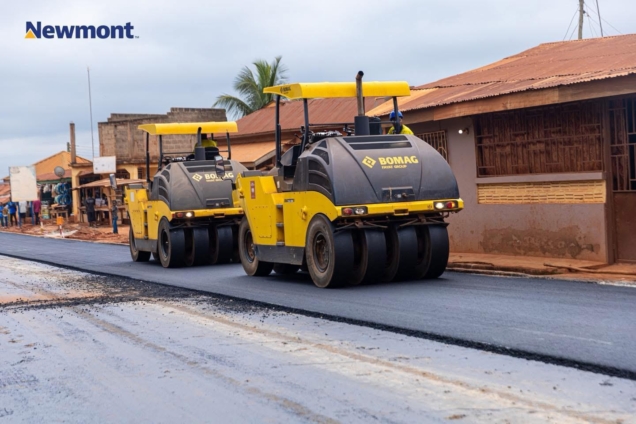
This disconnect calls for an innovative and locally grounded solution. One such approach is to adopt a Build-Operate-Transfer (BOT) model for community roads, similar to the public-private concession arrangements used in urban sanitation services.
Under this model, selected roads within high-traffic or high-value communities could be granted under concession to private entities who would design, finance, construct, and maintain these roads for a fixed period. In return, they would recover their investment through automated road tolls, targeted vehicle levies, or scheduled payments by municipal or district assemblies. Just as sanitation zones are divided and awarded to private companies under supervision by local authorities, community road networks can be similarly zoned and tendered out competitively. The goal is not to tax residents unnecessarily but to empower communities and encourage responsibility-sharing in infrastructure development.
Importantly, this proposal is now far more feasible than it would have been a decade ago. Since around 2015, the Department of Urban Roads has been fully decentralised, and its engineering and technical capacity has been transferred to Metropolitan, Municipal, and District Assemblies (MMDAs). This means that the expertise to plan, supervise, and monitor road projects now exists at the local level, making it practically possible to implement a BOT model with proper oversight and technical assurance.
To strengthen financing, a policy should be introduced to link building permit issuance to road development levies. Every new development approved by a local authority contributes to increased pressure on the surrounding infrastructure.
By requiring that developers pay a fixed Community Road Levy before their building permits are issued, assemblies can accumulate a ring-fenced fund to either co-finance BOT arrangements or repay concessionaires over time. This approach is not only fair, it also aligns infrastructure expansion with real estate growth. If you want to build, you must contribute to the roads that support your building.
A key element of the model would also include levies targeted at commercial vehicles, ride-hailing services, delivery vans, and transport operators that actively use the designated roads.
These users would contribute a small daily or monthly fee, managed transparently by the concessionaire and the assembly. Private vehicles in the community could also be levied a nominal annual road improvement charge. In exchange, communities would receive motorable, well-lit, and safe roads, and developers would get a return on investment.
This model is not new. In India, many community and rural roads are developed using Hybrid Annuity Models (HAMs) where the government pays part upfront and the rest over time. These examples show that it is both possible and effective to bring in private capital and expertise under strong public oversight.
Critics might argue that tolling community roads or linking permits to levies could burden residents or developers, but the current status quo where roads deteriorate without maintenance and communities absorb hidden costs is far more expensive. Delays, vehicle damage, lost productivity, and health impacts from dust or flooding all add up.
Additionally, this BOT framework can integrate social safeguards. Residents could vote on tolling decisions, low-income households could get exemptions, and all contracts could include local job quotas during construction and maintenance. With proper legislative backing and community sensitisation, this model can succeed.
It aligns perfectly with decentralisation. Instead of waiting for the central government to stretch its already thin resources, MMDAs can take initiative, leveraging the wealth within their jurisdictions to transform infrastructure.
The time has come to empower local communities to play a direct role in solving the infrastructure crisis. Roads are the arteries of development, and if we fix them community by community, we can solve one of Ghana’s most persistent headaches efficiently, fairly, and sustainably.
Latest Stories
-
Asantehene plants trees to commence Jimi Watercourse Rehabilitation destroyed by galamsey
2 minutes -
15 arrested, 6 trucks impounded over sandwinning activities on Kumasi-Accra Expressway
2 minutes -
OFFICIAL: Vinicius will miss El Clásico, suspended four games
6 minutes -
Prayer vigil held after four arson attack murders
12 minutes -
GRA fully recovers $154k legacy debt owed by foreign entities between 2022 and 2024
14 minutes -
Kwesi Pratt Jr warns bus preachers are adding to passengers’ stress with accident prophecies
15 minutes -
MTN Ghana to spend $1.1bn in 3 years, build 500 new sites as MoMo hits 44% Growth
17 minutes -
I have no regrets joining Assemblies of God – Mahama
17 minutes -
Starlink restrictions in Ukraine war linked to political situation, Zelensky aide says
20 minutes -
Furniture boost for Techiman North schools as MP donates to 20 institutions
20 minutes -
Assemblies of God to loan 10,000-seater dome for Ghana@70 celebrations
21 minutes -
Government to audit 2,016 community network sites – Communications Minister
21 minutes -
Heritage Series notes: BoG promises more inclusive cedi with improved sizes, tactile features
38 minutes -
‘We want answers’ – Family seeks probe into 14-year-old’s death 12 days after starting SHS
49 minutes -
No preacher has the right to impose beliefs on bus passengers – Kwesi Pratt Jr backs preaching ban
53 minutes