

Audio By Carbonatix
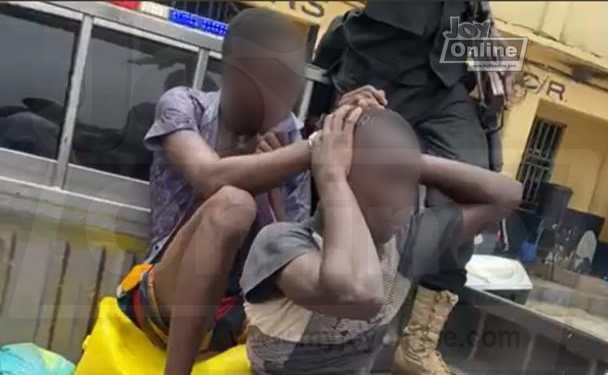
The High Court has found two teenagers guilty of the gruesome murder of a 10-year-old boy in Kasoa, a case that has gripped the nation since it occurred in 2021.
The court delivered its verdict nearly three years after the brutal killing of Ishmael Abdallah, a crime that shocked Ghanaians for its chilling nature and the involvement of two minors.
Nicholas Kini, who was 18 years old at the time of the crime, has been sentenced to life in prison for his role in the killing.
The first accused, who was only 15 years old when the crime took place, will be sentenced by a juvenile court since the High Court does not have jurisdiction to sentence minors.
The murder was a result of a misguided attempt to acquire wealth through ritual means.
During the investigation, the first accused admitted that he had been influenced by a video of a spiritualist, who promised riches in exchange for GH¢5,000 and human blood.
The teenager confessed to contacting Nicholas Kini to carry out the plan, which led to the brutal murder of the young boy.
The two teenagers lured Ishmael to an uncompleted building under the pretense of giving him a video game. Once there, they attacked him, first striking him with a stick and then crushing his head with cement blocks.
The boy was buried alive, with the pathologist confirming that he died from asphyxiation.
The trial saw the prosecution call seven witnesses, including the father of the deceased, police officers, and family members of the accused.
Testimonies painted a heartbreaking picture of the crime. The father of the first accused, Richard Mensah, revealed that his son had confessed to the murder, implicating Nicholas Kini as well.
The father of the deceased also testified, recounting the devastating moment when he discovered his son’s lifeless body.
The sister of the first accused also provided crucial evidence, stating that she had seen her brother and Nicholas Kini at the crime scene on the day of the incident.
Her suspicion led to the eventual discovery of the body and the boys’ confessions.
While the first accused admitted to the crime, pleading guilty to conspiracy but not murder, Nicholas Kini maintained his innocence throughout the trial.
He claimed he had been set up by the first accused and that he was not at the scene of the crime. However, his alibi—being with his grandfather at the time of the incident—was not corroborated by evidence.
After deliberation, the seven-member jury returned a unanimous guilty verdict for both teenagers on charges of murder and conspiracy to commit murder.
Justice Lydia Osei Marfo, in her final address, urged the jury to reflect the conscience of the nation in their decision.
The sentencing marks the conclusion of a case and brings some closure to the family of the deceased.
Latest Stories
-
Trump says he is considering firing US ambassador to Greece
3 hours -
Man City bananas ‘brought fun back’, says Varadi
3 hours -
Meta releases Muse Wonder AI models to challenge Anthropic and OpenAI
3 hours -
Daily Insight for CEOs: The CEO as Chief Decision Maker
3 hours -
Burnham had formal meeting with Man City chair while mayor
3 hours -
Is Ghana producing too many lawyers? What is the best lawyer-to-citizen ratio?
3 hours -
NDC sinking Ghana’s democracy with Emelia Agbenyo’s appointment – Miracles Aboagye
3 hours -
Seedorf back in football as Corinthians head coach
4 hours -
Hincapié and Zubimendi injured in post-match training session
4 hours -
Fridges in French supermarkets hit by cyberattack
4 hours -
Qantas flight grounded after bedbug outbreak
4 hours -
Reality Zone with Vicky Wireko: International Day of the Girl, shaping today’s girl for tomorrow’s future – ZONTA Clubs lead the way
4 hours -
Global health must be led by countries, not designed for them – Mintah Akandoh
5 hours -
Mahama honoured at 2026 World Health Summit in Berlin for global health leadership
5 hours -
Breast cancer is not a death sentence – Besease Kontire Obaapanin, Magmina Foundation lead awareness campaign
5 hours