

Audio By Carbonatix
John Boadu, the Director-General of the State Interest and Governance Authority (SIGA), has disclosed that the government is preparing to divest its interest in most state-owned enterprises (SOEs).
Mr. Boadu stated that this would allow Ghanaians to also invest in such institutions by buying shares.
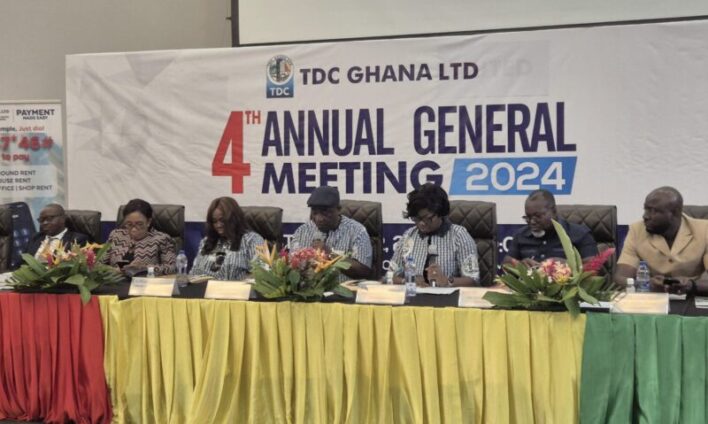
He revealed this at the fourth annual general meeting of the TDC Ghana Limited, saying, “The government is preparing itself to diversify its interest in most SOEs, 100 percent ownership for what, and the people of this country are also ready to invest in these entities.”
He noted that a look at most countries that have developed showed that governments have limited shares in their SOE sectors, adding that this ensures that people who are capable are put on the board.
He added: “You are not limited to costs that must be paid by the government, and you must pay those costs that ensure that you are not able to make the required profits.
Touching on the operations of TDC, Mr. Boadu commended the company for its performance over the past years, adding that it is about time that state limited liability entities challenge the market in which they operate.
The SIGA Director-General reminded TDC of its ability to borrow at the backbone of the government, provided its financials are good.
Commenting on the provision of affordable houses to Ghanaians, he said for the TDC to provide such houses and still survive, “the government must take the difference so they can survive; that’s how it works elsewhere.”
Meanwhile, Kofi Brako, the Board Chairman of the TDC, has appealed to the government to involve TDC in more affordable housing projects to help address the challenges in the sector and promote growth.
He said the real estate sector in Ghana continues to stand out as one of the fastest-growing industries, showing consistent expansion over the years, revealing that the industry over the years has experienced growth ranging between eight and 10 per cent.
This, he noted, was fuelled by the country’s rise in population and urbanisation trends, adding that, despite the promising development in the sector, Ghana grapples with a significant housing deficit, with Ghana currently having an estimated deficit of 1.8 million units of houses.
Latest Stories
-
Ghana needs a law to sustain constitutional reforms – CDD-Ghana
3 hours -
COVID fumigation audit: Auditor-General has a lot of questions to answer – Akwatia MP
3 hours -
Stranded Ghanaian medical graduates in Cuba appeal to Mahama for immediate return
3 hours -
GNFS contains fire outbreak at Teshie Lekma Road near Lekma Hospital
9 hours -
Samia Nkrumah rejects the narrative that Ghanaians were happy after Nkrumah’s overthrow
10 hours -
A Mother’s pain: Tribute by Ivan Baidoo’s mother
11 hours -
‘Forgive us for staying away’ — Samia Nkrumah leads family back to Nkroful, pledges to preserve Nkrumah’s legacy
11 hours -
Ernest Nuamah scores twice as Lyon beat Rennes
11 hours -
‘My dear Ivan’ – A father’s tribute to a son tragically killed
11 hours -
GNPC Explorco advances Voltaian Basin drilling preparations with 13.5km access road
11 hours -
Cabinet approves facility manager for Borteyman Sports Complex – Kofi Adams
12 hours -
Sanitation is improving; critics may be ‘living in another world’ – Salaga South MP replies Bekwai MP
12 hours -
Government must do more to tackle sanitation crisis – Bekwai MP
12 hours -
World Cleanup Day: GFF begins sanitation education in local communities
12 hours -
EU Ambassador, IGP discuss stronger cooperation on policing and security
12 hours