

Audio By Carbonatix
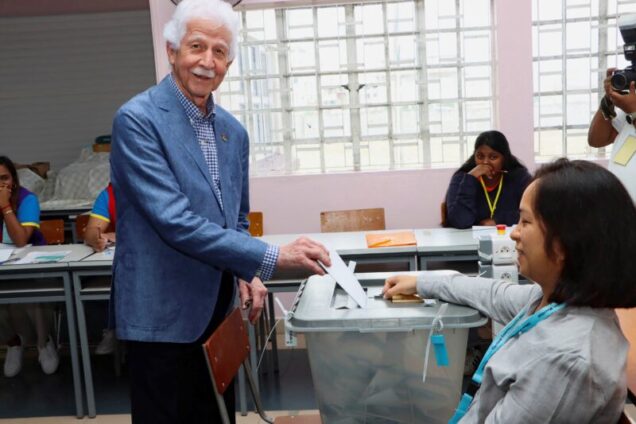
Mauritius held a parliamentary election on Sunday in which Prime Minister Pravind Kumar Jugnauth and his main rivals all promised to tackle a cost of living crisis in the Indian Ocean archipelago.
Polls closed at 6 p.m. local time (1400 GMT) and results were expected on Monday, according to the country's electoral body.
The country of about 1.3 million people markets itself as a link between Africa and Asia, deriving most of its revenues from a flourishing offshore financial sector, tourism and textiles. Mauritius also receives aid from China.
It has forecast 6.5% economic growth this year compared with 7.0% last year but many voters are not feeling the benefits.
Jugnauth's Alliance Lepep coalition has promised to raise minimum wages, increase pensions and reduce value-added tax on some basic goods.
It says it will use payments from the UK under an October agreement for Britain to cede the Chagos Islands while retaining the U.S.-UK Diego Garcia air base.
"The alliance led by the prime minister is selling the economic prosperity card, with promises of more money to different segments of the population," said political analyst Subash Gobine.
The opposition has also pledged to increase pensions as well as introduce free transport and internet services and reduce fuel prices.
It is dominated by the Alliance du Changement coalition led by Navin Ramgoolam and two other parties running in the Linion Reform alliance, whose leaders, Nando Bodha and Roshi Bhadain, plan to alternate as prime minister if they win.
Voters were picking lawmakers for the 62 seats in Parliament for the next five years, from a list of 68 parties and five political alliances.
Music instructor Ivan Mootooveeren, 41, who cast his ballot at a polling centre in the capital, Port Louis, told Reuters he was voting for the opposition because the country needed a new direction.
Another voter, David Stafford, 36, said young people would make a difference in the election. He did not say who he was voting for but added that people were looking for economic innovation and job opportunities as much as fiscal changes.
Arvin Boolell, deputy leader of the Labour Party, and a member of the opposition coalition, told Reuters voter turnout had likely exceeded 75%. The electoral body could not be immediately reached to give an official figure for turnout.
Whichever party or coalition gets more than half the seats in parliament also wins the prime minister's post.
Earlier this month, Jugnauth's government blocked social media platforms until a day after the election, citing national security concerns after conversations between public figures were leaked. It lifted the ban a day later after opposition parties criticised the move.
Latest Stories
-
BOSTenergies meets fuel tanker drivers over their concerns at the Kumasi depot
27 seconds -
X1 Energy Drink-backed DOL Super Cup ends with Ebusua Dwarfs crowned champions
2 minutes -
Disney and ABC sue Trump’s media regulator to stop early licence renewal
5 minutes -
Luv FM High School Debate: Prempeh dethroned as CHRISSEC and KUHIS ignite quarter-final path
7 minutes -
British couple on honeymoon killed in helicopter crash on Greek island
12 minutes -
George Opare Addo to lead National Youth Forum in Accra
13 minutes -
ECG invested GH¢710,965 in infrastructure replacement across Greater Accra – PURC
21 minutes -
Cyber Security Authority, EY resolve satisfactorily matters relating to licence fees
41 minutes -
Beyond the ribbon: Why the sport of dog showing matters for every pet owner
1 hour -
Illegal mining drives Ghanaian children from classrooms into hazardous labour
1 hour -
NACOC committed to strengthening border security – DG
1 hour -
DTI students showcase innovative solutions at 2026 Capstone Projects Exhibition
2 hours -
‘We let the athletes down’ – NSA boss on Ghana’s Commonwealth Games campaign
2 hours -
Jinapor prioritises exploration, investment to reverse Ghana’s oil production decline
2 hours -
Eric Tinkler highlights deep-rooted challenges at Asante Kotoko, admits club is aware
2 hours