

Audio By Carbonatix
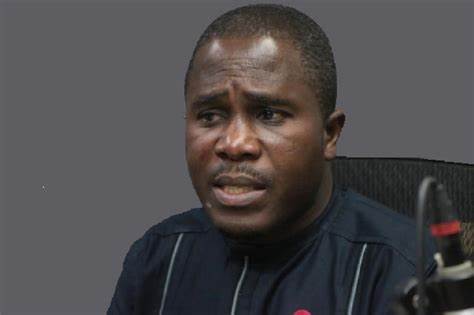
The Executive Director of the Institute for Energy Security (IES) Nana Amoasi VII, has accused the government of “suppressing information in the energy sector.”
He said this was in contrast to previous years when the public could easily access information on the power supply for proper analysis and suggestions to improve the sector.
There have been concerns about unstable power in recent times largely caused by the government's inability to pay millions of dollars owed to independent power producers. However, the government has not been fully open about the real challenges facing the sector.
Speaking on JoyNews' News File on Saturday, November 23, Nana Amoasi said, "We have so much to address, and it will require heavy investment and several years to return to where we were, at least back to the state we were in early 2017."
According to him, "data on power generation and transmission is now harder to find, unlike the Gridco system which was shut down and replaced by a command sector that provides data only to select key people and stakeholders in the industry.
He provided an example, noting that ordinary data sheets generated from Gridco are now classified as private and confidential.
Additionally, he pointed out that information on the amount of power being exported is now restricted.
Elaborating on his point, Nana Amoasi said "We are blinded in this sector" and rhetorically questioned, "What is there to hide?"
He concluded by saying, "We believe the government has not been efficient or effective in utilizing the opportunities and resources entrusted to it".
Ghana shouldn’t have experienced any ‘dumsor’ after 2017
Nana Amoasi VII said the country shouldn't have experienced frequent power outages, commonly known as 'dumsor', since 2017, considering all the necessary capacity to generate and supply power for consumption without any hindrances were in place.
“With the opportunities and resources entrusted to the current government in 2017, we shouldn’t have been experiencing 'dumsor' at all because we had a high installed capacity, a very dependable capacity of 4,300 megawatts,” he said.
He further explained that the country currently has a dependable capacity of 5,100 megawatts but “we are struggling to produce power to the extent of just 3,100 megawatts".
Read Also: Ghana shouldn’t have experienced any ‘dumsor’ after 2017 – IES Boss
Latest Stories
-
Bahass Foundation launches vocational skills training to support mental health recovery in Wa
14 minutes -
NPP orders parliamentary aspirants and their supporters to suspend campaign activities
47 minutes -
Techiman unites against child marriage: Joy Impact Makers Awardee leads charge on International Day of the Girl Child
59 minutes -
Ghana Psychological Association calls for greater involvement of people with lived experience in mental health care
2 hours -
Ablakwa says Ghana could evacuate more citizens from South Africa if the situation worsens
3 hours -
Violence against girls must be tackled through individual responsibility – Gender advocate
3 hours -
Ghana’s BRICS bid must be guided by national interest – International Affairs Analyst
3 hours -
Journalists look back on a decade of breast cancer reporting in Ghana
3 hours -
President Mahama ends Resetting Ghana tour of Ahafo Region
5 hours -
African negotiators seek delivery of climate commitments at COP31
5 hours -
BoG develops AI rules for financial sector
5 hours -
‘Big Push’: Government assures contractors of prompt payments
5 hours -
Court fines miner for breaking into gold buying shop
6 hours -
Tarkwa court jails labourer for three years over GH¢123,000 theft
7 hours -
GAEC must retain nuclear scientists for Ghana’s nuclear ambitions – Minister
7 hours