

Audio By Carbonatix
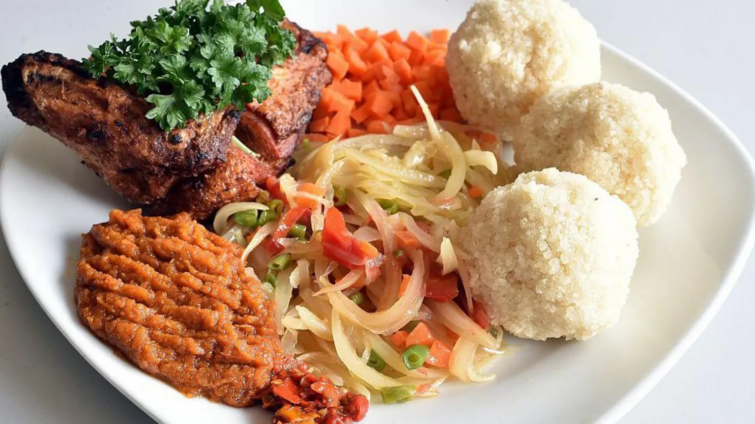
Ivory Coast's beloved staple, attiéké - made from fermented cassava flour - has officially been added to Unesco's list of intangible cultural heritage.
Attiéké, pronounced atchekay, is a kind of couscous made from ground cassava roots. It is so well-loved that many people have it for breakfast, lunch, and dinner.
Nicknamed "Ivorian couscous", it is typically eaten with grilled fish. It originated from the coastal areas of Ivory Coast centuries ago but is now popular across West Africa.
Ivory Coast's Unesco delegate, Ramata Ly-Bakayoko, told the 19th session on safeguarding intangible cultural heritage in Paraguay, that attiéké was "deeply rooted in the daily lives of its communities".
Japanese sake, an alcoholic beverage made from grains, was also added to the list this year.
In Ivory Coast, attiéké is often served at ceremonies such as weddings, baptisms, funerals, and community meetings.
But it is more than just a meal, it is some people's livelihood and a pathway to financial autonomy for many women.
Attiéké is traditionally made by women and girls. The process can take a few days as there are many steps rooted in tradition, and the skills it takes to make attiéké have also been added to the Unesco heritage list.
The cassava root is peeled, grated and mixed with a previously fermented cassava.
The pulp is then pressed to remove the starch and later processed manually dried and then steamed.
It is then taken to local markets, where it is typically sold in plastic bags each containing a single ball of attiéké.
But at the heart of it, attiéké, is a cultural connection from one generation to another.
The recipes, processes, and methods are passed down from mother to daughter and the dish "is a pillar of their identity and that of the whole of Ivory Coast", said Ms Ly-Bakayoko.
The Unesco list highlights intangible cultural heritage that are at risk, emphasising the need to protect and preserve traditional practices. The inclusion of attiéké highlights its importance to humanity as a collective, Unesco says.
The delicious and tangy staple has also caused controversy on the continent.
In 2019, there was outrage in Ivory Coast when Florence Bassono, founder of Faso Attiéké from neighbouring Burkina Faso, won an award at the Abidjan International Agriculture Show.
Many Ivorians were angered by a foreigner winning with their national dish.
Earlier this year, the African Regional Intellectual Property Organisation registered a collective trademark to prevent cassava produced in other countries from being sold under the name attiéké - in the same way that champagne has to be produced in the area of France with that name.
Latest Stories
-
Trump calls for Congress to pass crypto bill at White House event
2 hours -
ABC says intimidation by Trump’s FCC forced programming changes
2 hours -
Uber launches autonomous rides in Zagreb, its first in Europe
2 hours -
Ecuador intelligence chief and five Americans killed in Kenya helicopter crash
2 hours -
NMC reconstitutes boards of four state-owned media organisations
2 hours -
Keep abreast of new traffic regulations – Police
3 hours -
Police to prosecute commercial drivers for overcharging passengers
3 hours -
24-Hour Markets is not our responsibility – Goosie Tanoh distances Secretariat from project
3 hours -
Vaccine breakthrough stops cancer returning in trial
3 hours -
‘I was born in South Africa’, says beauty queen Chidimma Adetshina facing legal bid to deport her
3 hours -
Prince Harry and Meghan moving back to UK
4 hours -
Ghana’s output expansion largely driven by labour, capital rather than innovation – Opoku-Afari
4 hours -
Ghana is ready for nuclear power adoption – Gov’t affirms
4 hours -
GJA@77: Media-government partnership vital to Ghana’s democracy – Shamima Muslim
4 hours -
LUV FM High School Debate: Opoku Ware and St. Hubert Seminary book quarterfinal spots
4 hours