

Audio By Carbonatix
The hardest meeting I ever had was not in a courtroom.
It was in my office at Origin8 Saatchi & Saatchi.
I had been brought in as Company Secretary during a turbulent transition — effectively as a stabilising hand to help steer a ship that was heading toward the rocks. The global parent company had taken a decision to wind down operations in several offices across the world.
Shareholding issues. Departure by the former CEO, who served the company well for several years, had compounded the strain locally. The numbers told a story we could no longer ignore.
And so, we had to act.
Across the table sat colleagues I respected deeply. People I had seen build the company with the Founding CEO, Daniel Twum (RIP). People whose families I knew. People I had worked with during my days at Law School. But to preserve what could be preserved, we were compelled to lay off several staff.
There is no vocabulary that softens that moment.
Leadership is celebrated when it is about expansion. It is far less glamorous when it is about contraction. Yet stewardship is not about applause — it is about sustainability.
What made that season heavier was this: it cost me valuable relationships, too. Including one with Joel, the former CEO, a personal friend.
Sometimes the very decision that protects an institution fractures personal bonds. Sometimes, financial responsibility feels personal to those affected. Sometimes integrity is lonely.
But if you accept the responsibility of management, you must also accept that sentiment cannot override sustainability.
That experience shaped how I see moments like the one COCOBOD faces today. Aligning cocoa producer prices with global market realities is painful. It affects real households and real communities. But when guaranteed prices detach from world market arithmetic, the institution itself begins to suffocate.
And if COCOBOD suffocates, the consequences are systemic. Farmers suffer.
Managers are sometimes called to reduce in order to preserve.
To disappoint in order to protect.
To endure criticism in order to prevent collapse.
The real test of leadership is not whether everyone applauds.
It is whether, years later, the institution still stands.
I wish my friend since 1991, Randy Abbey, and Hon. Ato Forson, Minister for Finance, wisdom, courage and resilience as they steer COCOBOD toward greener pastures. Transitional seasons are never easy — but with discipline, reform and integrity, they can become turning points.
Stewardship is heavy.
But it is necessary.
***
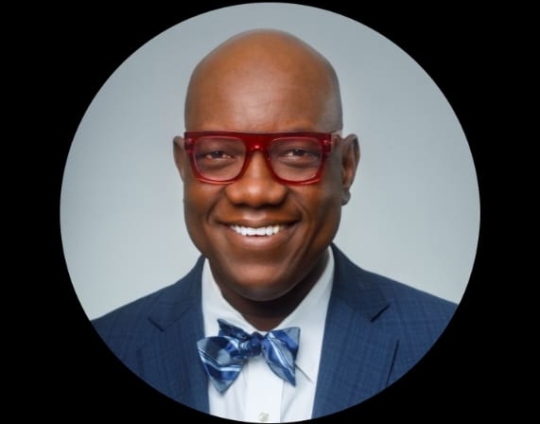
The author, Kofi Asmah, is a Consultant at the World Bank Group/ Lawyer/ Entrepreneur / Featured in Forbes/Investor.
Latest Stories
-
Journalists look back on a decade of breast cancer reporting in Ghana
21 minutes -
President Mahama ends Resetting Ghana tour of Ahafo Region
2 hours -
African negotiators seek delivery of climate commitments at COP31
2 hours -
BoG develops AI rules for financial sector
2 hours -
‘Big Push’: Government assures contractors of prompt payments
2 hours -
Court fines miner for breaking into gold buying shop
3 hours -
Tarkwa court jails labourer for three years over GH¢123,000 theft
3 hours -
GAEC must retain nuclear scientists for Ghana’s nuclear ambitions – Minister
4 hours -
Man reportedly mistaken for game and shot by hunter dead in forest
4 hours -
19-year-old mason jailed 15 years for defiling seven-year-old pupil
4 hours -
Ghana’s banking sector assets rise 20.47% to GH¢500.2bn – BoG Governor
4 hours -
22 injured as Sprinter bus overturns at Sege after tyre burst
4 hours -
UN housing expert urges Ghana to strengthen Rent Control Department amid housing affordability concerns
4 hours -
Delta-BCI partnership reaches 166,000 people with breast cancer education
4 hours -
Power restoration fault suspected in Kumasi Central Market fire
10 hours