

Audio By Carbonatix
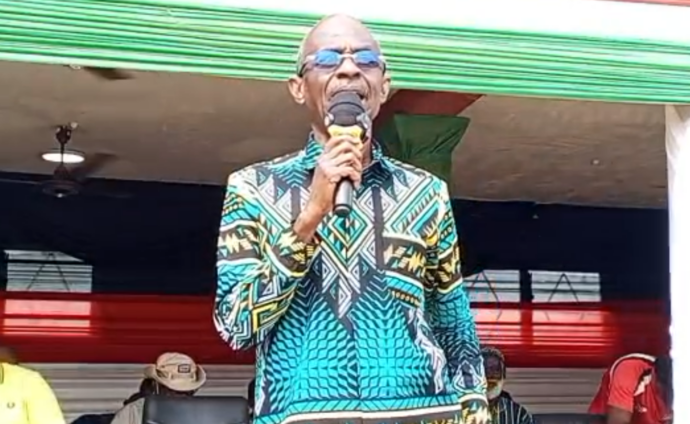
The Chairman of the National Democratic Congress (NDC), Johnson Asiedu Nketiah, says the party’s victory in the 2024 general elections was driven by bold internal decisions, including the controversial reshuffle of the party’s parliamentary leadership ahead of the polls.
Speaking in Tamale during his nationwide “Thank You Tour,” Mr. Nketiah said the changes were necessary to reposition the NDC for electoral success amid what he described as changing political dynamics.
“New things were emerging, and I said that we have to change the forward line of Parliament, otherwise it will be difficult for us to win the election,” he stated.
According to him, although the decision generated tension within the party and was misunderstood by some supporters, it was purely strategic and not motivated by personal differences.
“There was hell, and people started thinking that somebody who has been my friend for more than 20 years has suddenly become my enemy,” he said.
The NDC in January 2023 replaced its then Minority leadership team led by Haruna Iddrisu, in what the party described as part of a broader restructuring exercise aimed at strengthening the party ahead of the elections.
Under the reshuffle, Dr. Cassiel Ato Forson was appointed Minority Leader, replacing Haruna Iddrisu, while Emmanuel Armah-Kofi Buah took over as Deputy Minority Leader from James Klutse Avedzi. Kwame Agbodza was also named Minority Whip, with Ahmed Ibrahim and Comfort Doyoe Ghansah appointed as First and Second Deputy Whips, respectively.
Mr. Nketiah explained that as National Chairman, he saw himself as the “coach” of the party heading into the elections and therefore had the responsibility to make difficult decisions aimed at securing victory.
“You have elected me as Chairman of this party. I am the coach of the party going into the election, so let me make the changes that will win us the election,” he added.
He maintained that the outcome of the 2024 elections justified the strategy, describing the NDC’s performance as one of the strongest electoral victories in Ghana’s Fourth Republic.
Following the elections, Mr. Nketiah said he advised President Mahama not to sideline experienced party figures such as Haruna Iddrisu and Mohammed Mubarak Muntaka in the formation of government.
“After we won the election, I told President Mahama that we cannot ignore Muntaka and Haruna in setting up our government, so they needed to be given big positions,” he said.
Mr Iddrisu and Mr Muntaka-Mubarak were subsequently appointed to key ministerial positions in government.
Mr. Nketiah also cautioned party supporters against internal factionalism, stressing that unity remains critical to the NDC’s future.
“If you are forming groups, Haruna groups, Asiedu Nketiah groups, that is not our case. The NDC will continue to be one,” he said.
Latest Stories
-
Two-week strike will not derail academic calendar – GNAT President
6 minutes -
Headmaster detained after BBC investigation into alleged sexual abuse of students
15 minutes -
GNAT pushes for clear implementation procedures of teachers’ conditions of service
35 minutes -
Recurrent strikes threaten quality of education and academic calendars – Prof Bokpin
38 minutes -
‘Cockroach’ group leaders among hundreds detained in Delhi protest
42 minutes -
Don’t let speed of information become your judgement – CJ tells new lawyers
1 hour -
World Cup visa scandal: People have leveraged public office to facilitate fraud – Senyo Hosi
1 hour -
Glut! Farmers count losses as prices crash, customers happy
2 hours -
GSA postpones auction of unserviceable vehicles
2 hours -
Man charged with attempted murder after stabbing
2 hours -
World Cup visa scandal: Senyo Hosi says issue goes beyond calls for Sports Minister’s resignation
2 hours -
Yaw Ampofo Ankrah hasn’t taken or received any money to facilitate visas – Lawyer insists
2 hours -
World Cup visa scandal: Senyo Hosi urges focus on constitutional accountability
2 hours -
La Beach demolition: Senyo Hosi condemns lack of consultation
3 hours -
Russian glide bomb attack on Zaporizhzhia kills at least 15 people
3 hours