

Audio By Carbonatix
With every heavy rainfall, the shoreline where the Korle Lagoon meets the sea transforms into a site of frantic activity.
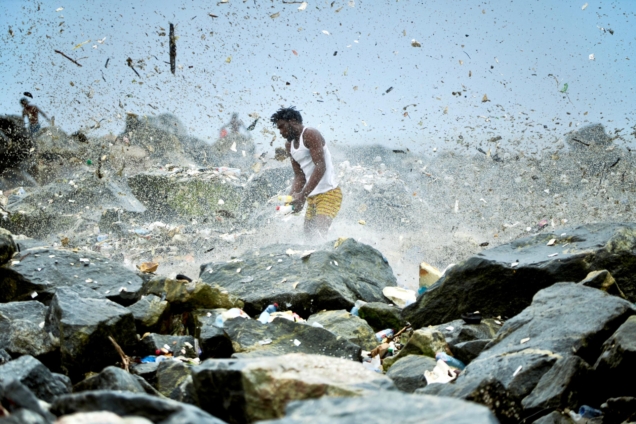
Men, women, and children flock to the polluted coastline to scavenge through mountains of waste deposited by the swollen lagoon.

When the rains pour, the lagoon, choked with plastic, foam, and other refuse, overflows and carries its burden of pollution into the sea. The result is a beach covered in trash, which, for many marginalized families, becomes an opportunity to seek out materials they can sell or repurpose.

Amid the debris, individuals can be seen with sacks, buckets, and improvised tools, sorting through the waste for plastics, metal scraps, or anything of value. For these communities, the dangerous and unsanitary conditions are an everyday reality.
“When the rains come, it’s like a blessing and a curse. There’s more waste to pick, but the waves are stronger and more dangerous,” said a young scavenger.

In one striking moment, captured on camera, a man is seen braving the spray of crashing waves, debris flying around him like projectiles. Others nearby, undeterred by the chaos, continue to rummage through the refuse-laden sand.

The Korle Lagoon, once a vital ecological and cultural asset to Accra, has become a symbol of Ghana’s waste management challenges. Decades of poor waste disposal practices and unchecked urban growth have turned the lagoon into an environmental disaster zone.

Residents in nearby communities, many of whom live in makeshift shelters along the shoreline, bear the brunt of the crisis. “We’ve lived with this problem for years. The government comes and talks, but nothing changes,” lamented a local woman, clutching a bucket of scavenged plastics.

Environmentalists and community leaders have repeatedly called for urgent measures to address the pollution of the Korle Lagoon and the surrounding coastlines. Proposed solutions include better waste collection systems, enforcement of environmental laws, and investment in recycling initiatives.

A Cycle That Must Be Broken
Until sustainable action is taken, the scavenging activities at the Korle Lagoon will continue to reflect the intersection of poverty and environmental degradation. For those who depend on the trash to make ends meet, the rains bring fleeting opportunities amidst a sea of challenges.

As the waves crash and the waste piles up, these images serve as a stark reminder of the cost of inaction and the urgent need for a cleaner, healthier environment for all.

Latest Stories
-
MPs, CSOs push for dedicated budget line for malaria
2 seconds -
Jeffrey Nortey’s viral Kanayo O. Kanayo bar gets the legend’s attention, leads to a meet-up
1 minute -
Bagre Dam’s Annual Floods: Scientists seek a lasting solution as Northern Ghana’s farmers count the cost
2 minutes -
Why Corporate Communications Professionals Must Be Marketing-Oriented: The strategic advantage and the professional mileage
13 minutes -
DVLA hands 357 suspected cloned vehicles to GRA over customs duties
13 minutes -
Appeals will not end strike, FWSC must negotiate – GAUA General Secretary
20 minutes -
Haruna Iddrisu hails Ghana’s academic calendar as best in a decade
21 minutes -
Silent Football: A team, a dream, a $24,000 debt – the struggles of Ghana’s deaf footballers
21 minutes -
Education Minister Haruna Iddrisu demands merit-based admissions, appointments at Defence University
23 minutes -
National Defence University to strengthen Ghana’s response to emerging security threats – Haruna Iddrisu
27 minutes -
Pupil arrested after two teachers shot at French school
33 minutes -
Lamisi takes ‘Let Us Clap’ tour across five countries and 18 dates
51 minutes -
DVLA cuts roadworthy contract cost from $155.4m to GH¢2m – CEO
53 minutes -
Okyeame Kwame calls for free university education for farmers’ children
56 minutes -
Black Stars: Two decades of coaching triumphs and turmoil (2006–2026)
60 minutes