

Audio By Carbonatix
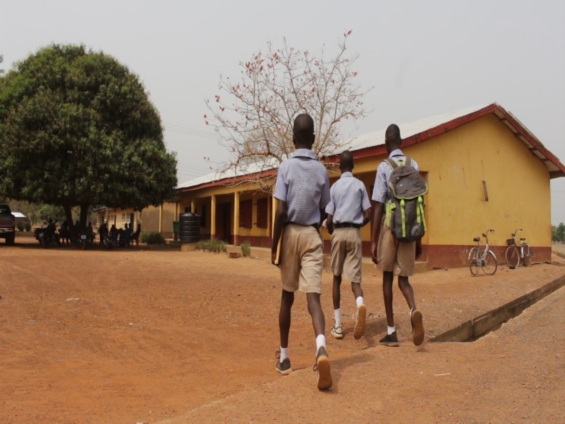
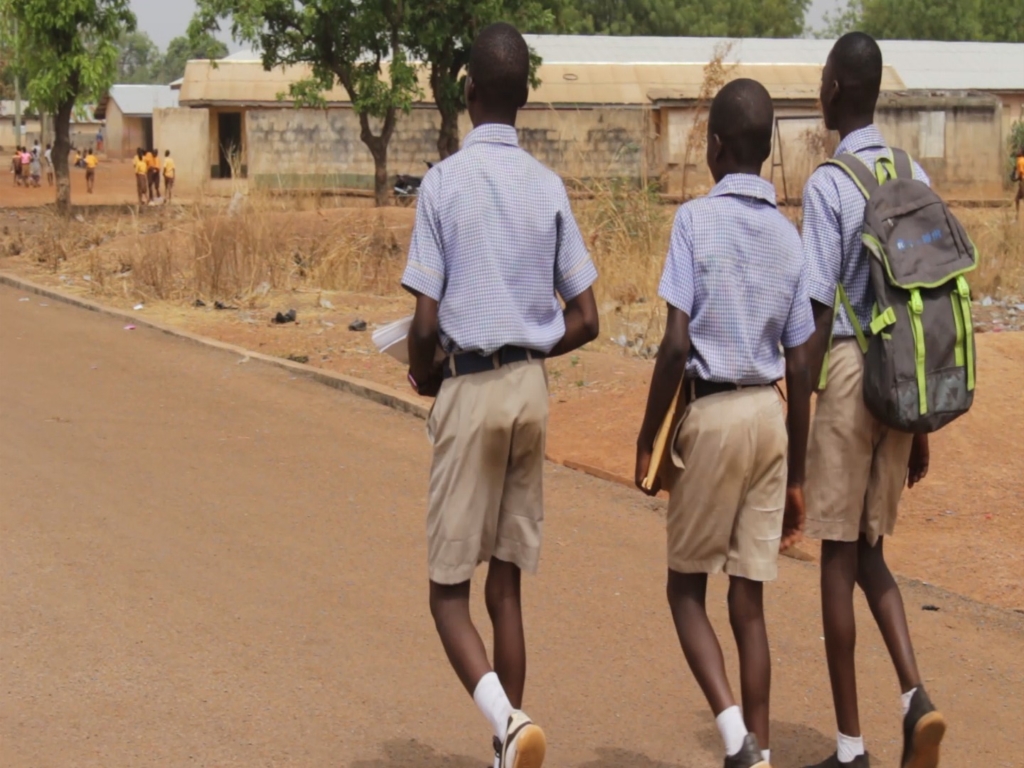
Many communities in the Northern Region still have children who walk long distances to access education.
In the Nanumba North District, accessing Junior High School education in communities such as Kubuabu, Namani, Manchuni, Jeji, Na Sungdo, and Tigbando, among others, comes at a price.
Many of these communities lack upper primary schools, forcing children to walk several kilometres to continue their education.
JoyNews visited Kubuabu, where Grundoow Godwin treks 14 kilometres each day to and from school.
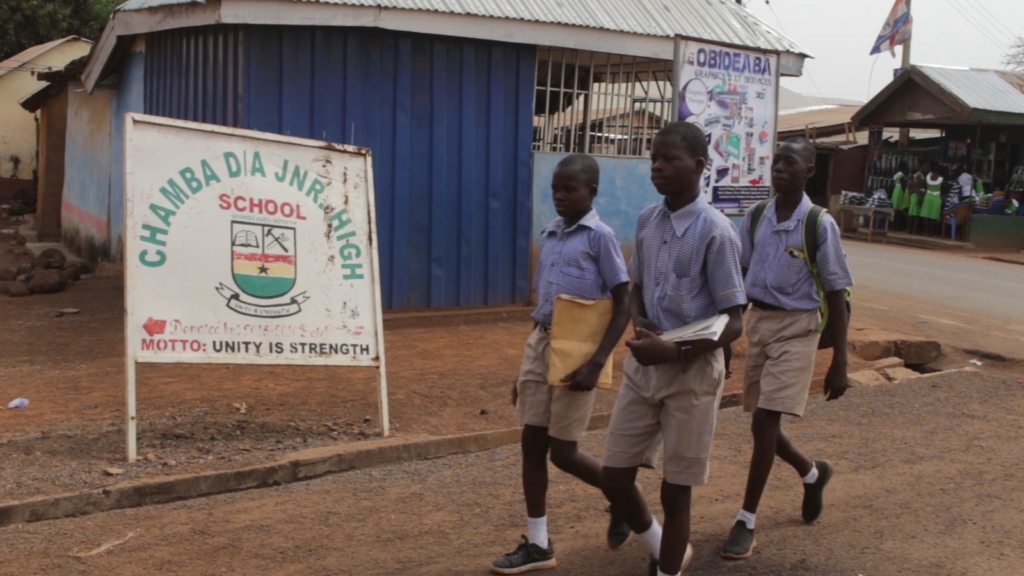
For these children, it is a daily struggle to sometimes navigate through the lonely bushes just to get to school.
"The journey to my school in Chamba is very far, but I have to travel every day," Gordon said.
Gordon's daily struggle mirrors the lives of many other children who walk between 7 to 12 kilometres each day.
The Junior High School student knows that education is his ticket to a better life. He is determined to succeed, no matter the distance.
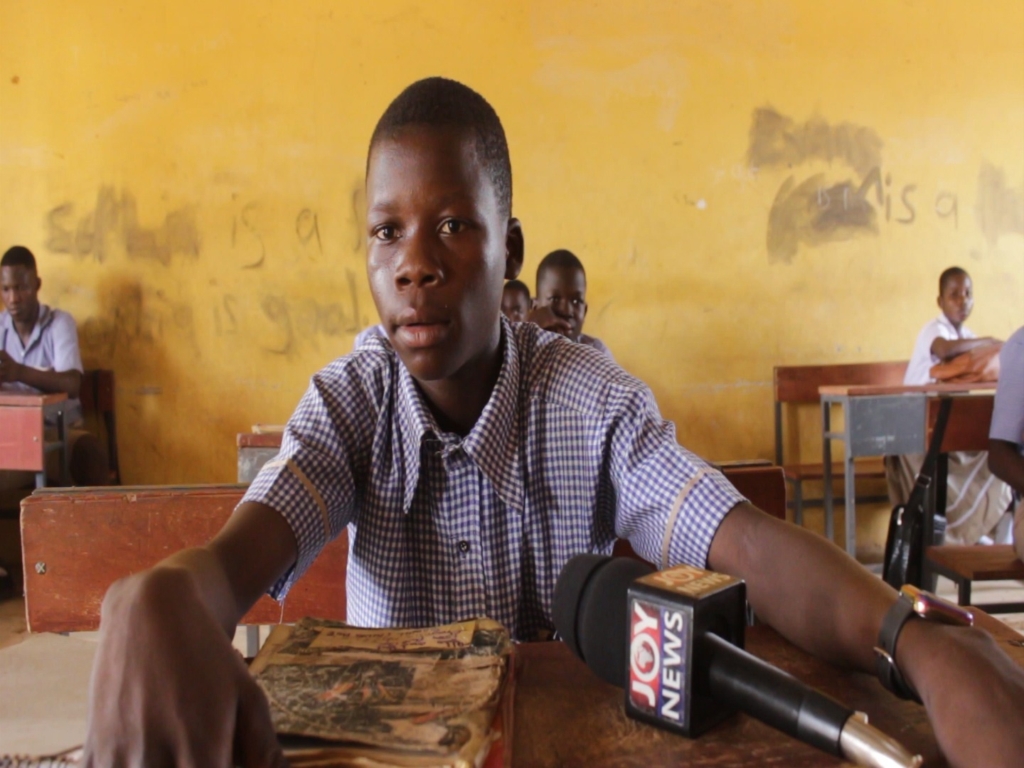
"I join my other mates who also travel long distances so that we keep each other company. That way, we are able to go every day," he said.
Back at Gordon's home, his mother, Makpa, puts in every effort to get him to school because she sees him as her key investment in securing a better future for their family.
"Godwin is my son, and I want him to go to school and become a great person in the future. He helps me fetch water to cook for the family before walking to Chamba for his education. I dream of him becoming a professional doctor so he can help me take care of his siblings. His father is no longer with us, and I’m struggling to provide for them. I don’t want all my suffering to be in vain.
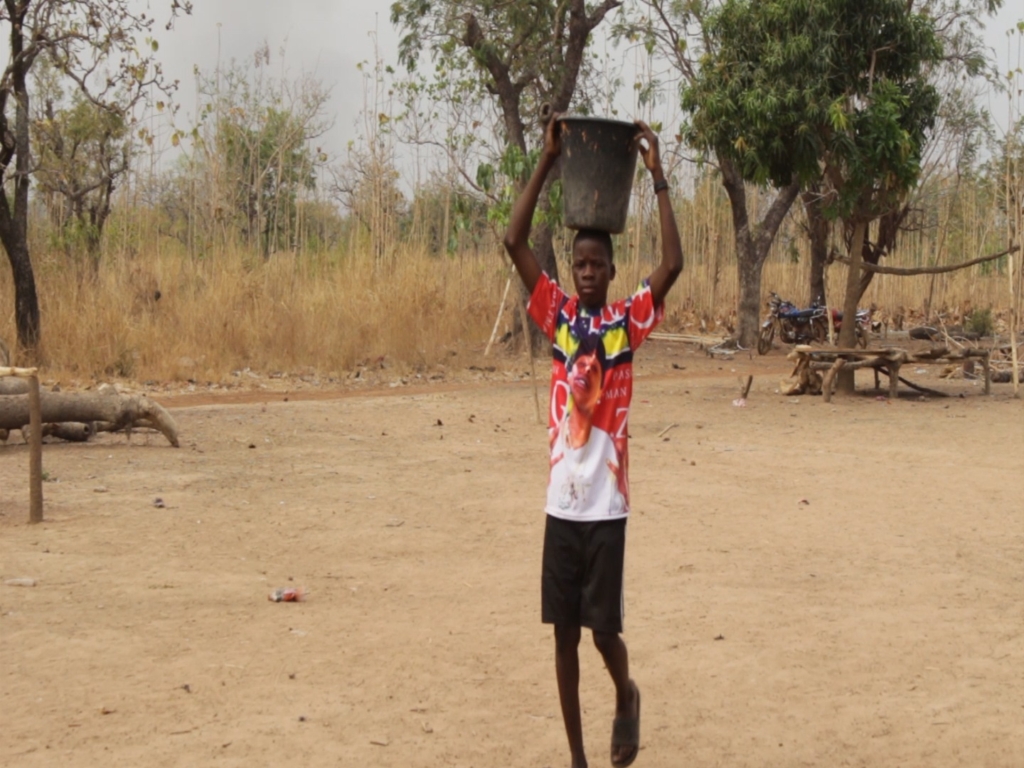
"I cultivate yam, okra, pepper, maize, and groundnuts. When I harvest, I set aside portions of the produce to meet Godwin’s needs, such as sandals, clothes, pens, and books. I also ensure he has food to take with him to school," she said.
Gordon's teacher, Norbert Yelim, expressed concern about the distance Gordon commutes to school, adding that it is affecting his academic performance.
"My last observation, when I followed up to Gordon's community, revealed that it is 7 kilometres from his home to the school. Gordon often arrives 30 minutes to an hour late, and this is affecting his education," Mr Yelim said.
The Ghana Education Service representative, Samuel Kwaku Kwayaba, acknowledged that children walking long distances to school remains a concern for the service.
He stated that this challenge has led many children to drop out or perform poorly due to the daily struggle.
Latest Stories
-
2026 WASSCE entry rises by 11% as 512,862 candidates sit exams
6 minutes -
WASSCE 2026: English Language performance falls to 62.4% – WAEC
21 minutes -
WAEC cancels 2026 WASSCE results of 8,295 candidates over examination irregularities
41 minutes -
WAEC releases provisional 2026 WASSCE results for 512,862 candidates
54 minutes -
CJ’s remarks on SOEs were made in good faith, not to undermine judicial independence – Judicial Service
4 hours -
Bright Future Alliance pays courtesy call on Akufo-Addo, invites him to African Leaders of Influence Lectureship Series
4 hours -
This is an attempt to break the Minority caucus – Patricia Appiagyei on alleged GH¢70k payment
5 hours -
‘OSP hasn’t contacted me’ – Patricia Appiagyei assures cooperation if invited
5 hours -
I find it strange that this memo was purportedly written by me – Patricia Appiagyei
5 hours -
Ayariga calls for stronger church partnership to tackle sanitation, environmental challenges
5 hours -
I don’t think we have an industry – Patchbay Band manager
6 hours -
Patchbay Band questions recognition of live bands in Ghana’s music industry
6 hours -
Newsfile to discuss SOEs’ GH¢19.8bn profit, dissolution of 9 boards, CJ’s visits to SOEs, GH¢70k gift rejection
6 hours -
BoG warns against spraying, defacing and using cedi notes for decorations
6 hours -
Adwumawura: Selected applicants to receive notifications from today – NEIP CEO
6 hours