

Audio By Carbonatix
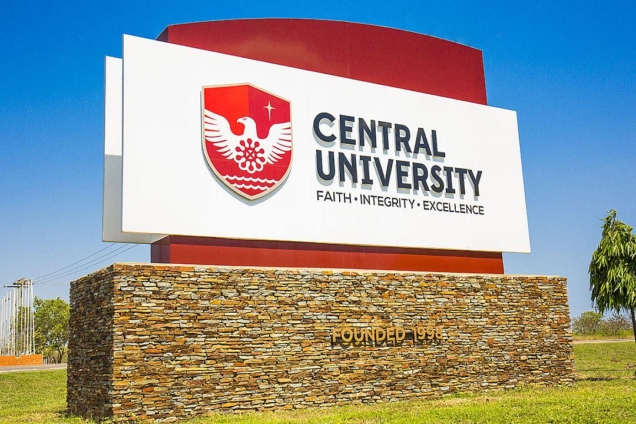
The Vice Chancellor of Central University, Professor Bill Puplampu, has urged the government to introduce a Fee Voucher System (FVS) to support students attending private universities in Ghana.
Speaking at the 28th Matriculation Ceremony at the university’s Miotso Campus, he emphasised that such a policy would provide an alternative for students who are unable to secure admission into public universities and struggle to afford private tuition.
"We have argued and strongly suggested that the state must look into the matter of a fee voucher system across the higher education space. Such a system will ensure that, irrespective of the program you want, you have a voucher that can be applied to any institution that you go to, and perhaps if it's a private institution and the fee is a little higher, you top up and you go to school," Prof Puplampu stated.
He further noted that private universities play a crucial role in Ghana’s educational landscape but often face financial limitations due to a lack of government support.
"We do not think that state intervention should be left to the state (1:03) sector, and private market forces should be left to take care of the private space. An intentional (1:08) blend is important," he added.
According to the Ghana Tertiary Education Commission (GTEC), private universities currently enroll about 15 per cent of Ghana’s tertiary students, yet they receive no direct government subsidies.
Prof Puplampu argued that an FVS would not only ease the financial burden on students but also enhance private universities' capacity to deliver quality education.
Beyond advocating for financial support, he also recommended improvements to the Free Senior High School (SHS) policy, stating that adjustments are needed to enhance both access and quality.
“We believe that the free SHS is good. Pressure on teachers, pressure on the state, so a review is very much in order. However, we do not believe a review should lead to cutting back on the policy and possibly a reduction in the numbers who are accessing secondary education.
"We believe a review should concentrate on how to improve the stock of existing secondary and post-secondary schools. A review should provide a platform for improving the content and future-proofing secondary curriculum to reflect global realities,” he noted.
As Ghana’s higher education sector faces increasing demand, stakeholders continue to push for policy reforms that bridge the gap between public and private institutions, ensuring equitable access for all students.
Latest Stories
-
Gender Ministry steps up community campaign against social vices
32 minutes -
Police bust armed robbery gang targeting gold dealers, mining sites in Ashanti and Western regions
38 minutes -
Galamsey causes 1 in 4 fibre cuts in Ghana – Sam George
45 minutes -
Police link Labone bank robbery suspects to earlier attacks on customers
50 minutes -
Accra-Kumasi Expressway will be Mahama’s major road legacy – Agbodza
55 minutes -
Ghana spends over US$20m repairing fibre cuts – Sam George
1 hour -
GACL wins two awards at ACI World Airport Experience Summit
1 hour -
Tomato prices to drop sharply in coming weeks – John Dumelo
1 hour -
Ashanti Region crowned 2026 MTN Elite U-19 champions after seven-goal thriller
1 hour -
Stranded Ghanaians in South Africa plead for fresh evacuation window
1 hour -
Kpone-Katamanso MUSEC summons emergency meeting over chieftaincy tension
1 hour -
Foreign Affairs Ministry to launch Diaspora Consular Fund
1 hour -
Police veers into investigations of death of a woman at Have Etoe
2 hours -
Travel and tour agent remanded over GH¢107,000 recruitment scam
2 hours -
Best farmer calls on government to prioritise local maize production over imports
2 hours