

Audio By Carbonatix
IMANI Centre for Policy and Education, in collaboration with University College London, has conducted an in-depth analysis of budget support programmes by International Financial Institutions (IFIs) and their implications for Ghana's pursuit of climate-compatible growth. The study examines political and economic challenges at both national and international levels that hinder the integration of climate considerations into budget planning and execution.
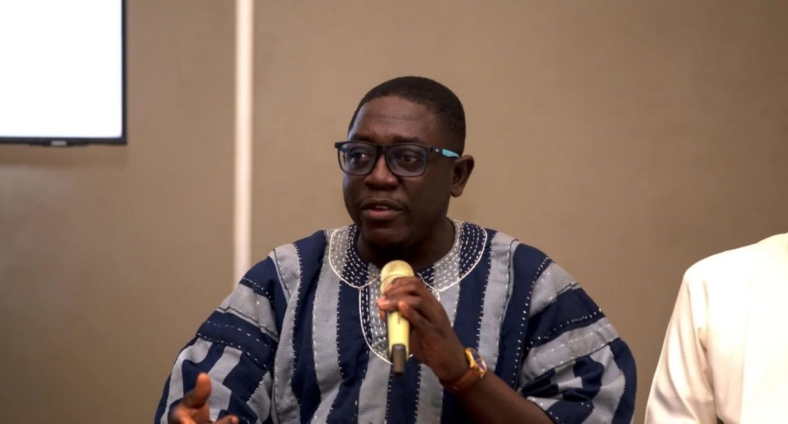
According to Dennis Asare, Senior Research Associate at IMANI, a lack of coordination remains a major obstacle in implementing Ghana’s climate agenda. He urged the government to address this issue in the 2025 budget to enhance climate policy integration.
“There is a need to prioritize climate issues in our economic planning. While macroeconomic and livelihood concerns are important, we can integrate climate considerations into these areas. This should be reflected in planning processes from the Metropolitan, Municipal, and District Assembly (MMDA) level to the Ministries, Departments, and Agencies (MDA) level, ensuring Ghana achieves climate compatibility.”
Budget support instruments provided by IFIs such as the World Bank, the International Monetary Fund (IMF), and the African Development Bank have played a critical role in Ghana’s fiscal stability and development. These mechanisms have enabled the government to meet budget financing needs and implement key institutional reforms. Traditionally, IFI-backed budget support has focused on fiscal and macroeconomic stability, but in recent years, these instruments have also been leveraged to incorporate climate considerations into economic planning.
While Ghana’s budget support programmes have successfully driven reforms in some areas, challenges persist—particularly in public financial management. Despite sustained IFI-backed reform efforts, weaknesses in institutional frameworks continue to pose significant barriers to effective climate-compatible growth.
IMANI's analysis highlights key lessons from Ghana’s experience with budget support to inform future strategies. It also identifies opportunities to strengthen domestic institutional frameworks, embedding climate considerations into macroeconomic policies and governance structures. However, achieving meaningful progress requires a nuanced understanding of political dynamics and the perspectives of key stakeholders regarding the potential development impacts of these reforms.
The event was conducted under Chatham House Rules to encourage open and constructive dialogue among stakeholders from government institutions, financial organizations, and environmental advocacy groups.
Latest Stories
-
World Cup visa scandal: Sports Ministry not shielding anyone – Sports Minister’s special aide
7 minutes -
World Cup visa scandal: Over 30 people misrepresented as GTA board members to US Embassy – Vincent Assafuah alleges
9 minutes -
Fire destroys wooden structure near Yesu Mo Villa at Bush Road
10 minutes -
NDC threatens sanctions over oversized campaign posters, gives aspirants 5 days to comply
1 hour -
Star Oil paid GH¢2.7bn in taxes, levies in nine months of 2026
1 hour -
Samson’s Take: The rule of law is cheaper before the bulldozer
1 hour -
GRA blames system failure for delay in issuing receipt over passenger’s customs duty
2 hours -
Livestream: Newsfile discusses World Cup visa scandal, beach demolitions, education strikes, BRICS bid
2 hours -
NC-PTAs welcomes end of teachers’ strike, urges parents to prepare children for Monday
2 hours -
Government procures over 2,000 transformers as Ghana’s electricity access hits 89.13% – Energy Minister
2 hours -
UTAG-UG threatens strike on October 19 over unpaid allowance
2 hours -
Let The Constitution direct Chieftaincy to deliver “All Development Is Local”
4 hours -
John Jinapor outlines renewable energy, nuclear power priorities for 2027
4 hours -
Ghana explores centre of excellence for hearing, communication and cochlear implant care
5 hours -
Schizophrenia-related disorders lead mental health cases recorded in Ghana
5 hours