

Audio By Carbonatix
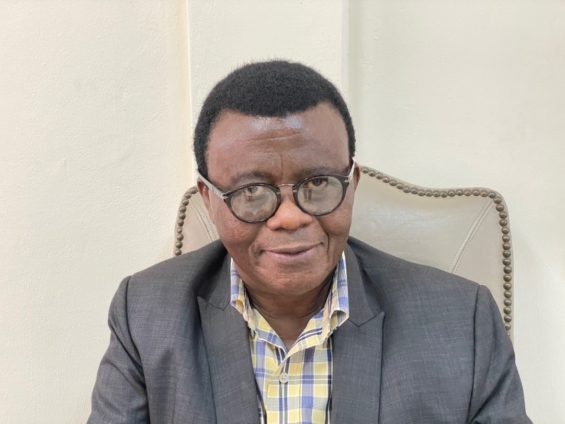
Governance expert and former UN Senior Governance Advisor, Prof Baffour Agyeman-Duah, has raised concerns over the timing and manner in which the Chief Justice, Gertrude Torkonoo, has been suspended by President John Mahama.
He suggests it casts a shadow over the integrity of the process and creates an impression of a political agenda.
Speaking in an interview on Joy FM's Middaynews on Wednesday, April 23, Prof Agyeman-Duah said the rushed nature of the suspension and its proximity to recent political declarations give room for speculation and public doubt.
“The issue of timing and the rush create an impression that perhaps the President has an agenda in this particular case,” he stated, referencing President Mahama’s earlier commentary about the judiciary on the campaign platform. “This becomes what you call a self-fulfilling prophecy. He said it, and now he’s doing it.”
His comment comes after President John Mahama suspended the Chief Justice after concluding that there are sufficient reasons to pursue further investigation, based on a petition filed by three individuals accusing the Chief Justice of misconduct and incompetence.
Read also: Mahama suspends Chief Justice after setting up committee to probe petitions
While acknowledging that the Constitution outlines a clear process for addressing allegations against a sitting Chief Justice and that the President appears to be operating within those legal boundaries, Prof Agyeman-Duah stressed that the optics and political context of the move are problematic.
He emphasised the importance of preserving the principle of separation of powers, warning that if partisan motives begin to drive actions against independent institutions, it could set a dangerous precedent.
“Even if the Chief Justice has serious cases to answer, that prejudice that was expressed earlier changes the whole thing. We are creating some kind of muddiness in this whole process.”
He further explained that his comments are not an attempt to exonerate the Chief Justice, but rather to highlight the need for caution and restraint in handling matters involving the judiciary, especially in a fragile democratic environment.
Latest Stories
-
Walewale MP launches GH¢1m fund to support women, small businesses
9 seconds -
US Navy carrier Abraham Lincoln arrives in Thailand after 286 days at sea
5 minutes -
‘Protect us or we’ll protect ourselves’ – A-Plus warns government over deadly Gomoa clashes
12 minutes -
Police arrest 68 suspects, seize 835 devices in Interpol cybercrime operation
14 minutes -
Okuapeman and Mount Sinai SHSs closed after violent clash, fire destroys school facilities
15 minutes -
Central Regional Minister visits injured victims after New Winneba attack
16 minutes -
Petroleum tanker drivers begin sit-down strike over Tema road conditions
19 minutes -
Poverty is not the destiny of Gambians – EFF Gambia leader
24 minutes -
Court discontinues death threat case against Ayitey Powers, orders release
29 minutes -
KMA announces temporary ban on new billboards
39 minutes -
NPP youth had genuine grievances against Akufo-Addo government – Salam Mustapha
41 minutes -
Ghana Navy, UPSA partner on research, digital innovation and capacity building
44 minutes -
Christian Council pays courtesy call on Mahama Ayariga to strengthen collaboration
45 minutes -
We’re ready to mobilise funds for National Cathedral – Christian Council
46 minutes -
Keeping children safe in a digital world
49 minutes