

Audio By Carbonatix
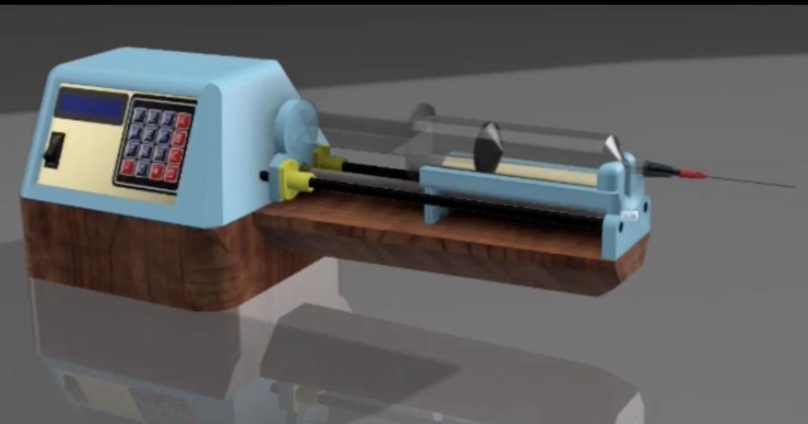
Two Biomedical Engineering students at the Kwame Nkrumah University of Science and Technology, Kumasi have designed a medical device to improve fluid management during surgical procedures.

The project, developed by Otema Darfour Manu and Bright Mensah, aims to reduce errors and enhance patient comfort during surgeries such as ureteroscopy and plasmapheresis.
Infusion pumps are commonly used in hospitals to deliver fluids to patients during surgery. However, many of the current systems are manually operated, which can lead to errors in fluid levels, temperature control, and timing. These issues can increase the risk of complications and patient discomfort.
To address these challenges, the students developed a two-way syringe infusion pump. The pump automatically controls both the delivery and withdrawal of fluids. It also includes a built-in warming system that maintains a consistent fluid temperature. The system uses a closed-loop control method, allowing it to adjust in real time based on the patient’s needs.
The device is particularly useful in procedures like ureteroscopy, where managing fluid pressure is critical. Improper control of pressure can damage the kidneys. With this new pump, fluid pressure is maintained at safe levels without the need for constant manual adjustments.
In plasmapheresis, where temperature control is crucial, the built-in fluid warmer ensures that the patient receives fluids at the appropriate temperature throughout the procedure. This enhances both the efficiency of the process and the patient’s comfort.
The students believe their project could help redefine surgical fluid management in hospitals across Ghana and beyond. Their next step is to conduct broader clinical tests and refine the device for use in various types of surgeries.
The project was supervised by Dr. Isaac Acquah of the Department of Computer Engineering at KNUST. The team hopes that, with additional support, their innovation can be produced at scale and implemented in hospitals to improve patient safety and procedural accuracy.
They also see potential for the device to be adapted for use in remote healthcare settings where resources are limited. The students are currently seeking partnerships to help advance the project.
Latest Stories
-
Convicted Bosnian Serb war criminal Mladić dies aged 84
2 minutes -
Ga Mantse boosts Sacred Crown Awards, names Princess Duncan as CEO to drive global push
3 minutes -
At least 12 dead, 54 injured as wildfires sweep through northern Algeria
3 minutes -
AI cannot replace lawyers and judges – Justice Asante
10 minutes -
PURC intervention restores power to Abofour-Dumasua community
11 minutes -
Africa needs 35% more to recruit health workers as 1 in 5 health dollars is wasted – WHO
12 minutes -
African Pension Funds shift more capital into private equity
14 minutes -
PURC engages Abofour-Dumasua residents over quality-of-service concerns amid faulty transformer
15 minutes -
AES, Ghanaian youth to confront debt, reparations at Accra forum
28 minutes -
Domestic Gold Purchase Programme: ‘US$1.7bn loss is largely a book issue’ — IEA
28 minutes -
Catholic Diocese finds suspended priest at Koforidua Police Training Centre
40 minutes -
I’ll exploit NDC’s complacency if elected NPP Communications Director – Dennis Aboagye
58 minutes -
Saalim Bamba files nomination to contest NPP National Nasara organiser position
1 hour -
Norway’s royal family gathers at King Harald’s bedside as his condition worsens
1 hour -
Merqury Republic returns to Takoradi with Guinness Ghana DJ Awards Pub Fest this Saturday
1 hour