

Audio By Carbonatix
Access to clean and efficient cooking fuel is essential for promoting good health, safeguarding the environment, and driving economic growth.
However, traditional solid fuels like charcoal and firewood remain widely used in Ghana, despite efforts to promote cleaner alternatives such as liquefied petroleum gas (LPG).
A recent joint study by the Kwame Nkrumah University of Science and Technology and the University and Energy and Natural Resources, analyzed the socio-economic factors influencing cooking fuel choices among 2,942 women of reproductive age. This was based on data from the 2019 Ghana Malaria Indicator Survey (GMIS).
The research published in the 2025 edition of PLOS One explored the relationship between factors such as educational attainment, wealth status, place of residence, and cooking fuel preferences.
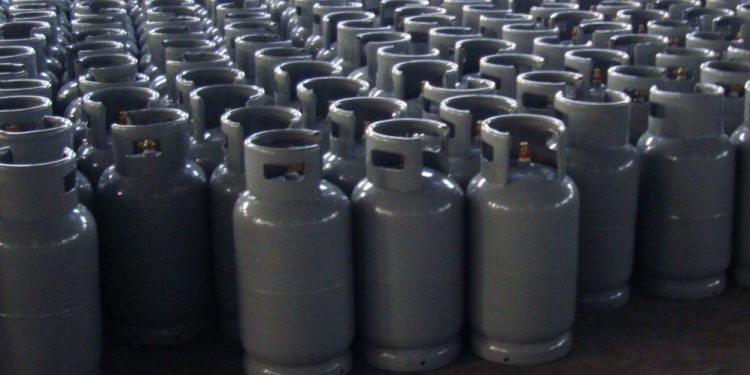
The study revealed that only 13.77% of participants used LPG for cooking, while 86.23% relied on non-LPG fuels, such as firewood and charcoal.
Again, the study showed 96.54% of LPG users were educated women.
Also, the majority of LPG users (95.31%) were non-poor, with only 4.69% classified as poor.
Urban women accounted for 78.27% of LPG users, while rural women made up 21.73%.
The study recommends that the government of Ghana and its stakeholders focus on leveraging the influence of urban poor women and educated rural women to promote the adoption of LPG.
They again advocated for key strategies including: Engaging target groups through peer-to-peer learning and educational campaigns, introduce microfinance options, subsidies, and reliable LPG infrastructure to improve access.
Latest Stories
-
Benedict Okyere Yeboah: Ghana’s football problem goes beyond sacking a coach
4 minutes -
GPL 2026/27: Darkwah Wiafe’s winner sees All Blacks beat Kotoko
10 minutes -
ITF World Tour : Patel Wins Boys’ Singles Final at J100 Accra
23 minutes -
Ghana must pursue BRICS partnership if it brings economic benefits – Kpebu
26 minutes -
Success and Wright Claims J100 Accra Girls’ Doubles Championship
26 minutes -
ITF J100: America’s Wright wins J100 Accra Girls’ Singles Title
33 minutes -
Expedition hopes to find aviator Amelia Earhart’s plane on remote island
33 minutes -
US seeks changes to rejected $109m health compact with Ghana – Mahama
1 hour -
Nine dead in mass shooting at Pennsylvania home
1 hour -
‘Time for Ukraine to get new president,’ says Trump after Zelensky condemns diesel deal
1 hour -
Hincapie injury adds to Arsenal issues after Guimaraes rescue act
2 hours -
Henderson scores twice as Chelsea thumb Bournemouth
2 hours -
Photos: Mentapulse Africa convenes health and labour summit to address talent retention
2 hours -
Mahama inspects Nkokɔ Nketenkete plant, eyes Bechem as chicken capital
2 hours -
Ghana not seeking full BRICS membership, applying as Partner Country – Ablakwa
2 hours