

Audio By Carbonatix
Professor Jerry John Kponyo has called for the extension of digital infrastructure beyond urban centres, describing it as a critical step toward ensuring equitable access to AI technologies and unlocking the potential of Artificial Intelligence across the Global South.
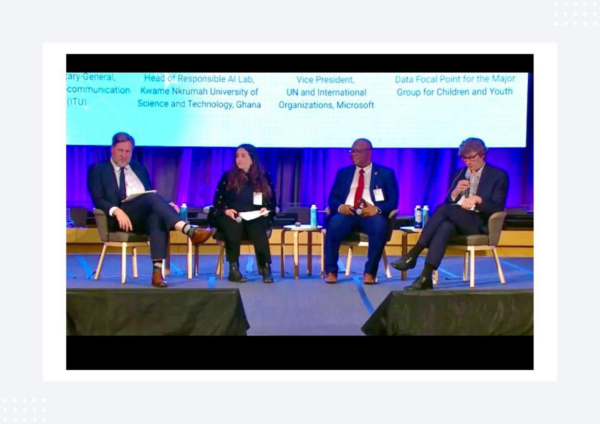
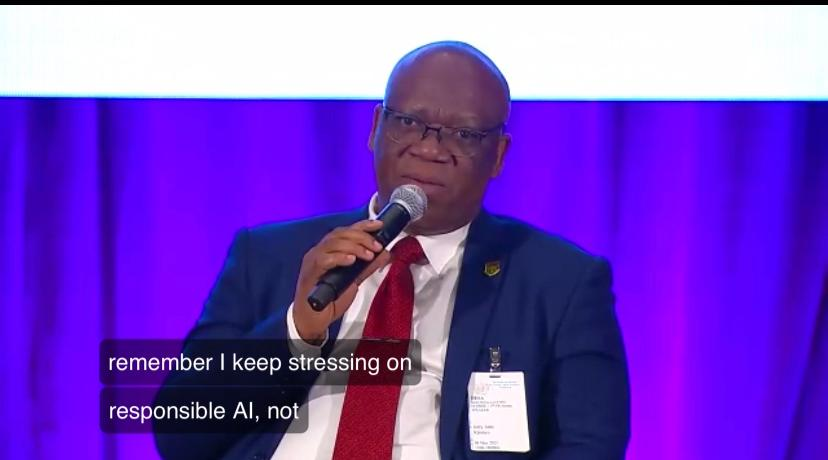
Speaking at the United Nations ECOSOC Special Meeting on Artificial Intelligence, Prof. Kponyo, the AI4SD project lead and P.I and Scientific Director for the Responsible AI Lab at the Kwame Nkrumah University of Science and Technology (KNUST), outlined key priorities for building a sustainable AI ecosystem starting with access to reliable internet and power.
“Irrespective of how good your AI solution is, if there isn’t infrastructure to deploy it on, there will be a problem,” he said during a panel discussion on “Building Foundations for AI in the Global South”.
The event, held at the ECOSOC Chamber in New York, formed part of STI Action Day and brought together global stakeholders to explore how AI can support the Sustainable Development Goals (SDGs).
The session was moderated by Tomas Lamanauskas, Deputy Secretary-General of the International Telecommunication Union.
During the panel discussion, Prof. Kponyo pointed to four critical enablers: infrastructure, data, talent, and compute.
He highlighted the need for inclusive planning that ensures rural and remote communities are not left behind in the AI revolution.
On data, he warned that unrepresentative datasets could entrench existing biases, stressing the importance of quality, diverse data to develop AI systems that work for all populations. “Your AI is only as good as your data,” he noted.
He also emphasised the need for targeted skills development not only for AI developers but also for end users in government and public services.
“We can make a lot of impact in the public sector if we pay particular attention to building capacity in that regard,” he said.
While acknowledging progress through initiatives like AI for Development, Prof. Kponyo said strategies must go beyond drafting to actual implementation, backed by committed budget allocations from national governments.
“Development partner support is helpful, but it is not sustainable,” he said.
“We need member states to demonstrate real commitment by funding infrastructure, data, talent, and compute annually.”
Ghana, he announced, is finalising its National AI strategy, expected to be released in June 2025.
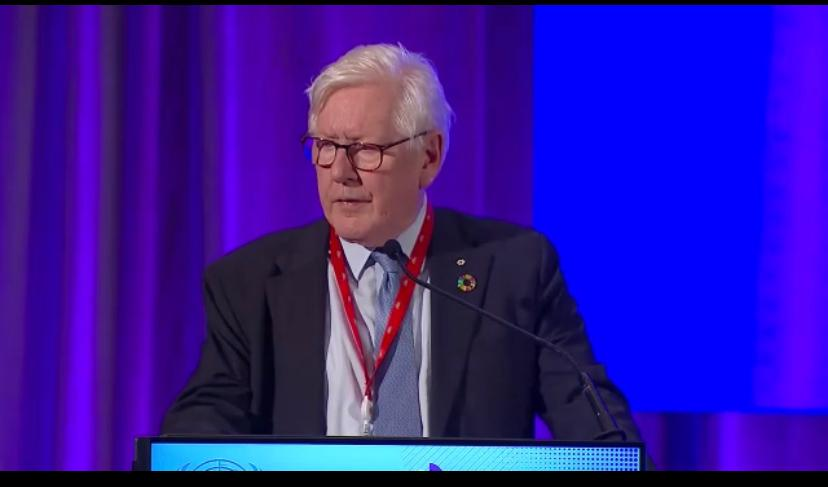
Canadian Ambassador to the UN and ECOSOC President, Bob Rae, who chaired the meeting, echoed the urgency of embracing technological change.
“There are people who think somehow that AI can be stopped. I’ve got news for you, it can’t,” he said.
Prof. Kponyo closed with a call for stronger international collaboration, urging the global community to build responsible, inclusive, and locally relevant AI ecosystems.
“If we want to leave no one behind, we must grow AI together responsibly,” he said.
Latest Stories
-
Partey visa ban: We are racing against time – Ablakwa reveals barely 48hrs to Ghana’s opener
54 minutes -
DHLTU’s Open Day and Mini Trade Fair: When classrooms turn into marketplaces
55 minutes -
Stranded tricycle waste collectors threaten to offload trash at unauthorised locations in Kumasi
1 hour -
Upper West minister challenges DHLTU leaders to excel at SRC Week 2026 launch
1 hour -
Office of Government Machinery not burdened by political appointees — Kwakye Ofosu replies Damongo MP
2 hours -
US Air Force B-52 bomber plane crashes after take off in California
2 hours -
SpaceX IPO raised $10bn more than thought
2 hours -
Heroic Cabo Verde clinch draw with Spain
2 hours -
Parents of 24 Ghanata SHS students agree to pay GH¢5,200 over alleged food theft by their wards
3 hours -
Kasapreko PLC lists on GSE, opens new chapter for growth
3 hours -
AI strategy key to positioning Ghana as leader in responsible AI development – Bandim Abed-Nego
3 hours -
Damongo MP urges CSOs to probe true cost of Mahama’s government
3 hours -
Ministerial numbers alone do not reveal government size – Samuel Jinapor
3 hours -
Ghana’s flooding problem caused by years of poor attitudes and weak enforcement – Researcher
4 hours -
Two diesel trailers collide at Kwahu Hwidiem
4 hours