

Audio By Carbonatix
I have followed with keen interest the range of public responses to the leadership of Captain Ibrahim Traoré in Burkina Faso, ranging from enthusiastic applause by many, to cautious scepticism by some, and vocal criticism by a minority.
Over the past two years, the country has experienced a reported GDP growth of approximately 18%. Traoré’s administration has rejected external loans from institutions such as the IMF and the World Bank, reduced the salaries of ministers and parliamentarians by 30%, and increased civil servant pay by 50%.
His government has reportedly cleared domestic debt arrears, established two tomato processing plants to boost agro-industrial employment and reduce import dependence, inaugurated a modern gold refinery to enhance value addition and reduce raw mineral exports, and launched the country’s second cotton processing facility.
He has also created the first National Support Centre for Artisanal Cotton Processing to support smallholder producers. Agricultural output has increased markedly, and infrastructure development—including road upgrades and a new airport—is underway.
Against this backdrop, public admiration appears understandable. Yet this experience raises fundamental questions about governance and the relationship between democracy and development.
While liberal democracy is often championed as the optimal political system, its legitimacy ultimately rests on its ability to deliver tangible improvements in people’s lives. As Amartya Sen has argued, “A country does not have to be deemed fit for democracy; rather, it has to become fit through democracy.” However, when democracy is reduced to periodic elections with little accountability, and when it primarily benefits a narrow political elite, citizens may begin to question its value.
As the events in Burkina Faso suggest, citizens appear to be yearning not merely for democratic form but for pragmatic, results-oriented leadership that addresses structural poverty, inequality, and underdevelopment. The philosopher John Dewey once noted that “democracy is more than a form of government; it is primarily a mode of associated living.” But when that mode of living fails to secure livelihoods, dignity, and hope, its foundations begin to erode.
The most sobering lesson is this: in literal terms, people do not eat democracy. Governance must be judged not solely by its institutional design, but by its capacity to uplift the lives of the many.
If democratic systems are repeatedly used as a façade for elite capture and mass impoverishment, we risk undermining not just institutions but the very idea of democratic legitimacy. As history reminds us, the gap between democratic ideals and material deprivation can become fertile ground for disillusionment—and ultimately, instability.
-
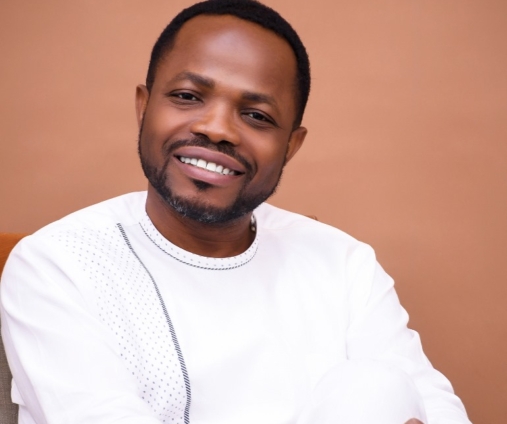
The author, FM Dzanku is a Development Economist, ISSER, University of Ghana.
Latest Stories
-
Scrap 15% priority placement quota for SHS admissions – GNAPS
4 minutes -
IFC Managing Director Makhtar Diop to visit Ghana for investment talks
11 minutes -
GPRTU opposes auctioning broken-down vehicles after 21 days
38 minutes -
Nigerian Goodnews Aina crowned J30 Accra champion as Ghana’s Gwendolyn Duvor Klu retires in final
2 hours -
WACCE urges gov’t to declare state of emergency in galamsey-prone areas
3 hours -
NACOC boss calls for practical cross-border action against drug trafficking
3 hours -
Ghana calls for stronger regional cooperation to combat drug trafficking
4 hours -
Ablakwa presents bicycles to 100 North Tongu day students
4 hours -
Ablakwa supports 2,269 North Tongu SHS students with essential items
4 hours -
Dr Bawumia expresses sympathy with farmers over their inability to sell their produce even at reduced prices
4 hours -
Constitutional review: Govt must keep discussions open – Dr Tandoh
4 hours -
GPL 2026/27: David Gyamfi hat-trick fires Ashantigold to historic first victory
4 hours -
Ericsson celebrates 150 years of global innovation, 30 years of partnership and digital transformation in Ghana
5 hours -
Ghana’s Ambassador to Serbia hosts African ambassadors’ September meeting in Belgrade
5 hours -
Ghana closer to terrorism threat than ever before – WACCE
5 hours