

Audio By Carbonatix
As Ghana prepares to reintroduce road tolls, experts have observed that a reliable and robust database will be critical to the success of a digitalised system.
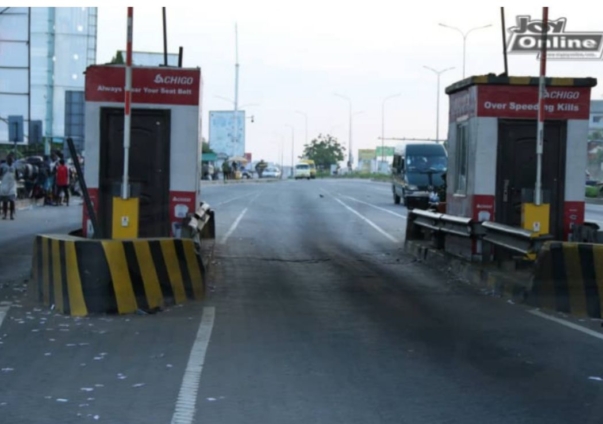
President Mahama recently indicated the government is considering digitalising the country’s toll booths to allow for car owners to use their Ghana Cards and mobile money accounts to pay road tolls under an automated system.
But according to Ing. Dr. William Ackaah, Head of the Transportation Engineering Division at the Building and Road Research Institute of the Council for Scientific and Industrial Research (CSIR-BRRI), a well-structured data system that links vehicle registration numbers directly to owners will enable proper monitoring and accountability.
“If we have a very strong database, then it is possible for us to link the vehicle registration numbers to the vehicle owners so that we will be able to track and get them,” he told David Akuetteh on Luv FM.
Dr. Ackaah noted that Ghana’s current challenges with enforcement and tracking stem largely from weak data infrastructure.
“We need to build a strong database. Most of our problem is the fact that we don’t have a strong database, a reliable one. The Ghana Post GPS address, I don’t know how we use it now to track where people live,” he said.
Citing challenges with national identification and telecom records, Dr. Ackaah questioned the country’s ability to manage the automated toll compliance under the current systems.
“My only problem is how we are going to trace people with our database. Already, we have issues with the mobile registration system. Some people can use some IDs, which the current communication minister says he’s going to do a re-registration.
“We have instances where people borrow money from MTN, they know what they are doing. They will make sure that money doesn’t get into their account. That is why I would prefer we have a prepaid system,” he added.
As part of the solution, Dr. Ackaah recommended implementing flexible toll payment plans to reduce the burden on road users and encourage compliance.
“They can have a daily plan which will be flexible so that they don’t pay so much. Let’s say you can buy a daily plan for Gh¢10 and use it as many times as you can, or you can have a weekly or monthly plan, and as you buy the plan, the price gets reduced,” he suggested.
Latest Stories
-
Ecobank Group commits US$2.6bn to women-led businesses and agribusinesses across Africa
11 minutes -
Ghana to host high-level conference on scaling education initiatives in emergencies
34 minutes -
Democracy must not be for sale: Who pays for Ghana’s politics, and how do we confront money, influence and accountability?
49 minutes -
Aburi Amanfrom landowners appeal for government support for Atwapim development project
53 minutes -
Cargill Ghana and International Cocoa Initiative celebrate 111 young graduates building skills for the future
1 hour -
Video: Madina MP Francis-Xavier Sosu collapses while addressing students at GIMPA
1 hour -
Hunnyboy reveals how social media landed him Shatta Wale feature
1 hour -
I am a perfectionist – Actor William Lamptey
1 hour -
No room for another false start as Ghana begin AFCON qualifying campaign
2 hours -
“We are grateful for what you have achieved” – AGI President tells Finance Minister
2 hours -
“No Nation is Inferior”: Mahama champions human dignity and security council reform at the UN
2 hours -
Manhyia South residents, NPP executives fume over botched EOCO arrest of MP
2 hours -
Mahama unveils new deal with global philanthropy
3 hours -
Daily Insight for CEOs: Building customer-centric leadership
3 hours -
Democracy must deliver food, jobs and healthcare, not just elections – Mahama
3 hours