

Audio By Carbonatix
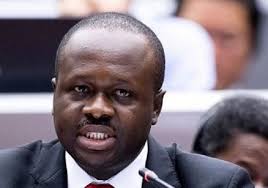
The Minister for Defence, Dr Edward Omane Boamah, has defended the decision to release several high-ranking officers from the Ghana Armed Forces, following the appointment of a Brigadier General as Acting Chief of Defence Staff (CDS).
He described the move as a strategic measure to enhance service efficiency, align with precedent, and uphold the nation’s security objectives.
Responding to a parliamentary question posed by the Member for Assin South, Rev John Ntim Fordjour, Dr Boamah appeared before Parliament and clarified the rationale behind what has been perceived as a sweeping shake-up within the military’s top brass.
Dr Boamah was quick to correct what he termed a “mischaracterisation” of the facts.
"The Honourable Member’s question suggests the termination of all fifteen Major Generals (2-star) and equivalents. However, this assertion is inaccurate and must be corrected to avoid misleading the public," he noted.
According to the Minister, eight of the fifteen Major Generals were already due for terminal leave pending their compulsory retirement.
An additional four officers, aged between 60 and 62, are to be released in line with established practices, even though they have not yet reached the compulsory retirement age of 63.
One officer, Major General Irvin Nii-Ayittey Aryeetey, is being considered for an international appointment at the United Nations, which will see him promoted to the rank of Lieutenant General.
“This means that, in total, twelve officers are being released, eight of whom are already due for retirement. The decision is neither unusual nor unprecedented,” Dr Boamah stated.
Precedent and historical context
Providing historical context, the Defence Minister recalled that previous transitions of power had seen similar decisions taken regarding the upper echelon of the armed forces.
- In 2001, ten high-ranking officers—including six Major Generals and four Lieutenant Generals—were released.
- In 2005, all seven Major Generals serving at the time were released, none of whom had reached the age of 63.
- In 2009, another six Major Generals were similarly released.
- Selective releases also occurred in 2017 and 2021, involving officers below retirement age.
Dr Boamah emphasised that such actions are guided not only by age and rank but also by the overriding need for operational efficiency and adaptability in a complex and volatile security environment.
“The Ghana Armed Forces must remain ever-ready to defend our territorial integrity and protect lives and property. This obligation requires a leadership structure that is not only experienced but also nimble and responsive to today’s multifaceted security threats—ranging from terrorism and piracy to cybercrime and illegal mining,” he said.
Deployments and reassignments
To further clarify the matter, the Minister provided an update on the remaining three Major Generals who are not due for immediate retirement:
- Major General Robert Affram is currently serving as Deputy Force Commander with the United Nations Mission in South Sudan (UNMISS).
- Major General Anita Asmah serves as Force Commander of the United Nations Disengagement Observer Force (UNDOF).
- Air Vice Marshal Felix Asante has been appointed Acting President of the National Defence University in Ghana.
“These appointments reflect the confidence placed in Ghanaian military leadership on both the national and international stage,” Dr Boamah added.
Constitutional and legal mandate
Dr Boamah reaffirmed that the President, as Commander-in-Chief of the Ghana Armed Forces, John Mahama, acted in full compliance with Article 212 of the 1992 Constitution, which mandates the appointment of the Chief of Defence Staff and Service Chiefs in consultation with the Council of State.
“The appointment of a Brigadier General as CDS, while uncommon, is not without precedent. Similar actions were taken in 2005 and 2009, following changes in political leadership,” he stated.
A vision for a renewed Armed Forces
The Defence Minister concluded by reiterating the government’s commitment to a robust, efficient, and future-ready military.
“This process is anchored in the regulatory and historical frameworks of the Ghana Armed Forces. It is not borne of partisanship or expedience, but of a solemn duty to enhance service efficiency and defend the sovereignty of our nation,” Dr Boamah told Parliament.
“As we reset Ghana, we do so with a renewed sense of patriotism, determined to secure our democracy and safeguard the lives and property of our people,” he concluded.
Latest Stories
-
Food inflation never responded – Dr Yamson says Ghana must stop throwing money at short-term fixes
43 minutes -
Oil set for second weekly rise as unsettled US-Iran war crimps supply
1 hour -
US teen drops lawsuit against Meta, Google and Snap ahead of trial
1 hour -
Meghan could return to acting once back in UK
1 hour -
Bali jails Swiss tourist for insulting sacred Day of Silence
1 hour -
At least 50 killed, mostly children, as overloaded boat capsizes in Nigeria
2 hours -
Cameroon president returns home after 10-week absence
2 hours -
Mineworkers demand release of $34.5 million in trapped savings
2 hours -
Stability must last 10 years, not 4 – Dr Yamson challenges gov’t to make boom-bust economy last
2 hours -
Tunisia opposition protests against president amid economic discontent
2 hours -
Nii Lante Vanderpuye apologises to Sammy Gyamfi, NDC over GoldBod comments
4 hours -
US sanctions more Cuban companies and officials
4 hours -
There is something different this time – Dr Yamson hails Mahama govt’s economic management
5 hours -
Gold for Reserves has risky, but necessary – Dr Yamson backs Mahama govt’s gold strategy
5 hours -
‘You want the trade, but not the people?’ – Dr Yamson tears into South Africa’s xenophobia
5 hours