

Audio By Carbonatix
Whenever I drive through some of our public universities, particularly those outside Accra, I am struck by a disturbing contradiction: these institutions with large populations, located in regions rich in raw materials and surrounded by skilled artisans and small-scale industries, remain visibly underdeveloped, deprived, and utterly dependent. They do not produce much for themselves, and worse, they do not seem to see the need to.
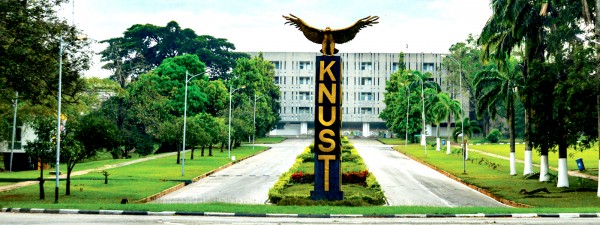
Let us take the Kwame Nkrumah University of Science and Technology (KNUST), Ghana’s premier institution for science, technology, and innovation. With over 85,000 students, sprawling departments in engineering, applied sciences, art, agriculture, and architecture, and a location in the craft and industry-rich Ashanti region, one would expect this university to be a hotbed of functional innovation, a self-sustaining ecosystem, and a driver of local economic transformation.
Instead, what we see is a glorified certificate factory whose graduates walk past the very problems they were trained to solve because their own institution cannot model the solutions.
How can a university that trains all kinds of engineers, architects, designers, and building technologists be grappling with accommodation crises? Why are thousands of students forced to compete with local residents for housing and transport when the university has land, manpower, material knowledge, and the country's top brains?
It is beyond disappointing. It is a national embarrassment.
Imagine this. Eighty-five thousand students wake up every morning, brush their teeth, eat from plates, sit on furniture, wear clothes, and ride buses to class, and yet none of these everyday items is made by the university’s own departments. Not the toothbrush from its polymer lab. Not the beds from its woodwork studios. Not the fabric from the Textiles Department. Not even the cups from the ceramics section of the College of Art. Instead, the university outsources everything to the open market, when it could teach its students to produce and sell.
And what about the College of Art? A department that should be pulsing with creativity, enterprise, and innovation now hangs like a dry, brittle branch, barely connected to the tree, producing nothing of real economic value.
The irony is brutal. Even if this college only produced ceramic crockery for the university community, it could turn over 25 million cedis annually. Another 25 million could be generated if the school simply required students to wear clothing made from fabric produced by the Textiles Department, not as punishment, but as proof of value creation and pride in self-reliance.
We have not even discussed the proximity of KNUST to the Building and Road Research Institute (BRRI) at Fumesua, a facility that should be collaborating with the university daily to pioneer housing innovations and low-cost student accommodations and for the larger surrounding communities. Instead, these two entities exist in parallel universes, their potential synergy wasted year after year.
So I ask. If a university that possesses every tool needed to fix its own problems cannot do so, how can it be trusted to solve national problems?
It is not a rhetorical question. It is the very crux of our underdevelopment.
Ghana will continue to train millions of students at great cost, yet remain stuck in poverty, inefficiency, and borrowed thinking. Not because we lack resources or brains, but because we refuse to connect the dots. We treat knowledge as decoration, not as a tool for transformation. We run our universities like paper mills instead of live laboratories of national change.
It is disgraceful. And it must change.
Until KNUST and other institutions like it begin to live what they teach, Ghana will continue to produce graduates who are experts in theory and helpless in practice, brilliant in PowerPoint but irrelevant on the ground.
And the cost of this failure is no longer academic. It is existential.
Latest Stories
-
Who’s Millicent Amankwah Yeboah, the 34-year-old MP married to Mahama Ayariga?
1 minute -
I bring 30 years of experience to make Dr Bawumia President – John Boadu
5 minutes -
Ghana must move beyond spectator role in climate initiatives – Zanetor
14 minutes -
Adamu, Kipruto unopposed for top PANASA positions
20 minutes -
OSP secures approval to serve Ofori-Atta, Akore with SML case summons in US
23 minutes -
Ghana must leverage AfCFTA to unlock climate finance, green technology – Zanetor
24 minutes -
Surprise at vetting as Mahama Ayariga reveals Sunyani West MP is his wife
29 minutes -
Ministers have no business meddling in chieftaincy disputes – Ayariga
29 minutes -
Bawku peace talks showing encouraging signs – National Peace Council
38 minutes -
Anger in Cameroon over femicide after eight women killed in a week
38 minutes -
‘If you started running, they shot you’ – inside Nigeria’s growing kidnapping crisis
39 minutes -
Fire destroys about 300 wooden structures at Asawase
39 minutes -
NRSA calls for urgent action on road infrastructure deficiencies
54 minutes -
Accra International Airport project funded without direct government financing – Mahama
55 minutes -
NDC promised 24-hour economy but cannot deliver 1-hour economy — John Boadu
1 hour