

Audio By Carbonatix
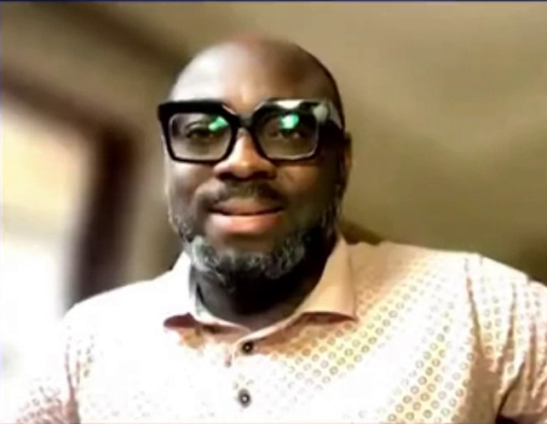
A Professor of Financial Economics at the University of Ghana Business School says the Attorney General’s recent offer to reconsider the prosecution of Dr Kwabena Duffuor and others if 60% of the alleged losses are recovered is an admission that government had a role in the collapse of the affected banks.
“The Attorney General has realised that, yes, of course, government had a role in the collapse of those banks,” Prof Lord Mensah stated on JoyNews’ PM Express on Wednesday, July 30.
He argued that the state is now choosing pragmatism over prosecution because it acknowledges its contribution to the banking sector’s failure.
“That is why the Attorney General thinks getting a part of what the cake is better than losing everything,” he said.
Prof. Mensah pointed to the interconnected nature of financial institutions and government obligations.
“The existence of the bank satisfies several stakeholders, including the government itself,” he explained.
“If it turns out that the government owes the bank, and at the same time the bank is collapsing, then obviously government needs to consider what it owes the bank, and then net it off the possible assets that they are recovering.”
He said the situation should have been handled from a technical and structured financial standpoint, not through aggressive closure and prosecution.
Asked about global best practices when banks face distress, Prof. Mensah said the first step depends on the nature of the problem, especially whether it’s a liquidity or solvency crisis.
“If you look at the bank’s balance sheet and it turns up that it’s purely a liquidity problem, then obviously you may call for liquidity injection from the shareholders,” he explained.
“Now, if the shareholders are not able to do it, then possibly you may have to look at getting a partner, or possibly government may also come in.”
In some situations, the state has a clear economic interest in helping the bank stay afloat.
“Government may also want to pump in money to ensure that at least the bank becomes stable. And the money will not go free.
"The money becomes part of ownership in the bank,” he noted.
“While the bank survives and is able to build up again, the government can sell off its equity once again.”
He emphasised that this route preserves multiple national interests.
“You’re going to save employees, their jobs. You save homes. You save government interest, which is the consistent taxes that government will be getting. And then also, you save the shareholders.”
Latest Stories
-
Hawa Koomson pledges experienced and mature leadership of NPP women’s wing
17 minutes -
Young woman found dead at Kasoa Peace Town
50 minutes -
Playback: The Law examined lawful arrest in Ghana
1 hour -
Mahama urges African governments to treat healthcare as an investment, not budget cost
2 hours -
Bawumia congratulates John Boadu and new NPP executives, pledges support ahead of 2028
2 hours -
‘No talent should be left out’ – Bawumia pledges inclusive NPP campaign for 2028
2 hours -
Prof. Mike Oquaye recounts how he blocked Special Prosecutor’s attempt to arrest Bawku Central MP
2 hours -
Make health sovereignty a priority for Africa – Mahama
2 hours -
Dorimon Naa, Wa West DCE lead massive clean-up exercise; threaten sanctions against recalcitrant residents
3 hours -
Photos from Adom FM Y2K Jam
3 hours -
Praye Tiatia steals the show at Adom FM Y2K Jam [Watch]
3 hours -
Boakye Agyarko congratulates John Boadu, pledges support for NPP leadership
3 hours -
Antwi HiMight thrills fans with Antwi ne Antwi hits at Adom FM’s Y2K Jam [Video]
3 hours -
Amb. Edward Boateng congratulates Boadu, Kodua on election wins
4 hours -
John Boadu pledges to rebuild NPP from grassroots and restore ‘winning machinery’
4 hours