

Audio By Carbonatix
The Ghana Academy of Forensic Sciences has raised serious concerns about the handling of the remains of the eight people who died in the tragic military helicopter crash on August 6.
The academy's president, Dr Pet-Paul Wepeba, has lambasted the authorities' response, describing the transportation of the victims' bodies in sacks as "undignified" and a dangerous breach of established protocols.
Speaking on Eyewitness News on Friday, August 8, 2025, Dr Wepeba expressed his dismay at the sight of the high-profile victims' bodies being handled in such a manner.
"When it comes to the bodies that were transported, they are humans, for heaven’s sake. For that matter, the situation where they were put in sacks and transported is not a good practice; it doesn’t add up,” he stated.
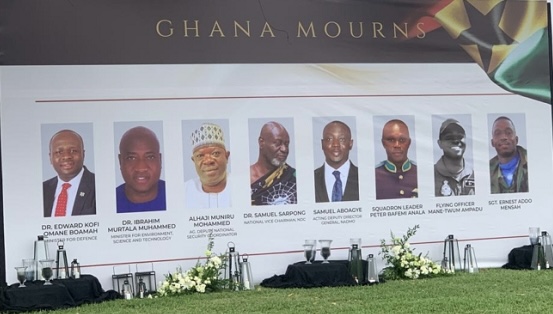
They were accompanied by Muniru Mohammed, Acting Deputy National Security Coordinator; Samuel Aboagye, a former parliamentary candidate; and Samuel Sarpong, Vice Chairman of the NDC.
Tragically, the military crew members, Squadron Leader Peter Bafemi Anala, Flying Officer Manin Twum-Ampadu, and Sergeant Ernest Addo Mensah, also lost their lives in the crash.
Dr Wepeba explained that both international standards and existing Ghanaian protocols mandate the use of specific equipment for such circumstances.
"International best practices, or even in our country, dictate that when situations of this nature occur, we have body bags which come with zips and do not leak. That is dignity. But that wasn’t done,” he stressed.
Beyond the lack of dignity afforded to the deceased, Dr Wepeba warned of a potential public health crisis.
He highlighted that the remains, despite being severely burnt, could still harbour dangerous pathogenic organisms.
This poses a significant risk of infection to those who handled the bodies without proper protective gear.
“There are pathogenic organisms that may have gotten to these individuals who carried them. So, there is some degree of public health hazards associated with it,” he added.
The forensic expert attributed this critical failure to a broader lack of local capacity in managing disaster victim recovery.
He called on key state institutions to improve their emergency preparedness.
"If we had the proper capacity, and there are institutions such as NADMO, police, and the others, they would know what to do when situations such as these arise,” he said.
Latest Stories
-
Sky Train trial moves to defence as Asamoah, Ameyaw-Akumfi file witness statements
11 seconds -
AFCON 2027Q: Ghana will face Ivory Coast, Gambia unscathed – Sports Minister
3 minutes -
Heavy security at Accra High Court ahead of Salomey Baffoe bail hearing after EOCO’s attempted arrest of Manhyia South MP
13 minutes -
Teen rocker Nene Royal becomes first Thai to win America’s Got Talent
18 minutes -
Skills Bridge Ghana Foundation trains 50 professionals in solar energy
23 minutes -
Photos: Mahama Ayariga inspects waste evacuation exercise at Agbogbloshie
24 minutes -
Photos: Mahama meets world leaders at 81st UN General Assembly
24 minutes -
From the Accra Reset to Reparatory Justice: Inside President Mahama’s diplomatic agenda in New York
26 minutes -
Photos: Ghana-China relations strengthened at China’s 77th anniversary celebration
28 minutes -
Majority says stronger enforcement drove rise in NACOC arrests
28 minutes -
He took fees above legal limit – Inusah Fuseini alleges in Baffour Awuah case
29 minutes -
Jan Alessie joins African Collaborations Group advisory board
29 minutes -
It has absolutely nothing to do with Salomey – Inusah Fuseini on Baffour Awuah’s EOCO case
39 minutes -
GES orders SHS heads to refund unauthorised fees collected from parents
42 minutes -
African Collaborations Group appoints Paulo J. Cruz as founding CEO
44 minutes